Kosovo Architecture Festival _ Park the Parking
With its theme "Certain Uncertainties" KAF wanted to focus on how our related professions, the "makers" of our built environment: architects, designers, engineers & artists, could contribute in a positive way to make our cities better and our futures more livable. From an amazing pool of research fellows of LINA Platform, KAF has carefully selected 2 individuals and a collective to present their work in front of the local audience in Kosovo, an exhibition, and in collaboration with the local city officials hold two workshops.
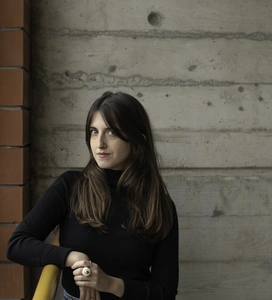
Ana Gallego
Currently working in the international architecture studio Miralles T agliabue EMBT in Barcelona since 2020. She is the lead coordinator of the Urban LAB of Mental Health which participates in the public policies of the EU, making an investigation that joins mental health, urban design and technology policies in the EU. She has taken part in MODELFest with ‘Aigua Sana’ (2022) and at BCN Architecture Week with ‘Square it' (2021), both exhibitions related to the improvement of the urban space.
Public space has been designed according to regulatory issues or urban planning parameters. However, there has been a paradigm shift and the quality and quality of public space has regained interest, since the well-being of citizens depends on it. Large cities need more and more space, the population is growing and there is less and less space.
This makes it inconceivable that there are wasted and empty spaces in the city. These well-designed spaces can contribute to the wellbeing of the users, and would it be possible to raise design issues for these public spaces to improve the quality of life of citizens? That is why the objective of this study is to relate the good design of public spaces with physical and mental health applied to public spaces in Pristina, both their transportation ways and public areas. For this, from an architectural point of view, new sciences such as neuroarchitecture and salutogenesis will be used to find new elements that can benefit the design of public spaces in Pristina.
The most important value of public space in the city to ensure plural use must be diversity, both of users and of the very function of the place. This multifunctionality is the fundamental value for an adequate response not only for the citizen but also for the city and its cohesion with it. These spaces influence the economy, the integration of citizens, their physical and mental well-being, etc.
Public space, being one of the most important elements of the urban fabric, is one of the most complex, which is why it can be subdivided into simpler ones: by types, components, elements and subsystems, and at the same time these can be subdivided into more specific groups. The space of the city can be differentiated into four categories, which are subdivided into concepts that feed each other.
"The understanding of urban space, disregarding aesthetic criteria, requires the consideration, as such urban space, of all types of intermediate space between buildings, whether in urban or rural areas." (KRIER, 1975:17).
The architect León Krier, determines the urban space as all the territory found up to the limits of its constructions. However, he also leaves aside the conception that the building is one of the components of the urban form, and that, although from the walls inward, it is a private space, from the walls outward it is part of the urban space and has repercussions in the landscape of the city by the simple fact of being implanted, occupying and modifying a previously free space. In other words, all urban space is equal to the space in between.
The urban space assumes and congregates much more than the intermediate space, which exists between the free (built and natural) and the built, but in reality, the urban space accepts the elements of the private space and the public space. Krier segments urban space (in-between space) into two elements: the street and the square. 'The square is the first human creation in urban space. It results from the grouping of houses around a free space (KRIER, 1975:18). In addition, the container and the urban structure, which encompass all the elements of private and public space, should be taken into account as elements of urban space. "To speak of public space and private space implies speaking of dynamic spaces corresponding to space of an anthropological or existential character: the public is that of social praxis, the private is that of intimacy. The former is of greater interest for urban planning, the latter for architecture. Although there are intermediate things that enrich the subject of space." (ACUÑA, 2005:44).
PUBLIC SPACE: PLANNED OR INVOLUNTARY
Today, the concept of public space has many meanings. On the one hand, there are those who point to 'the public' as that which is of common interest, as opposed to the private, which would include individual interest and use (HABERMAS, 1994)*. Another of its meanings could be the conception of a place susceptible of being materially and normatively delimited (GOODSELL, 2003)*. Therefore, although the first concept is related to interest and a possible common use, the second requires the existence of a material surface. In urban planning, the State plays a key role in the configuration of a
public space. Quoting Pedro Güell (2005): "The State has produced in this central or axial way that which is so scarce in the rest of the continent and obsessively adored by Chileans: order. If the benefit has been high, so has been the price: lack of autonomy of society and lack of cultural thickness in daily life. Beyond the calculation of whether this has been good or bad, what is certain is that this way of organizing the public is disappearing. The state-centric public and its model of integration has begun to dissolve" (GÜELL, 2005:s/n)* The transformation of public space is a reality that directly affects the objective and subjective experience of society. For some time now, public
space has acquired great importance and has become an important issue in various fields such as sociology, economics and urban planning. Urban planners and architects agree that the recovery of public spaces should be the main strategic priority of urban development in the next decade. This generates a conflict with architectures that prioritize private interests over those of the community. If public space could generate benefits for investors and future owners, the attitude towards the development of public spaces could be changed.
PUBLIC SPACES AND HEALTH
Physical health problems due to a bad urban design
With regard to physical health, obesity and, as a consequence, diabetes and heart problems have become more prominent in recent decades. In England, obesity costs more to public health in England than the effects of smoking, and if this trend continues, it will be the leading cause of death in the next 10 to 15 years (PRETTY et al., 2003)*. In the USA in 1999, 27% of adults were obese, almost twice as many as in 1980 (CDC, 2001). In 2018, according to the United Health Foundation, the US has reached its highest obesity rate ever: 30% of adults are obese.
The latest report on obesity by the Organisation for Economic Co-operation and Development (OECD), updated in 2017, gives Spain a percentage of 16.7% of the adult population that is obese, almost three points below the OECD average, estimated at 19.5%, and it is predicted that by 2030, 80% of men and 55% of women will be obese or overweight. The growth in the number of obese people is progressive and sustained, with approximately 3 million new cases per decade, and the increase in the global obesity rate has repercussions in other aspects:
- Emergence of cardiovascular diseases, (mainly heart disease and stroke) which were the leading cause of death in 2012.
- Diabetes.
- Disorders of the musculoskeletal system, especially osteoatritis, a very disabling degenerative joint disease.
- Cancers developed as a consequence of obesity: endometrial, breast, ovarian, prostate, liver, gall bladder, kidney and colon.
- Liver and gallbladder disease.
- Sleep apnoea and respiratory problems.
- Physical inactivity: Public spaces designed without adequate facilities for physical activity, such as parks or pavements, can deter people from exercise and physical activity. This can increase the risk of chronic diseases such as obesity, diabetes and heart disease.
- Accidents and injuries: Poorly designed public spaces can also increase the risk of accidents and injuries. For example, poorly lit or poorly maintained pavements can increase the risk of falls, and inadequate traffic lights or pedestrian crossings can increase the risk of accidents for pedestrians and cyclists.
- Air pollution: Public spaces designed without consideration of air quality can contribute to air pollution, which can have a range of negative health effects, including respiratory problems, cardiovascular disease and cancer.
- Noise pollution: Public spaces designed without consideration of noise pollution can contribute to hearing loss, stress and sleep disorders.
Mental health
Urban design can have a significant impact on mental health, and there are several mental health problems that can be related to urban design. Here are a few examples: Social isolation and loneliness: Urban design that does not promote social interaction, such as high-rise buildings with no shared spaces or lack of public parks and gathering places, can contribute to social isolation and loneliness, which can negatively impact mental health.
Stress and anxiety: Urban design that is noisy, chaotic, or lacks green spaces can contribute to stress and anxiety. For example, heavy traffic and air pollution can cause chronic stress, while lack of green spaces can limit opportunities for stress reduction and relaxation.
Depression: Urban design that is monotonous or lacking in aesthetic appeal can contribute to depression. For example, a lack of natural light, greenery, or public art can contribute to a sense of boredom or hopelessness.
Cognitive overload: Urban design that is overwhelming or difficult to navigate can
contribute to cognitive overload, which can lead to anxiety and confusion. For example,
complex road systems or confusing signage can contribute to cognitive overload and14
decision fatigue.
Moreover, the psychological problems associated with obesity and a sedentary lifestyle
include:
Low self-esteem: People who are overweight tend to develop a feeling of inferiority and
rejection in front of others, as society relates being overweight with poor diet, which has
repercussions on that person who develops a feeling of guilt. Children tend to be more
vulnerable to their environment, which is why they also tend to develop insecurity,
emotional discomfort and anguish.
Isolation and social exclusion: Those who suffer from obesity and overweight are
more exposed to social stigmatization and bullying, so they are more closed when it
comes to relating to others (CASAS, 2018).
Depression: Rejection and discrimination by society can, in the long run, be elements
that develop depression in the individual.
Anxiety: Patients themselves often eat to appease the anxiety they have, and a circle is
created that never stops growing. In addition, this anxiety, which can become chronic,
produces situations of frustration and mood disorders (NEVADO, 2014).
Addressing these issues through neuroarchitecture and urban design can be an
important step in promoting mental health and well-being in urban areas.
NEUROARCHITECTURE
The human being is defined as a biological, social and psychological being. Architecture
has extensively studied the biological and social being, however, the psychological
being is only now beginning to be studied. The mind-architecture relationship begins to
acquire an important role when the plasticity of the brain is discovered in relation to the
places in which it develops. "...Research, such as that led by neurobiologist Fred Gage,
has shown that new neurons are born throughout our existence, especially in the
hippocampus, the region of the brain dedicated to processing new information and
storing memories and recollections. In 2003, Gage presented this discovery at an
architects' convention at the American Institute of Architecture. And he announced an
idea: changes in the environment change the brain, and thus. They change our15
behavior". (SÁEZ,C. 2014)*.
People spend more than 87% of the time of their existence in buildings, hence the need
to understand the relationship between the context and the person. The relationship
between architecture and human beings is extremely close; people live in or around
buildings. "According to the UN, by 2050, two out of three people in the world will live in
a metropolis. And that, it seems, takes a heavy toll on our brains. Several studies show
that memory, concentration and attention span are negatively affected in the media. And
that urbanites suffer higher levels of anxiety, depression, chronic stress and risk of
apparently serious mental disorders than those who live in the countryside." (SÁEZ,
2014:2). Architecture and neuroscience have a common aspect: their studies are based
on the person. Both converge in a new discipline: Neuroarchitecture. Neuroarchitecture
arises from the discovery that the brain's plasticity and cognitive processes are
influenced by the context in which they develop, and seeks to find the necessary
guidelines for the individual to develop in the optimal conditions depending on the action
or place. Neuroarchitecture scientifically supports how the brain responds to different
external stimuli.
Neuroarchitecture originated with the scientist Jonas Salk in the early 1950s, when he
was trying to find a vaccine against poliomyelitis, a disease that caused around 50,000
people to become ill in the United States. His workplace was a bleak, small space and
he felt that his research was progressing very slowly and that despite all
his attempts, he kept failing. It was on one of his trips, while walking in an open space,
that he had an intuition that led him to develop a successful vaccine. Following this
event, Salk began to investigate the influence of spatial design on performance in his
studies. T ogether with Louis Kahn, he designed the Salk Institute, which is considered to
be the first building designed according to the requirements of neuroarchitecture. As a
result of Salk's studies, the first Academy of Neuroscience for
Architecture (ANFA) was founded in San Diego in 2003, where scientists and architects
investigate how the environment modifies the brain in order to create new guidelines for
building models.
Neuroarchitecture refers to the study of how the built environment affects our brain and
nervous system, and how the design of buildings, spaces, and cities can be optimized to16
promote well-being, creativity, and productivity. It is an interdisciplinary field that
combines neuroscience, architecture, psychology, and urban planning, among other
disciplines.
It takes into account how the brain processes information from our environment and how
it responds to sensory stimuli, such as light, color, texture, sound, and spatial
organization. It also considers how the built environment can affect our mood, emotions,
and cognitive performance, as well as our physical health and safety.
This discipline of architecture considers a variety of elements in the design of the built
environment that can impact our neurological and psychological well-being. Some of the
key elements of neuroarchitecture include:
Lighting: The quality and intensity of light in a space can impact our circadian rhythms
and influence our mood, energy levels, and cognitive performance. Neuroarchitecture
considers the use of natural light, artificial lighting, and the color temperature of light
sources.
Color: Colors can have a powerful effect on our emotions, behavior, and perception of
space. Neuroarchitecture takes into account the psychological effects of color, and how
different colors can be used to evoke specific moods or create visual interest.
Acoustics: Sound has a significant impact on our perception of space and our cognitive
performance. Neuroarchitecture considers the use of sound-absorbing materials,
soundscapes, and other design elements that can promote acoustic comfort and reduce
stress.
Spatial organization: The layout and flow of a space can affect our cognitive
performance, social behavior, and emotional well-being. Neuroarchitecture considers
the use of open spaces, enclosed spaces, and the arrangement of furniture and other
elements to optimize the functionality and comfort of a space.
Texture: The textures and materials used in a space can impact our sensory experience
and emotional response. Neuroarchitecture considers the use of natural materials,
tactile surfaces, and other design elements that can create a sense of comfort and
connection with the environment.17
Biophilic design: The inclusion of natural elements such as plants, water features, and
natural light can have a positive impact on our well-being and cognitive
performance. Neuroarchitecture considers the use of biophilic design to enhance our
connection with the natural environment.