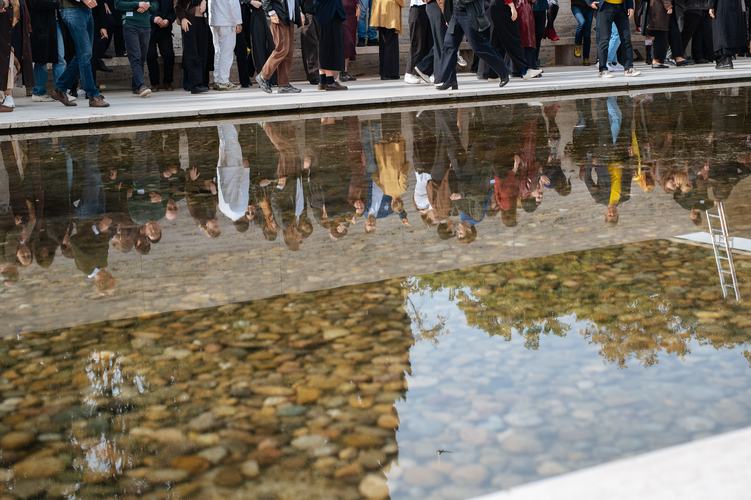
LINA Community in Barcelona
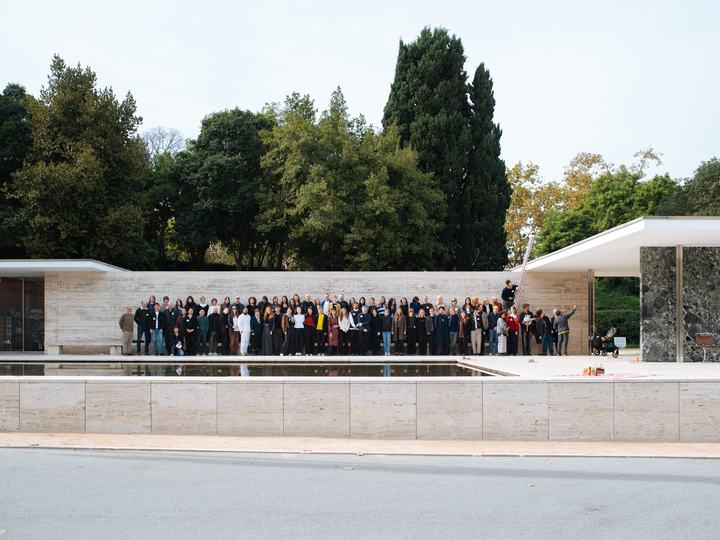
LINA welcomed 22 new Spotlight LINA Fellows and its network of LINA Members to Barcelona! Co-produced with Fundació Mies van der Rohe and dpr-barcelona and supported by the Creative Europe programme of the European Commission, the internal event of the platform took us around the city and helped us meet each other within the topics we care about.
On 22 and 23 October 2026, LINA organised its annual forum in Barcelona. The 2026 Spotlight LINA Fellows and the platform’s member organisations were welcomed at the event by Anna Ramos (director of the Fundació Mies van der Rohe), Matevž Čelik (head of the LINA platform), Maria Buhigas (chief architect of Barcelona City Council) and Ivan Blasi (director of the EUmies Awards). Océane Ragoucy opened the event with The State of Architecture address.
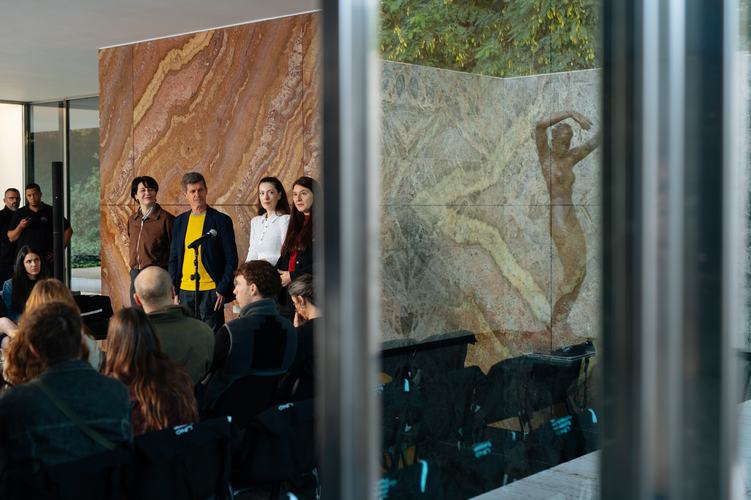
Taking place in Barcelona, this year's UNESCO–UIA World Capital of Architecture, the forum was organised by the Faculty of Architecture at the University of Ljubljana in collaboration with the Fundació Mies van der Rohe and dpr-barcelona. This event marks the first meeting of the newly selected LINA Fellows and Members, and the beginning of collaboration within the framework of the upcoming European LINA programme. This year's Fellows were selected from 464 applications submitted by individuals from 39 countries.
Welcome at the Barcelona Pavilion
The Forum began at the Barcelona Pavilion with an opening address by Anna Ramos. Matevž Čelik, head of the LINA platform, then welcomed the participants on behalf of the Faculty of Architecture at the University of Ljubljana, which coordinates the platform. He explained the importance of LINA for learning, interacting, and networking in architecture.
'We must learn from one another because the issues we face are evolving faster than our education system can keep up with. Climate breakdown, wars and conflicts, housing problems, and polarised societies are interconnected issues, and at LINA, we are learning through practical experience how they are connected. Architecture alone can no longer provide the answers, so we must collaborate. Almost none of the new LINA Fellows describe their work as exclusively architectural; instead, they collaborate with ecologists, filmmakers, communities and public servants. We must network because Europe is not a single, unified space. Fellows and Members hail from all corners of the continent, with many coming from cities that have fewer architectural institutions. Maintaining these connections enables us to learn from one another and collaborate in creating better living spaces across Europe.”
The State of Architecture
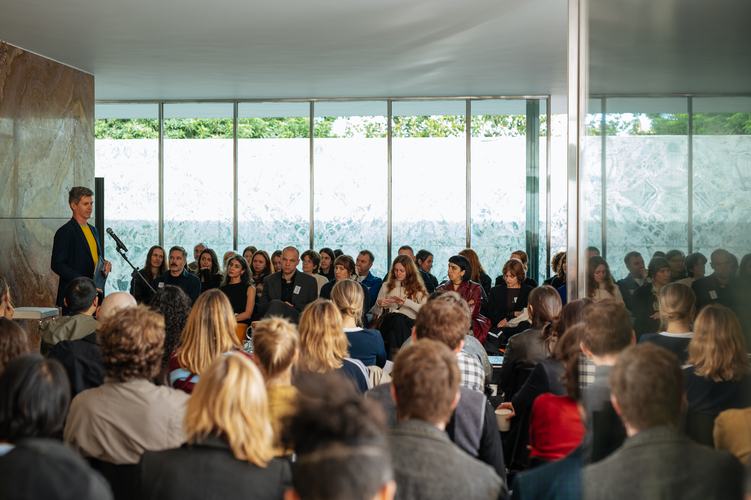
LINA’s annual meetings traditionally begin with a State of Architecture address, delivered by renowned architectural thinkers through the lens of the proposals submitted by LINA Fellows. This year, the platform invited Océane Ragoucy, architect, curator and assistant editor at AOC magazine in Paris, as well as a LINA Alumna, to contribute to this analysis and statement.
She began her talk by referring to the current protests in Paris, where young people are demanding better educational spaces after years of neglect. She then asked whether the diverse practices of the new fellows were merely a response to precarious working conditions. Yet her answer was clear: they reflect a deeper transformation of the profession and the categories we use to describe it.
She argued that architectural work is still mistakenly regarded primarily in terms of buildings, whereas research, writing, teaching, curating and community work are treated as secondary. At a time of complex spatial, social and ecological challenges, when construction itself has become part of the problem, architecture, when reduced to mere construction, simply cannot respond to these challenges. It is precisely these other architectural skills that are taking on ever greater significance.
The full text and a recording of the lecture will be published on the LINA website later this year.
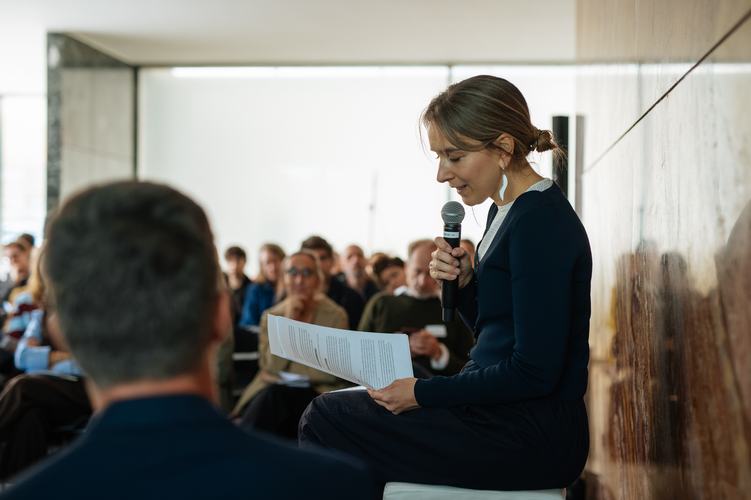
Spotlight Conversations at The Casa de l’Arquitectura
The Forum continued at Casa de l’Arquitectura, a preserved modernist building that once housed the GG publishing house. In the year that Barcelona was named the World Capital of Architecture, the city purchased the building, which was designed by the architects Joaquim Gili and Francesc Basso, and dedicated it to the public architecture programmes.
There, Maria Buhigas, Chief Architect of Barcelona City Council, welcomed the participants and spoke about projects that are currently of great importance to Barcelona and other urban centres around the world. She addressed the young architects, talking about the many demanding, important and interesting tasks that architects face in public administration. She encouraged them not to hesitate should such challenges and opportunities arise in the future.
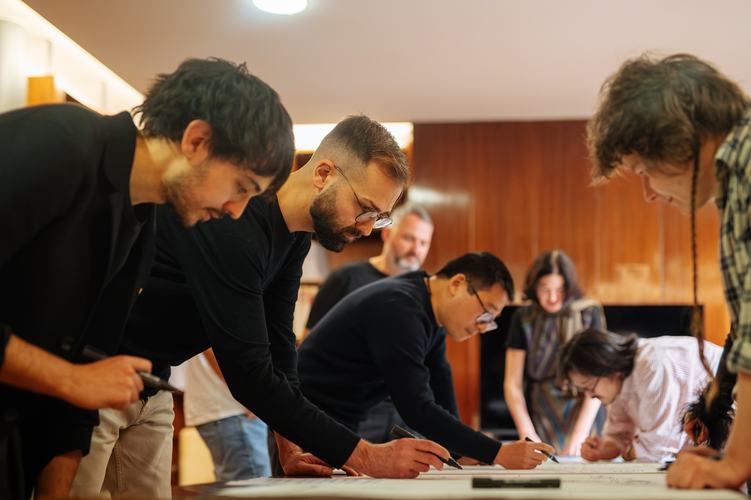
On Friday, discussions took centre stage at Casa de l’Arquitectura. The thematic Spotlight Conversations between Members and Fellows were designed to enable participants to get to know one another through their professional expertise and perspectives on the issues they wish to address within the 2026–27 LINA Architecture Programme. The Fellows rotated between eight round tables: Boundaries and (im)material territories; Memory and belonging; Care, resilience, regeneration; Sounds better with you; Materials and reuse; Elements of ecology; Invisible histories and regeneration; and Infrastructures of trust.
These discussions inspired all participants and opened up topics that will be developed into collaborations in the coming months. These collaborations will then form part of LINA’s public architecture programme across Europe.
The day concluded with a city walk through Barcelona’s independent bookshops, organised by LINA Member dpr-barcelona.
General Assembly
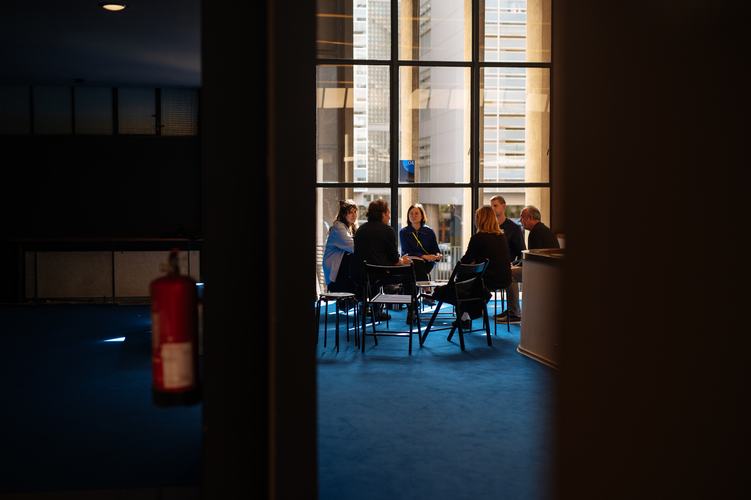
During the Forum, members of the LINA network met for the General Assembly, where they focused primarily on the structured continuation of discussions and the architectural programme. Two new members were elected to the Governing Board: Moritz Maria Karl of the Design Academy Eindhoven and Line Ramstad of the Oslo Architecture Triennale. The Assembly thanked the outgoing Governing Board members, Irhana Šehović of ARRA – ARhitektonska RAdiona and Josephine Michau of the Copenhagen Architecture Forum, for their work.