Bioregional Design Practice _ Earth & Fire Hybrid Materiality
This year's LINA activities are scheduled to take place between January and June 2025. We have selected four main LINA Fellows to participate in the Research Residencies: Kuidas Works, Adam Przywara, Sonder, and Rubble. Each fellow was chosen for their unique perspectives on sustainable practices, particularly in relation to Atelier LUMA's bioregional approach to architecture and design.
Each Fellow follows a similar work plan structured around three phases: investigate & research, connect & design, and implementation. These phases shape the focus of their visits and on-site work in Arles, France. All Fellow activities will be completed by the end of June 2025.
This year, we have introduced two additional components to the LINA programme. First, we have invited former LINA Fellow Jakob Travnik to act as co-editor for a publication summarizing the past three years of LINA x LUMA activities. Second, we are organizing a LINA conference on 27 June 2025, which will include a review of past activities, a preview of the publication's first draft, and presentations of work developed as part of our Year 3 programme.
Kuidas Works — Earth & Fibre Hybrid Materiality
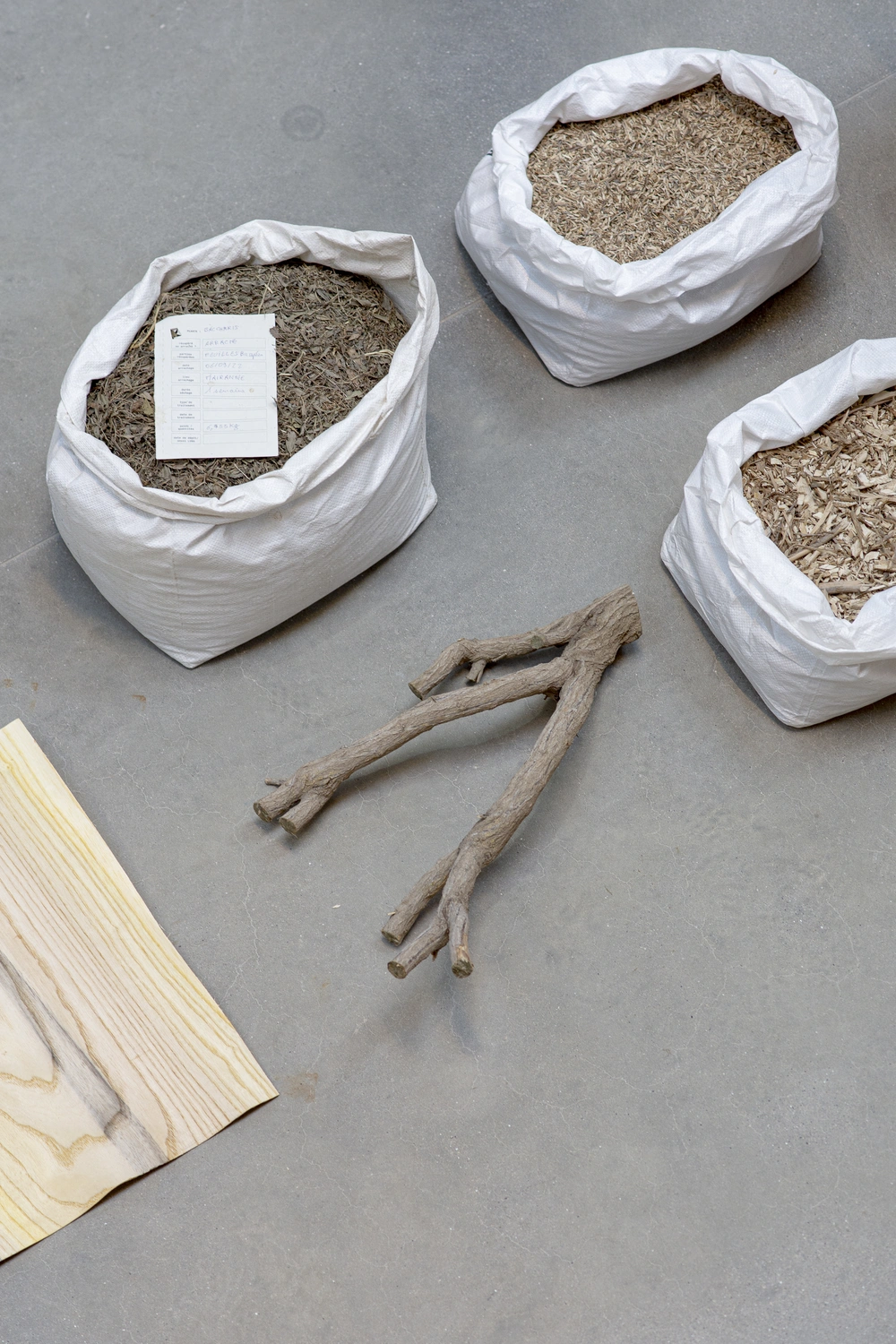
This Research Residency explores hybrid materials made from earth and reed, focusing on the bioregions of Arles and Tallinn. Two key questions guide the inquiry: How can reed and earth be optimally combined for sustainable construction, and how do extraction and production processes differ between these climate zones?
Using Atelier LUMA's mapping system, the residency will investigate traditional and contemporary uses of reed and earth in both regions. It will assess seasonal availability, material extraction timelines, and identify suitable applications (e.g., insulation, acoustic panels, infill). Initial material recipes will be developed and documented.
Material samples will be tested for different combinations and construction forms (e.g., blocks, tiles). Comparative experiments will be conducted in both France and Estonia. The phase concludes with a defined construction joint and application proposal, and an on-site visit to Arles.
The final stage involves prototyping, lifecycle analysis, and visualization. Outputs include technical drawings, material diagrams, and a narrative highlighting the traditional and innovative potential of reed-earth hybrids in sustainable, bioregional architecture.