Kosovo Architecture Festival _ Pristina Habitat Corridors
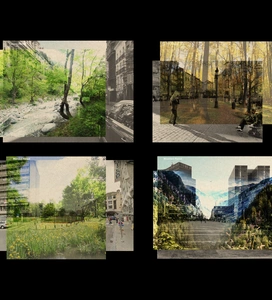
This year the Foundation decided to invite 3 creative fellows (collectives) with a diverse background. Jean-François Gauthier is a landscape architect and founder of SYLVA Landscape Architecture & Urban Forestry. In this year's KAF edition, Jean-François Gauthier leads the Pristina Habitat Corridors Workshop—a hands-on, multidisciplinary exploration of how urban streets can become ecological green corridors. Through mapping, walking, sketching, and planting, participants will experiment with design approaches that center trees, biodiversity, and community well-being.
The second fellow selected by KAF is Dea Buza, an architect and urban designer from Kosovo and co-founder of Apparat Collective, is leading a workshop titled "Play, Connect, Resilience: Redefining Public Spaces in Prishtina". Drawing from her experience in landscape urbanism and community-focused design, the workshop aims to transform neglected urban areas into multifunctional, ecologically resilient, and playful public spaces.
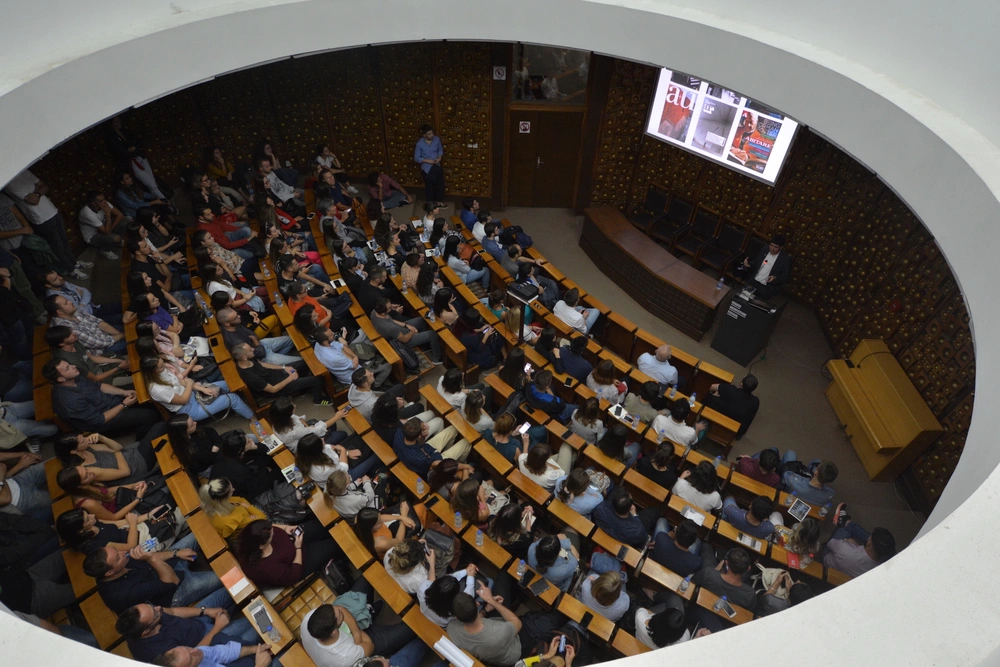
The third collective of LINA fellows are the Ukrainian architect and researcher Iryna Miroshnykova and curator Maria Noschenko leading the Hide and Seek three day workshop exploring fortifications as spatial, political, and emotional constructs. Through discussions, a magazine launch, and a city walk in Prishtina, participants will examine how defensive architecture shapes urban narratives and collective memory.
Pristina Habitat Corridors Activities: Mapping – Walking – Sketching – Planting
How to develop new urban typologies in which trees play a central role, combining design, place making, participation and the implementation of good growing conditions for trees that will grow old and benefit all? The LINA framework is an opportunity to test further the Trees First methodology and craftsmanship in the context of Pristina. In the form of a workshop, tree planting actions and design research: a learn-by-doing approach to imagine the future of urban nature. Key themes such as: habitat (living urban space and ecological environment), co-creation, monitoring and maintenance can be starting points for debates and for developing knowledge and new bridges between the different design disciplines shaping the future of our city. Bringing the forest back into our cities requires innovative design approaches that can come in many different shapes and sizes. The workshop in Pristina is a chance to bring together people from different disciplines and share a new attitude for a new kind of design language, in which trees are the protagonists for poetic and innovative public spaces.
The city as an ecological network
Inspiration: The book 'landscape ecology principles in landscape architecture and urban planning'. This book uses ecology principles to look at cities with a new eye. It compares natural conditions with urban conditions to arrive at design principles for greening the city. One interesting comparison involves ecological networks as follows: - Natural conditions: On a broader scale, ecological networks are organised by sources / natural reserve (a forest), corridors (a river) and stepping stones (small patches of nature). - Urban conditions: In urban conditions, nature is fragmented and highly disturbed by human activities. Starting point for the workshop: If we look at the city as a potential ecological network, parks can be seen as ecological reserves, streets as corridors and squares as stepping stones. Can we reinvent these basic urban typologies with this ecological approach? In this workshop, we will focus on street typologies as important green corridors for Pristina.
From big to small scale – workshop days by days
Day 1 – Scale XL: Mapping existing green networks in the city and potential or hidden corridors. Day 2 – Scale L: Walking along one potential ecological corridor and understanding where the corridor is broken (for instance by infrastructure). Is there key streets, squares or parcs where a small greening action could help restoring a green corridor / life line in the city? Day 3 – Scale M: Sketching key areas within the potential green corridor and propose a greening intervention. Day 4 – Scale S: On a small scale: a planting day as a symbolic action to restore the green corridor and imagining its potential for the development of the city. Day 5 – Reflection and scaling up: What is the potential of this methodology at the city scale?
A tree on your doorstep, a forest in your mind
For this workshop, two possible locations will be studied: George Bush Boulevard and Luan Haradinaj Street.
Together with the participants, an ideal street profile will be drawn up, including linear forests and green corridors. We will stress how vital daily access to nature is to our health. Indeed, local greenery is becoming increasingly important and we need to bring the forest to people. Even five trees can provide a crucial environment for children's development.
We will work on imagining new accessible green spaces for people, animals and plants in Pristina: a network of continuous walking routes connecting the city and the natural areas on the outskirts of Pristina.
The workshop will provide answers to the question: How can people use streets as linear parks and how can we rethink this urban typology as habitat corridors for fauna and flora?
Possible project area A: George Bush Boulevard Possible project area B: Luan Haradinaj Street Reference projects: tree planting actions, street profile reforestation and urban tree nurseries