Slowing Down to Infrastructures by Radio Otherwise

I. Slowness as Method: Introducing the Collaboration
Our activity, titled Slowing Down to Infrastructures, is a collaboration with LINA fellow Radio Otherwise as part of Copenhagen Architecture Biennale 2025. This ongoing web-based radio project explores infrastructural soundscapes and invites deep, attuned listening as a method of engaging with hidden systems that sustain urban life. The activity is designed to align with LINA's objectives by prioritizing ecological awareness, supporting emerging talent, and mobilizing spatial experimentation as a method of inquiry.
The collaboration exemplifies LINA's mission to activate spatial practice through regenerative approaches and principles of de-growth. By using radio as a medium to foreground overlooked systems — such as air flow, electromagnetic activity, and waste removal — the project addresses the sensory and cultural dimensions of infrastructure, promoting a shift from dominant, extractive narratives to slower, reflective, and reparative modes of architectural engagement.
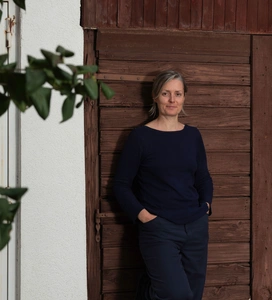
The LINA fellows we collaborate with are the members of Radio Otherwise: Kate Donovan, Monai de Paula Antunes, and Niko de Paula Lefort. Their practice lies at the intersection of ecological thinking, media art, and feminist/decolonial theory. Their contribution is crucial in shaping the direction and sensibility of the project.
II. Radio is Ritual: Unfolding the Practice
The core of our activity is a generative, durational web radio stream, launched in May 2025 and continuing until October 18, 2025, the closing date of the Biennale. The radio is broadcast live from Halmtorvet 27, the home of CAFx, and is slowly unfolding over months through a carefully layered soundscape.
Each transmission interweaves environmental sounds — air flow, ground vibrations, humming servers, water movements, outdoor activity — with conversations around the theme of slowness. The conversations, featuring invited guests from LINA, local experts, and other participants, often unfold at an unhurried pace, reflecting the temporal philosophy of the project. Sometimes they are aired in full; other times they are fragmented and embedded into broader compositional streams.
As the Biennale opens in September, the radio will also transmit live from public program events, making parts of the Biennale accessible to remote audiences. This extends the experience of the Biennale beyond its physical boundaries and duration, contributing to the creation of a slower, more resonant architecture of communication.
III. Awareness is Amplification: Listening to the Infrastructural
The project responds to three interrelated and site-specific challenges in the urban context of Copenhagen.
First, it addresses the general invisibility of infrastructures in the public consciousness — systems like air flow, drainage, and digital connectivity that sustain urban life yet remain invisible and unnoticed. Through deep listening and acoustic amplification, these essential systems are made perceptible.
Second, the project calls attention to the undervaluing of maintenance, repair, and other forms of non-spectacular spatial labor. In a culture that often prioritizes innovation and newness, the slower work of sustaining and caring for environments is frequently overlooked. Slowing Down to Infrastructures foregrounds these rhythms and routines, inviting reflection on their crucial role in ecological and social sustainability.
Finally, it challenges the dominance of fast-paced, anthropocentric media practices by fostering a slower, more inclusive form of engagement. Rather than reinforcing extractive or sensational narratives, the project cultivates an atmosphere of attentiveness to more-than-human entanglements and infrastructural ecologies. Through this shift, the project helps reposition listening as an architectural and civic tool.
IV. Extending the Network: Shared Growth Across Contexts
This collaboration offers Radio Otherwise a high-profile, publicly accessible platform to showcase their practice. This collaboration gives Radio Otherwise a context to further develop their ongoing research into sonic infrastructures and listening as a spatial practice. Through the slow build-up of the project over several months, they are testing methods of long-form broadcasting, distributed authorship, and situated sound-making. The format supports experimentation, process-based work, and informal knowledge exchange. Importantly, the collaboration has already sparked new projects between members of Radio Otherwise and local artists, including Bureau of Listening and Arendse Krabbe.
By making infrastructures audible, the project invites residents of Copenhagen to reframe their relationship to their built environment. It draws attention to the rhythms of repair and decay that define urban life, fostering conversations around care, sustainability, and resilience. It helps revalorize listening as an act of urban engagement — particularly relevant for planners, designers, and community organizers.
V. Listening as Architectural Literacy: Themes Explored
The project engages with a rich set of interrelated themes that cut across architecture, media, and ecology:
- Infrastructural literacy — making often-ignored systems sonically and experientially present, grounded in an understanding that infrastructures shape not only the urban environment, but also our daily rhythms and possibilities for action.
- Sound and urbanism — proposing listening as a method for spatial analysis and community engagement. Through the medium of web radio, it rethinks urban space as an acoustic environment shaped by both human and non-human activity.
- Feminist and decolonial media practices — key conceptual anchors of the project. By questioning dominant narratives, amplifying marginal perspectives, and resisting extractive listening modes, the work aligns with more equitable and situated modes of knowledge production.
- Climate consciousness and sensory ecology — explored through attentive listening to environmental systems, emphasizing slowness, care, and sensory recalibration as responses to ecological urgency.
- Rhythms of maintenance and repair — acknowledging these processes not as peripheral but as central to sustainable urban life and architectural thought.
VI. Radio is Infrastructure: Lasting Effects and Future Paths
The project is generating a growing archive of live radio content that evolves over time, offering a dynamic and accessible resource for future exploration. This archive is not only a repository of sound but also a conceptual map of the unfolding engagement with slowness and infrastructure.
Cross-sectoral collaboration has been central, bringing together LINA fellows, local artists, and experts across fields. These engagements have deepened the reach and impact of the work while fostering lasting relationships.
Additionally, the project has begun to establish a conceptual and technical framework for future sound-based urban interventions, pointing toward scalable and transferable models for practice rooted in listening, care, and co-creation.
VII. Conclusion: From Fast Futures to Lasting Infrastructures
This activity directly contributes to making architectural practice more sustainable by shifting focus from construction to care, from production to listening, and from visibility to relationality. By re-tuning our attention to the ambient and the overlooked, we begin to cultivate practices of repair and resilience. It reinforces the values of regenerative design, de-growth, and socio-ecological interdependence that are central to LINA's strategic framework.