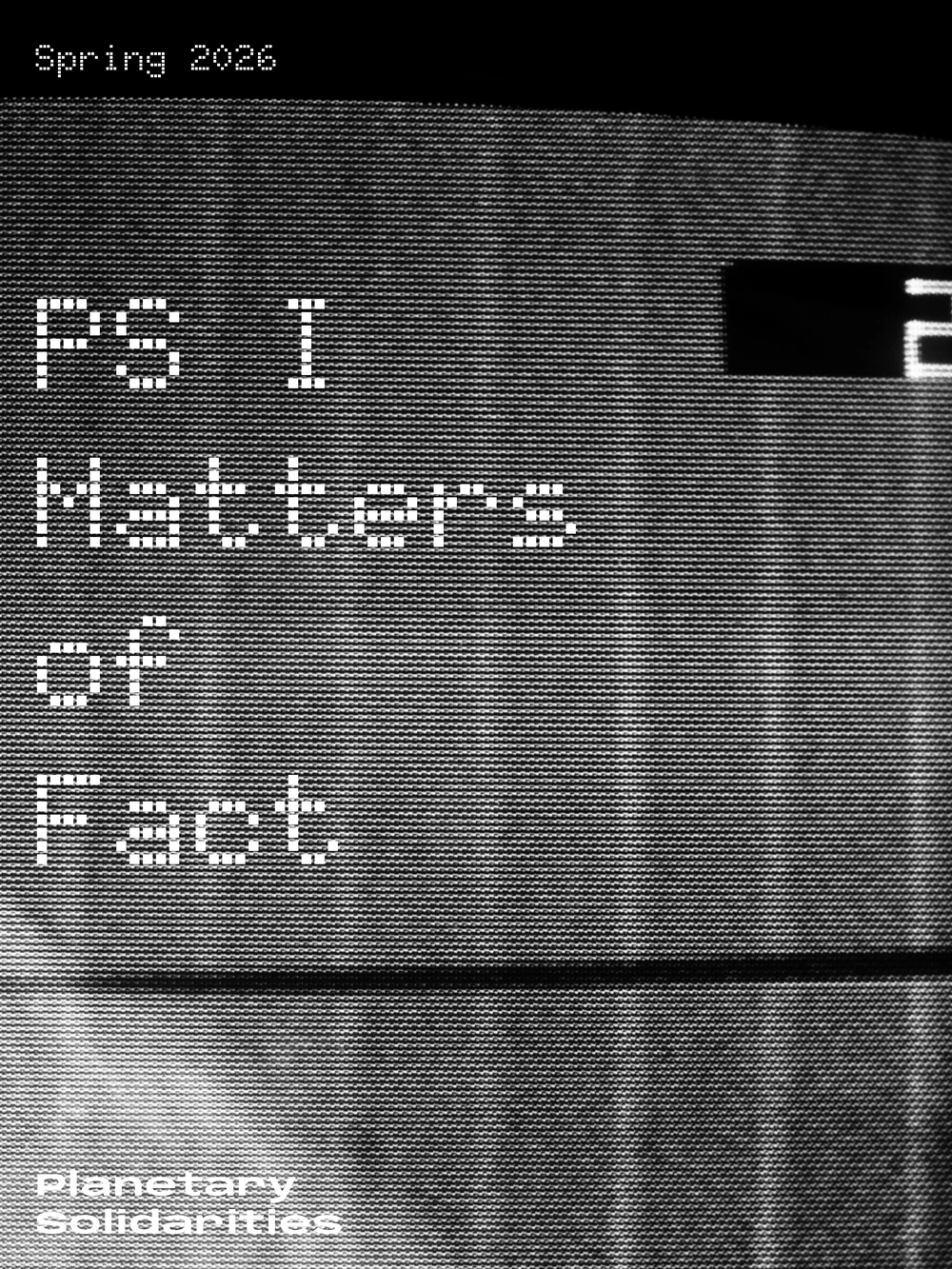
Planetary Solidarities 1: Matters of Fact
Planetary Solidarities is a transnational workshop and research programme developed by DAI-SAI (Society of Architects of Istria) within the framework of the LINA European Architecture Platform. Bringing together emerging practitioners working across architecture, artistic research, film, and experimental curatorial practices, the programme explores how forms of care, knowledge production, and solidarity can be rethought under contemporary planetary conditions.
The programme builds upon questions first explored through Planet Krvavica, a long-term artistic, architectural, and community-based research project centred on the abandoned Children's Health Resort in Krvavica, Croatia. Developed through years of research, public programmes, residencies, exhibitions, and collaborative fieldwork, the project culminated in the publication Planet Krvavica: Researching Local Futures through Practices of Imperfect Care (DAI-SAI, dpr-barcelona, 2026). Many of the concerns that shape Planetary Solidarities—situated knowledge, collective authorship, imperfect forms of care, and the relationship between local realities and wider planetary conditions—have their origins in this earlier work.
Structured through online workshops, collective reading sessions, asynchronous exchanges, invited contributions, and collaborative archival practices, Planetary Solidarities approaches architecture not as a fixed discipline but as an expanded field of situated relations. The first cycle, Matters of Fact, explored questions of mapping, infrastructure, archives, environmental transformation, embodied knowledge, and territorial change. Participants investigated rivers, coastlines, abandoned institutions, hydroelectric infrastructures, conflict zones, and contested landscapes, examining how facts are produced, mediated, and emotionally experienced.
A key outcome of the entire programme is the development of the Living Archive—an evolving digital platform that gathers references, visual materials, responses, recordings, and unfinished reflections. Conceived not as a repository but as a medium of thinking in motion, the archive documents how knowledge is produced collaboratively and under conditions of uncertainty.
Rather than a singular event, Planetary Solidarities is a long-term process that connects artistic research, spatial practice, environmental thinking, and grassroots knowledge, proposing solidarity as something continuously negotiated through collective attention, difference, responsibility, and care.
Collaboration with LINA Fellows
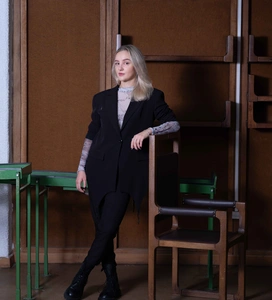
• Tiphaine Bedel (France) participated in Planetary Solidarities I — in the online workshop series, collaborative research process, and initial development of the Living Archive — through a research project exploring water as an ecological, territorial, and imaginative medium, contributing reflections on inhabiting water, environmental transformation, and situated design practices across multiple scales.
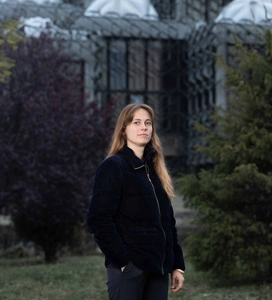
• Samanta Kajėnaitė (Lithuania) participated in Planetary Solidarities I — in the online workshop series, collaborative research process, and initial development of the Living Archive — with an artistic and spatial research practice focused on abandoned and neglected spaces, examining care, decay, material agency, and embodied engagement as alternative approaches to architectural intervention.
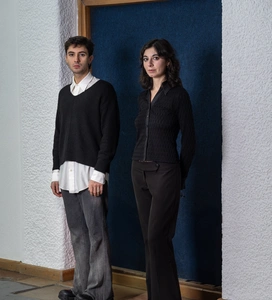
• Galena Sardamova (Bulgaria) and Paris Bezanis (Greece) participated in Planetary Solidarities I — in the online workshop series, collaborative research process, and initial development of the Living Archive — through a collaborative investigation of the Black Sea coast as a landscape of healing infrastructures, memory, ruination, and environmental transformation, exploring the intersections of body politics, archives, and territorial change.
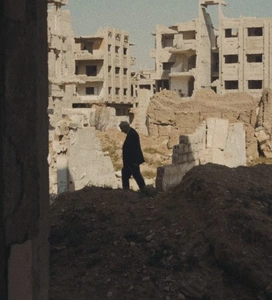
• Svitlana Usychenko (Ukraine/France) participated in Planetary Solidarities I — in the online workshop series, collaborative research process, and initial development of the Living Archive — with a research project examining the production, mediation, and perception of facts in contexts of war and displacement, focusing on maps, bodies, archives, and embodied forms of knowledge as epistemic devices.
• Walaa Haj Ali (Al-‘ar·d Team, Syria/Germany) contributed to Planetary Solidarities I — in the online workshop series — as an Included Voice through the presentation “Violated Waters: A Spatial Biography of Barada,” introducing questions of river infrastructures, environmental justice, memory, conflict, and the political agency of water in Damascus.
Related fellows