Understanding City Growth _ Public Housing: Belgrade Mode
Many citizens of Belgrade have the impression that Belgrade is losing its identity and urban functionality. This is the result of accelerated city growth without a clear development strategy which cares about the city and its citizens.
We will try to find out how new generations of creative people coming from other contexts perceive the city of Belgrade and its future growth through a three-year programme that would focus on urban planning, architecture and ecology. Three editions of fortnight-long residency programmes per year will be organized in the first and the second years. BINA will invite creatives selected through the platform open call. Their task will be to respond to the topic through different forms and media of expression: design proposals, films, photographs or essays. Creatives will be paired with a local team/person that will be selected by an open call or invited by BINA. During their stay, BINA will organize presentations of creatives’ work in the most appropriate format and medium for each participant.
Collaboration with LINA fellows
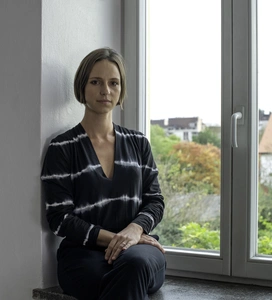
Rebeka Bratož Gornik (Slovenia)
Documentary film "Public Housing: Belgrade Mode"
Rebeka Bratož Gornik completed her residency during April and May 2023. Her arrival in Belgrade was preceded by thorough preparation, which she carried out in cooperation with members of the BINA team as well as on her own. From the very beginning of her preparations, the author was focused on the topic of public housing. In accordance with that, she was provided with the necessary material related to this topic, and contacts were established with experts who are relevant to this field: urban planners and architects, legal experts and political scientists. With the intention of getting as complete a picture of this topic as possible, contact was made with citizens/residents and representatives of the youngest generation, students of architecture as those who will plan and build future facilities. During her first stay, and on the basis of previous preparations, in addition to an exhaustive tour of the city, and above all the settlements with collective housing, Rebecca conducted and filmed a series of interviews. During her one-week stay, she managed to record an impressive amount of material, which upon her return she edited and created a 16 min documentary film. The film was translated and subtitled into English. During the first public screening on LINA DAY, May 13, the audience was shown a film with a very precise and critical attitude, based on research and work in the field, and conversations with well-chosen participants, who each shed light on this problem from their own perspective. The film clearly recognizes the state of inequality in the affordability of housing as one of the basic human needs and rights indicating the need to find a solution to this problem in order to ensure a fairer and more democratic development of the city. At the same time, the film draws attention to the existence of previous good and high-quality solutions, as well as to the search for new ways of financing and cooperative organization of citizens in order to solve the housing issue independently. The film was well received by the audience, especially the local audience, who welcomed the insightful way of presenting the situation which encouraged them to join the discussion. The comments were primarily related to innovative models of self-organization of tenants with the aim of providing housing space on their own, and models for improving the inclusion of citizens in decision-making processes, especially those related to the issue of housing for sensitive and marginalized groups.
While working on the film, Rebeka Bratož Gornik collaborated with local colleagues: Jelica Jovanović, architect, Collective of Architects; Zlata Vukasnović Macura, architect, Institute of Geography, SASA; Danilo Ćuričić, lawyer, A 11 – Initiative for Economic and Social Rights; Jovana Timotijević, architect and Marko Aksentijević, graduate of Political Science, Collective Ministry of Space, Ana Džokić, architect, European Cooperative Society, MOBA Housing; Ivana Tomić, student, Faculty of Architecture, Belgrade