LINA Library _ Custodians: Cosmic Undergrounds
The LINA Library is a transnational virtual space dedicated to publishing and divulgation of architecture and its intersection with politics, technology, economy, and social issues. It gathers together the editorial production of LINA members paired with a community of international independent publishers in order to create connections and intellectual exchange with the readings that have been fundamental for a couple of fellows selected as custodians and curators.
We deeply believe in open access and eschew the notion of appropriation of knowledge by a few ones, making profit based on the intellectual efforts of a whole community. That’s why we also believe in the power of the network to re-invent the ways we all can share, and discuss the knowledge in books, and analogous form of building common knowledge in cities.
The custodians, understood as the ones who care and share knowledge, is an initiative that started as a support to SciHub and Library Genesis, two activist libraries supporting open access publications confronting fire-walled academic publishers. For the LINA Library 2024 we selected two fellows to curate a series of books reflecting on Books as spaces for critcal practices in cities, and establish dialogues with the editorial production of LINA members and fellows, and the topics they address.
The curators of the book fair were selected from the LINA Open Call and had the mission to choose and classify a collection of books that promote and disseminate works and ideas in the field of architecture and beyond that responds to the yearly LINA main theme: Custodians: Books as critical spaces in cities.
LINA Fellows as curators. Selection process
The curators of the LINA Library were selected among 19 applicants that responded to LINA Open Call specifically interested in the project. dpr-barcelona evaluated the entries and selected two winners. The applicants evaluated by dpr-barcelona are shown in the Table 2 below. For the selection there were considered the following aspects:
- Alignment of the proposal to LINA categories.
- Interest in books as critical tools for architecture thinking
- Potential to engage LINA platform members and publisher abroad.
The selected fellows were Catherine Bennett (Epilogue for Venice) and Margarida
Waco (Cosmic Undergrounds)
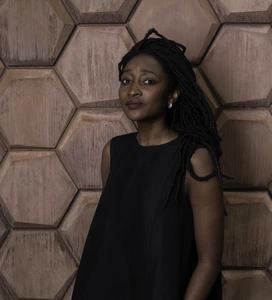
Curators’ statement – Margarida Waco
Now, I won't recount anecdotes. Instead, here, I will write of relations, and of what we share as relatives on our crossing on this Earth. Of the body of our origins, gently nurturing us as we move through and across. And of her ubiquitous gravity that firmly holds us, enmeshed. I'll whisper softly of language, of listening, and of tellings otherwise. I'll whisper of the grammars we might take upon us in our longing, aspirations, dreams, and desires to create a world that holds the diversity of all living forms at its heart, cast in reciprocal relationships between relatives far and near.
Like many, my story echoes one among many of separation and loss—loss of the land and soils that hold my language, heart and those who came before me. Yet it is also one of love, a story of return. In this mourning, I return in dreams. In this mourning, I return in my adulthood to the nest my feet once walked, as I have carried and carry it in memory. As I descend the airspace, fixing my feet on her back, it is as if she beckons me in her soothing embrace: «Child, remove your shoes, rest your feet upon my body», my tears land heavily on her red, silky skin, like an unstoppable tide. Even if our lands are rendered in plural, their primordial breath is singular. And how we act upon our shared body of origin, determines our becoming and livingness, as relatives. The trembling whispers of the Earth seem to speak of a multitude of stories: Of separation, and of dispossession. Of chaos and catastrophe, upon catastrophe. The fruits she bears, we harvest to quench our unquenchable thirst. Her body and repositories, we cast as absorptive emptiness depleted of matter to build our surrounds. The scars and imprints we leave behind as if we know no better, as if she taught us nothing at all, as if we know no borders. These markings seem to speak of a long durée that render visible the masked intentions inherent to modernity—marked by exploitation, commodification and subjugation. They seem to speak of its ripples in the wake, of ecological collapse, and of the ruins left by rampant capitalism. Yet, the possibilities of dreaming of our world anew might be held by grammars we adeptly take on us in our defiance of the confines by which the discipline of architecture is measured.
Dialectic Rehearsals and Other Tellings If the discipline historically has been conveyed by a set of choreographed lexical systems, what are the grammars that allow us to look beyond a singular way of knowing, sensing and seeing? While these systems fraught with our sufferings and cyclical destructions are seeded in its language, the tellings I offer as a site of knowledge, however non-exhaustive, might call upon us to explore myriad pathways for our relational existence, as relatives on our crossing on Earth. Perhaps in these tellings lie possibility-making and transformation that extends beyond the limitations and dominance of the singular story we have been told far too often. Perhaps, if we drew from the lessons of such tellings, these grammars and the broken stutters of the Earth might become legible to those of us who carefully listen.
In ways, the discipline offers a lens to demonstrate the various modes of governance that are operational in space—be they political, financial, social, or otherwise. In a dance between matter, form, and aesthetics, the materialities of our societies, often masked as monuments to various regimes of extractive capitalism, evidence an annexation of life flows. In listening to the material wisdom of the Earth, we are taught about the intricate tapestry of life on Earth conditioned by the extractive and expropriate infrastructures of the global capital that render visible the violence and subjugation that continues to order the world and peoples along a racial axis. In this telling, some bodies are left to languish, sacrificed, while others thrive, and therewith, race becomes a geological formation inasmuch a biological one by virtue of how we act upon this primordial body. The tellings herein might amount to opening a horizon through which we can position our discipline in productive dialogue with those who teach us about a continuum, ecology of existence, ruinous capitalism, and more. Amid these intricacies is an enthralling channeling of energy that calls on us to consider different systems of knowledge, old and new traditions and custodianship, rooted in an array of epistemologies to which I turn in a quest to expand the grammars governing our disciple. Each of these call upon us as constituents on Earth to act differently, through other set of politics of inhabiting, of repairing, of sharing and of existing in relation. And in their midst, within these flirtations and lexical episodes pulling us toward a different listening, ways of knowing, seeing, sensing, and existing, lie my offerings.
LINA Library Curatorial Books Selection. Margarida Waco
Denise Ferriera da Silva: Unpayable Dept
Now, let me begin here; For those of us haunted by a gaping concern with the material foundations of our societies, Unpayable Debt brings into focus a lexicon - and meditation - that complicates the singular way of knowing, seeing, and sensing that historically has shaped architectural discourse. While the materials used to build our surrounds rely on mining operations elsewhere, they lay bare the social relations under which such seemingly mundane commodities emerge. These relations are palpable in global practices and methods of governance that perpetuate systems of inequality and exploitation and extend a cosmology based on racial hierarchies, which, far too often result in displacement and dispossession of peoples, ecological collapse, economic marginalization, and death.
Central to philosopher Denise Ferreira da Silva's argument is the inseparable relation between our insatiable thirst for matter, minerals, and resources – extracted, harnessed, displaced - and raciality. This dialectics between extraction and raciality forms the crux of her meticulous analysis of the extractive and expropriate infrastructures that nourish global capital through juridical and economic architectures of colonial and racial violence. Here, I invoke Ferreira da Silva's concept of 'mapping onto Blackness' to constellate relations across oceans by stitching together histories of Blackness in a fluid cartography through multigenerational processes of racial violence. Invariably, I take her wisdom(s) as an invitation to illuminate how the materialities of our societies inherently reflect a racial regime of governance – marked by long histories of exploitation, subjugation, and the commodification of human and nonhuman bodies. These economic regimes and political systems are most often entrenched through the workings of global capital. In this present moment of planetary exhaustion, I gently extend this invitation to you to reflect on the histories etched onto our material fabrics - histories that often interweave narratives and make legible unsettling truths about the relationship between matter, race, and space.
Natalie Diaz: Postcolonial Love Poem
In deftly navigating the waters of history, memory, and identity, Natalie Diaz crafts a resounding and emotional collection of poetry that complicates the historical erasure of subaltern bodies and voices. Through a breathtaking and dazzling declaration of love, Diaz's lyrical stanzas and verses delve into the intimate realms of personal love and loss, while simultaneously mobilizing and reflecting a collective mourning that seems to resonate widely in a world fraught with political upheavals, tremblements, and cyclical destructions of Black, brown and Indigenous bodies. At the heart of her universe lies the interrogation of language - its untranslatability, scalability, and transformability - its ability to oppress, but also, liberate. Here, she invites and calls on us to reconsider the grammar we embrace in our dreams, desires, and aspirations to create the world anew – built on the ruins and imprints of colonialism, capitalism, genocide, militarization, and carceral logic.
Herein, we are taken on a literary voyage that opens up a space for explorations into the intricacies of belonging and the contested intimacies of identity, threading together the personal and universal. In my reading, I am drawn to the echoes of lessons from Frantz Fanon (The Wretched of the Earth), Édouard Glissant (Poetics of Relation), Grada Kilomba (Plantation Memories), and others, all of which seem to reverberate in Diaz's evocative portrayal of colonial afterlives, compounded by racial othering, loss, psychological repercussions, and systemic injustices. Yet, Diaz's offering manifests as an entrancing embodiment of thought that invokes the corporeality of the thinking subject through lived experiences. It serves as a continuous meandering of past, present, and future lifeworlds, driven by categorical refusals enacted through practices of resistance, desire, and love.
Léopold Lambert, ed.: Landback… From Settler Colonial Property to Landback
As we bear witness to the immeasurable ills and horrors of this world unfolding in Gaza, the totality of violence, seismic destruction, and multigenerational sufferings inflicted upon Palestinian bodies, I cannot escape the idea that, as Fanon sensed, authentic struggle, in its primacy, is a matter of reparation, beginning with the repairing of that which has been broken. And that our ongoing quest for decolonization takes up the key question of land. From Palestine to South Africa, from Cabinda to Turtle Island, from the Amazonas, and Abya Yala to Katanga, from British Columbia to Australia, whether we're grabbling with settler colonialism or the relentless plundering of precious minerals and resources, the struggle for land remains the primary object of our collective struggles for liberation.
This 40th thematic issue of The Funambulist brings to the fore land restitution in the struggle for decolonization. While struggles for land transcend geographical boundaries, representing a fundamental demand for justice, sovereignty, and the right to self-determination, it is also one that is marked by long and enduring histories of colonization and dispossession. This, inevitably, brings to mind Brenna Bhandar's seminal book Colonial Lives of Property, equally mobilized in this issue. Bhandar's work undertakes the crucial task of mapping the commonalities that thread together these struggles through the lens of abstract juridical systems, modern property laws, and racial superiority and hierarchies that render land a mere commodity. This colonial logic that continues to shape contemporary systems of property and ownership dismisses any notion of ancestral, co-constitutive, and kindred relations that fall outside of capitalist imaginaries and confines to legitimize the theft of land.
Amid these contested intricacies of belonging and loss, perhaps the collective love song we might take upon ourselves to write to our homelands might be held in these stanzas by Gaza-born poet, Moen Bseiso:
That I would see you again for the first time, homeland a sail lost at sea, found by the storm.'
Claire Lubell, Rafico Ruiz: Fugitive Archives - A Sourcebook for Centring Africa in Histories of Architecture
In myriad ways, Fugitive Archives embody and earnestly engage processes of 'unlearning'. As Bonaventure Soh Bejeng Ndikung sensed, unlearning is not forgetting, not deletion, or cancellation. Instead, unlearning is expressed through bolder and different writing, commenting and questioning, and giving new footnotes to old, dominant, and flawed narratives. Such processes may ultimately enable us to confront the universalism that purports the hegemony of knowledge production that underpins societies in the wake – to think with Christina Sharpe. And as a subtle blow to dominant discourses, Fugitive Archives call for much-needed extra-disciplinarity by way of intentional integration of new footnotes to methodologies entrenched in Western knowledge traditions and archival practices.
Borne out of the research initiative Centring Africa: Postcolonial Perspectives on Architecture (2019-2022), by the Canadian Centre for Architecture, this assemblage brings together an array of architectural scholars including Dooren Adengo, Dele Adeyemo, Warebi Gabriel Brisibe & Ramota Obagah-Stephen, Rachel Lee & Monika Motylinska, Ikem Stanley Okoye, Cole Roskam, Lukasz Stanek and Huda Tayob. In coming together, each of these scholars offers an epistemic shift that seeks to circumvent traditional modes of inquiry, pedagogy, and archival practice, inviting us to reconsider how (African) spatial histories are recorded and remembered. Fugitive Archives begs the question of what it means to conduct primary research in places marked by the enduring legacies of colonialism. In thoughtfully acknowledging the limitations, fragments, and silences inherent to archival practices, the three, richly illustrated chapters comprising this assemblage bring to the fore three distinct toolboxes, namely grey literature (first-person accounts and manifestos), ephemera (oral histories, memories, and personal documents), and cultural production (music, theatre, and films) that extend our inquiries beyond conventional ways of seeing and knowing. In doing so, they eloquently and effectively draw parallels to similar toolsets as those offered by Sónia Vaz Borges (Errant Archive) and Saidiya Hartman (Critical Fabulation) and invite us to navigate the complex nexus of memory, power, and representation in architectural discourse. Moreover, these toolsets make visible the transformative potentials that lie in counter-narratives, in rewriting overlooked histories, and above all, reclaiming and reshaping archival records in formerly colonized contexts.
Alexis Pauline Gumbs: Undrowned – Black feminist lessons from marine mammals
When I deliberately opted for Undrowned/Udruknet in its translated Danish version, this gesture appeared to be my own peculiar way of honoring its translator, Danish poet Mikas Lang. Lang's tireless efforts to channel Black radical feminist thought to Danish publics have carved out a much-needed space where the instrumental teachings of Angela Davis, Dionne Brand, Jesmyn Ward, Chimamanda Ngozi Adichie, and now, Alexis Pauline Gumbs, find fertile ground, and seem to only resonate and grow deeper amongst those of us, myself included, in societies marred by erasure, racial othering, and daily (micro)aggressions, palpable in the undercurrents of prevailing assimilationist politics. Undrowned, taking up a compelling field of breathability, might serve as the anchor we may hold onto.
It lays bare a narrative of a world bifurcated along two divergent cosmologies: reciprocity and segregation. In the latter, systems and infrastructures that separate and alienate us from our broader ecology of existence conspire to transform complex, interspecial relationships into profit-making apparatuses. And where colonialism, as Achille Mbembe observes, crystallizes as one of such systems of rupture and segregation. Alexis Pauline Gumbs, however, deflates this cosmology and rejects the racializing logic inherent to the workings and mechanisms of capitalism. Through her blend of prose and poetry, she casts the world in principles of reciprocity, relation, and resonance. And therewith, powerfully rebuffs the grip of capitalism's toxicity, confinement, and captivity. At its core, Undrowned is, in its poetics, breath, and complexities, a poignant love letter – a tender testament to the interconnected web of life and the enduring, kindred relations forged across generations between terrestrial and aquatic relatives, passed down by our foremothers and forefathers. Within its poetic depths lie subtle invitations to listen - and learn - from ancestral wisdom, strategies, and practices embodied and performed by our aquatic cousins. It beckons us in our desires to escape the ubiquitous atmospheres engineered and designed to suffocate and constrain some of us; our desires to breathe in racialized, sexist, and ableist strangleholds that permeate our societies and stand in the way of our collective liberation through radical acts of care and forging pathways for planetary solidarity with our nonhuman relatives.
Ondjaki: Os Transparentes (Transparent City)
First published in Portuguese in 2012, Angolan novelist, Ondjaki's evocative tale set against the backdrop of Luanda – the Angolan capital at the crux of the greatest commodity-centred urban transformation since the exodus of the Portuguese – stands as a poignant reminder of the gaping disparities between daily orchestrations and abstracted networks of global capital flow, fuelled by the proliferation of extractive industries and a faltering, kleptocratic government. If we stay and contend with urban theorist, Paul Jenkins, Luanda's genesis traces back to the late 16th century, anchored around a natural harbour. Over the centuries, the city saw successive economic transformations driven by extractive capitalism that evidence a continuum – from transatlantic slave trade to a plantation-based economy – sugar, cocoa, coffee, and cotton -, and later, in the mid-1900s till its present-day reliance on oil and diamonds.
Oil, the black gold, is one of many protagonists in Os Transparentes/Transparent City. The same way that oil is a central protagonist in my own personal tale; being the reason for the (illegal) annexation of our soils and waters in Cabinda into a newly independent Angola etched onto the Alvor Accord in 1975, a catalyst for our ongoing struggles for self-determination as Cabindans, and the reason for my own diasporic existence in exile since 1999. Paradoxically, those bits of hydrocarbons that unite to form a body and energy, appear to be the battleground on which multiple stories coalesce. In Ondjaki's satirical tale, magical realism blends with tender comedy. As we enter the parallel worlds of urban Africa, schemes, laughter, and surreal daily mundanities collide with the cacophony of a kleptocratic government's endless chase for extractive wealth, compounded by ongoing excavations, inland oil explorations, and infrastructure investments, at all costs. Herein lie the stark realities of a city in flux, a timeless tale about power, capital, and forged living in a rapidly changing urban landscape premised by the promise of (economic) prosperity and the specter of exploitation.
Curators' statement – Margarida Waco
Now, I won't recount anecdotes. Instead, here, I will write of relations, and of what we share as relatives on our crossing on this Earth. Of the body of our origins, gently nurturing us as we move through and across. And of her ubiquitous gravity that firmly holds us, enmeshed.
I'll whisper softly of language, of listening, and of tellings otherwise. I'll whisper of the grammars we might take upon us in our longing, aspirations, dreams, and desires to create a world that holds the diversity of all living forms at its heart, cast in reciprocal relationships between relatives far and near.
Like many, my story echoes one among many of separation and loss—loss of the land and soils that hold my language, heart and those who came before me. Yet it is also one of love, a story of return. In this mourning, I return in dreams. In this mourning, I return in my adulthood to the nest my feet once walked, as I have carried and carry it in memory. As I descend the airspace, fixing my feet on her back, it is as if she beckons me in her soothing embrace: «Child, remove your shoes, rest your feet upon my body», my tears land heavily on her red, silky skin, like an unstoppable tide. Even if our lands are rendered in plural, their primordial breath is singular. And how we act upon our shared body of origin, determines our becoming and livingness, as relatives.
The trembling whispers of the Earth seem to speak of a multitude of stories: Of separation, and of dispossession. Of chaos and catastrophe, upon catastrophe. The fruits she bears, we harvest to quench our unquenchable thirst. Her body and repositories, we cast as absorptive emptiness depleted of matter to build our surrounds. The scars and imprints we leave behind as if we know no better, as if she taught us nothing at all, as if we know no borders. These markings seem to speak of a long durée that render visible the masked intentions inherent to modernity—marked by exploitation, commodification and subjugation. They seem to speak of its ripples in the wake, of ecological collapse, and of the ruins left by rampant capitalism. Yet, the possibilities of dreaming of our world anew might be held by grammars we adeptly take on us in our defiance of the confines by which the discipline of architecture is measured.
Dialectic Rehearsals and Other Tellings
If the discipline historically has been conveyed by a set of choreographed lexical systems, what are the grammars that allow us to look beyond a singular way of knowing, sensing and seeing? While these systems fraught with our sufferings and cyclical destructions are seeded in its language, the tellings I offer as a site of knowledge, however non-exhaustive, might call upon us to explore myriad pathways for our relational existence, as relatives on our crossing on Earth. Perhaps in these tellings lie possibility-making and transformation that extends beyond the limitations and dominance of the singular story we have been told far too often. Perhaps, if we drew from the lessons of such tellings, these grammars and the broken stutters of the Earth might become legible to those of us who carefully listen.
In ways, the discipline offers a lens to demonstrate the various modes of governance that are operational in space—be they political, financial, social, or otherwise. In a dance between matter, form, and aesthetics, the materialities of our societies, often masked as monuments to various regimes of extractive capitalism, evidence an annexation of life flows. In listening to the material wisdom of the Earth, we are taught about the intricate tapestry of life on Earth conditioned by the extractive and expropriate infrastructures of the global capital that render visible the violence and subjugation that continues to order the world and peoples along a racial axis. In this telling, some bodies are left to languish, sacrificed, while others thrive, and therewith, race becomes a geological formation inasmuch a biological one by virtue of how we act upon this primordial body.
The tellings herein might amount to opening a horizon through which we can position our discipline in productive dialogue with those who teach us about a continuum, ecology of existence, ruinous capitalism, and more. Amid these intricacies is an enthralling channeling of energy that calls on us to consider different systems of knowledge, old and new traditions and custodianship, rooted in an array of epistemologies to which I turn in a quest to expand the grammars governing our disciple. Each of these call upon us as constituents on Earth to act differently, through other set of politics of inhabiting, of repairing, of sharing and of existing in relation. And in their midst, within these flirtations and lexical episodes pulling us toward a different listening, ways of knowing, seeing, sensing, and existing, lie my offerings.
LINA Library Curatorial Books Selection. Margarida Waco
Denise Ferriera da Silva: Unpayable Dept
Now, let me begin here;
For those of us haunted by a gaping concern with the material foundations of our societies, Unpayable Debt brings into focus a lexicon - and meditation - that complicates the singular way of knowing, seeing, and sensing that historically has shaped architectural discourse. While the materials used to build our surrounds rely on mining operations elsewhere, they lay bare the social relations under which such seemingly mundane commodities emerge. These relations are palpable in global practices and methods of governance that perpetuate systems of inequality and exploitation and extend a cosmology based on racial hierarchies, which, far too often result in displacement and dispossession of peoples, ecological collapse, economic marginalization, and death.
Central to philosopher Denise Ferreira da Silva's argument is the inseparable relation between our insatiable thirst for matter, minerals, and resources – extracted, harnessed, displaced - and raciality. This dialectics between extraction and raciality forms the crux of her meticulous analysis of the extractive and expropriate infrastructures that nourish global capital through juridical and economic architectures of colonial and racial violence. Here, I invoke Ferreira da Silva's concept of 'mapping onto Blackness' to constellate relations across oceans by stitching together histories of Blackness in a fluid cartography through multigenerational processes of racial violence. Invariably, I take her wisdom(s) as an invitation to illuminate how the materialities of our societies inherently reflect a racial regime of governance – marked by long histories of exploitation, subjugation, and the commodification of human and nonhuman bodies. These economic regimes and political systems are most often entrenched through the workings of global capital. In this present moment of planetary exhaustion, I gently extend this invitation to you to reflect on the histories etched onto our material fabrics - histories that often interweave narratives and make legible unsettling truths about the relationship between matter, race, and space.
Natalie Diaz: Postcolonial Love Poem
In deftly navigating the waters of history, memory, and identity, Natalie Diaz crafts a resounding and emotional collection of poetry that complicates the historical erasure of subaltern bodies and voices. Through a breathtaking and dazzling declaration of love, Diaz's lyrical stanzas and verses delve into the intimate realms of personal love and loss, while simultaneously mobilizing and reflecting a collective mourning that seems to resonate widely in a world fraught with political upheavals, tremblements, and cyclical destructions of Black, brown and Indigenous bodies. At the heart of her universe lies the interrogation of language - its untranslatability, scalability, and transformability - its ability to oppress, but also, liberate. Here, she invites and calls on us to reconsider the grammar we embrace in our dreams, desires, and aspirations to create the world anew – built on the ruins and imprints of colonialism, capitalism, genocide, militarization, and carceral logic.
Herein, we are taken on a literary voyage that opens up a space for explorations into the intricacies of belonging and the contested intimacies of identity, threading together the personal and universal. In my reading, I am drawn to the echoes of lessons from Frantz Fanon (The Wretched of the Earth), Édouard Glissant (Poetics of Relation), Grada Kilomba (Plantation Memories), and others, all of which seem to reverberate in Diaz's evocative portrayal of colonial afterlives, compounded by racial othering, loss, psychological repercussions, and systemic injustices. Yet, Diaz's offering manifests as an entrancing embodiment of thought that invokes the corporeality of the thinking subject through lived experiences. It serves as a continuous meandering of past, present, and future lifeworlds, driven by categorical refusals enacted through practices of resistance, desire, and love.
Léopold Lambert, ed.: Landback… From Settler Colonial Property to Landback
As we bear witness to the immeasurable ills and horrors of this world unfolding in Gaza, the totality of violence, seismic destruction, and multigenerational sufferings inflicted upon Palestinian bodies, I cannot escape the idea that, as Fanon sensed, authentic struggle, in its primacy, is a matter of reparation, beginning with the repairing of that which has been broken. And that our ongoing quest for decolonization takes up the key question of land. From Palestine to South Africa, from Cabinda to Turtle Island, from the Amazonas, and Abya Yala to Katanga, from British Columbia to Australia, whether we're grabbling with settler colonialism or the relentless plundering of precious minerals and resources, the struggle for land remains the primary object of our collective struggles for liberation.
This 40th thematic issue of The Funambulist brings to the fore land restitution in the struggle for decolonization. While struggles for land transcend geographical boundaries, representing a fundamental demand for justice, sovereignty, and the right to self-determination, it is also one that is marked by long and enduring histories of colonization and dispossession. This, inevitably, brings to mind Brenna Bhandar's seminal book Colonial Lives of Property, equally mobilized in this issue. Bhandar's work undertakes the crucial task of mapping the commonalities that thread together these struggles through the lens of abstract juridical systems, modern property laws, and racial superiority and hierarchies that render land a mere commodity. This colonial logic that continues to shape contemporary systems of property and ownership dismisses any notion of ancestral, co-constitutive, and kindred relations that fall outside of capitalist imaginaries and confines to legitimize the theft of land.
Amid these contested intricacies of belonging and loss, perhaps the collective love song we might take upon ourselves to write to our homelands might be held in these stanzas by Gaza-born poet, Moen Bseiso:
That I would see you again for the first time, homeland
a sail lost at sea, found by the storm.'
Claire Lubell, Rafico Ruiz: Fugitive Archives - A Sourcebook for Centring Africa in Histories of Architecture
In myriad ways, Fugitive Archives embody and earnestly engage processes of 'unlearning'. As Bonaventure Soh Bejeng Ndikung sensed, unlearning is not forgetting, not deletion, or cancellation. Instead, unlearning is expressed through bolder and different writing, commenting and questioning, and giving new footnotes to old, dominant, and flawed narratives. Such processes may ultimately enable us to confront the universalism that purports the hegemony of knowledge production that underpins societies in the wake – to think with Christina Sharpe. And as a subtle blow to dominant discourses, Fugitive Archives call for much-needed extra-disciplinarity by way of intentional integration of new footnotes to methodologies entrenched in Western knowledge traditions and archival practices.
Borne out of the research initiative Centring Africa: Postcolonial Perspectives on Architecture (2019-2022), by the Canadian Centre for Architecture, this assemblage brings together an array of architectural scholars including Dooren Adengo, Dele Adeyemo, Warebi Gabriel Brisibe & Ramota Obagah-Stephen, Rachel Lee & Monika Motylinska, Ikem Stanley Okoye, Cole Roskam, Lukasz Stanek and Huda Tayob. In coming together, each of these scholars offers an epistemic shift that seeks to circumvent traditional modes of inquiry, pedagogy, and archival practice, inviting us to reconsider how (African) spatial histories are recorded and remembered.
Fugitive Archives begs the question of what it means to conduct primary research in places marked by the enduring legacies of colonialism. In thoughtfully acknowledging the limitations, fragments, and silences inherent to archival practices, the three, richly illustrated chapters comprising this assemblage bring to the fore three distinct toolboxes, namely grey literature (first-person accounts and manifestos), ephemera (oral histories, memories, and personal documents), and cultural production (music, theatre, and films) that extend our inquiries beyond conventional ways of seeing and knowing. In doing so, they eloquently and effectively draw parallels to similar toolsets as those offered by Sónia Vaz Borges (Errant Archive) and Saidiya Hartman (Critical Fabulation) and invite us to navigate the complex nexus of memory, power, and representation in architectural discourse. Moreover, these toolsets make visible the transformative potentials that lie in counter-narratives, in rewriting overlooked histories, and above all, reclaiming and reshaping archival records in formerly colonized contexts.
Alexis Pauline Gumbs: Undrowned – Black feminist lessons from marine mammals
When I deliberately opted for Undrowned/Udruknet in its translated Danish version, this gesture appeared to be my own peculiar way of honoring its translator, Danish poet Mikas Lang. Lang's tireless efforts to channel Black radical feminist thought to Danish publics have carved out a much-needed space where the instrumental teachings of Angela Davis, Dionne Brand, Jesmyn Ward, Chimamanda Ngozi Adichie, and now, Alexis Pauline Gumbs, find fertile ground, and seem to only resonate and grow deeper amongst those of us, myself included, in societies marred by erasure, racial othering, and daily (micro)aggressions, palpable in the undercurrents of prevailing assimilationist politics. Undrowned, taking up a compelling field of breathability, might serve as the anchor we may hold onto.
It lays bare a narrative of a world bifurcated along two divergent cosmologies: reciprocity and segregation. In the latter, systems and infrastructures that separate and alienate us from our broader ecology of existence conspire to transform complex, interspecial relationships into profit-making apparatuses. And where colonialism, as Achille Mbembe observes, crystallizes as one of such systems of rupture and segregation. Alexis Pauline Gumbs, however, deflates this cosmology and rejects the racializing logic inherent to the workings and mechanisms of capitalism. Through her blend of prose and poetry, she casts the world in principles of reciprocity, relation, and resonance. And therewith, powerfully rebuffs the grip of capitalism's toxicity, confinement, and captivity. At its core, Undrowned is, in its poetics, breath, and complexities, a poignant love letter – a tender testament to the interconnected web of life and the enduring, kindred relations forged across generations between terrestrial and aquatic relatives, passed down by our foremothers and forefathers. Within its poetic depths lie subtle invitations to listen - and learn - from ancestral wisdom, strategies, and practices embodied and performed by our aquatic cousins. It beckons us in our desires to escape the ubiquitous atmospheres engineered and designed to suffocate and constrain some of us; our desires to breathe in racialized, sexist, and ableist strangleholds that permeate our societies and stand in the way of our collective liberation through radical acts of care and forging pathways for planetary solidarity with our nonhuman relatives.
Ondjaki: Os Transparentes (Transparent City)
First published in Portuguese in 2012, Angolan novelist, Ondjaki's evocative tale set against the backdrop of Luanda – the Angolan capital at the crux of the greatest commodity-centred urban transformation since the exodus of the Portuguese – stands as a poignant reminder of the gaping disparities between daily orchestrations and abstracted networks of global capital flow, fuelled by the proliferation of extractive industries and a faltering, kleptocratic government. If we stay and contend with urban theorist, Paul Jenkins, Luanda's genesis traces back to the late 16th century, anchored around a natural harbour. Over the centuries, the city saw successive economic transformations driven by extractive capitalism that evidence a continuum – from transatlantic slave trade to a plantation-based economy – sugar, cocoa, coffee, and cotton -, and later, in the mid-1900s till its present-day reliance on oil and diamonds.
Oil, the black gold, is one of many protagonists in Os Transparentes/Transparent City. The same way that oil is a central protagonist in my own personal tale; being the reason for the (illegal) annexation of our soils and waters in Cabinda into a newly independent Angola etched onto the Alvor Accord in 1975, a catalyst for our ongoing struggles for self-determination as Cabindans, and the reason for my own diasporic existence in exile since 1999. Paradoxically, those bits of hydrocarbons that unite to form a body and energy, appear to be the battleground on which multiple stories coalesce. In Ondjaki's satirical tale, magical realism blends with tender comedy. As we enter the parallel worlds of urban Africa, schemes, laughter, and surreal daily mundanities collide with the cacophony of a kleptocratic government's endless chase for extractive wealth, compounded by ongoing excavations, inland oil explorations, and infrastructure investments, at all costs. Herein lie the stark realities of a city in flux, a timeless tale about power, capital, and forged living in a rapidly changing urban landscape premised by the promise of (economic) prosperity and the specter of exploitation.
Macarena Gómez-Barris: The Extractive Zone – Social Ecologies and Decolonial Perspectives
The Extractive Zone is both the title and site of knowledge of Macarena Gómez-Barris' seminal work. Here, she stitches together extraction sites premised on the sacrificial dynamics inherent to modern capitalism's pursuit of 'progress' in the age of 'the Great Acceleration, the Green Transition', illustrated by the emergence of what she terms the Sacrifice Zone.
Etymologically, the Sacrifice Zone is a relational concept: it names a relation between situated bodies and the mechanisms of ruinous capitalism. Much like environmental historian Jason Moore's conceptualization of capitalism as a world-ecology, the Sacrifice Zone, too, operates as a form of ecological relation embedded within the fabric of capitalist and colonialist systems and ways of organizing human and nonhuman bodies. This resonates with critical geographer Kathryn Yussof's reading of geology when she notes that no geology is neutral. Rather, geologic principles underpin five centuries of European Empire-building and illuminate the intertwined nature of race and geology. The spatial frontiers intimately connected to the extraction of minerals, resources, and matter, serve as crucibles where ecological bodies – both human and nonhuman – rendered expendable and 'excess' are ensnared and sacrificed. Often organized along racial hierarchies, these bodies bear witness to cyclical violence and pervasive atmospheres of toxicity and remain at the center of continued reconfigurations of the world ecology and the annexation of life flows – a worldview that marks the continuation, mutations, and stratifications of colonialism's logic and landscapes.
Yet, amidst - and in opposition to - the persistent specter of colonial atmospheric violence and its afterlives, The Extractive Zone maps onto the blueprint of what Boaventura de Sousa Santos might call an 'ecology of knowledge'. This ecology includes, amongst others, ancestral, Indigenous, and embodied memory-based practices that serve as conduits and offer an entrancing channeling of energy through which our bodies seek not only to exceed and escape but ultimately invert and resist the extractivist logic intrinsic to racial capitalism.