Ground
Johanna Bendlin (DE) is a landscape architect based in Brussels. Her work explores unintended landscapes through careful observation of existing conditions, revealing the latent qualities of places and the potential for transformation. Grounded in the relationship between architecture and landscape, her practice fosters shared environments that evolve over time through use, ecology, and collective experience. She runs projects through her independent practice Openfield and previously worked at the Belgian architecture office 51N4E (2021–2025). She has collaborated with institutions and cultural organizations including deSingel Arts Centre and Horst Arts & Music Festival, contributing to projects that engage the intersection of landscape, architecture, and contemporary culture. Her work has been presented at conferences and institutions including the Aarhus School of Architecture (DK), In Practice at CIVA Brussels (BE), and HafenCity University Hamburg (DE), and has been published in smaller magazines and exhibition catalogues.
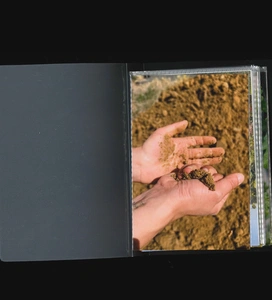
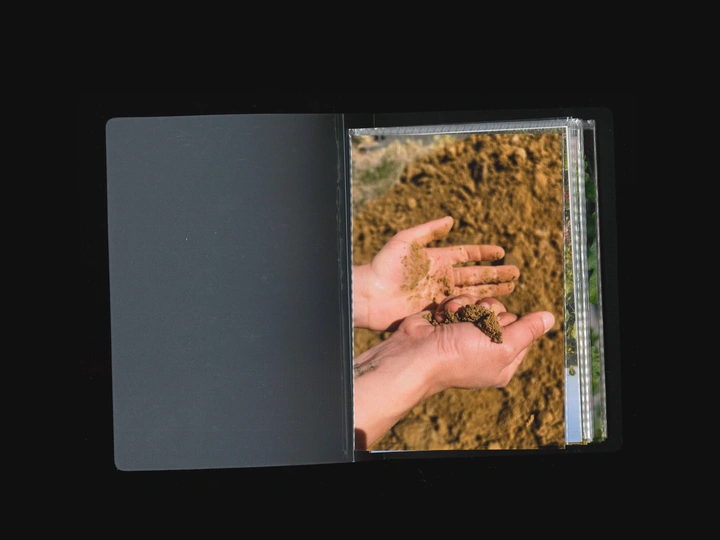
Soil, through its material richness, its capacity to hold water, support growth and accumulate time, is both a resource and a living ground. Yet in landscape construction, soil is often treated as a material to be moved, replaced, imported or removed. New landscapes are built through the displacement of existing grounds, while the resources required to establish and maintain them are rarely considered as part of their design.
This project looks at soil as a resource to work with rather than a material to replace. It explores how existing and reused soils can inform the development of landscapes, and how working with what is already present might reduce soil movement, new materials and water consumption. An atlas of vegetation on mineral urban grounds traces the conditions in which different forms of growth emerge, looking at the relationships between soil, water, air and temperature, and at how these conditions change from one place to another.
The research takes place across different sites through local and temporary laboratory setups. Through activities, participation and 1:1 soil experiments developed during the residency, the project tests how existing grounds can become the starting point for alternative landscape visions. These experiments are documented through images and a series of reflections around succession, habitat and maintenance.
The project asks: how can we design landscapes by moving less? How can landscape practice begin with the ground that is already there, rather than replacing it?