Artifacts of a Periphery
I am a Cuban architectural designer and a professor at Wentworth Institute of Technology with a deep interest in how architecture intersects with larger social, economic, and territorial systems. My published work has revolved around the ways in which built environments are shaped by histories of extraction, economic flows, and spatial practices in Latin America. Broadly i am interested in the material footprint of ideology, whether through infrastructural mechanisms or those more directly related to design, I have written about and given lectures on post cold war housing, particularly in Berlin, Vienna and Rome.
I am a researcher at my university's Center for Design and Research where i interview and write about community involvements in theory and in practice.
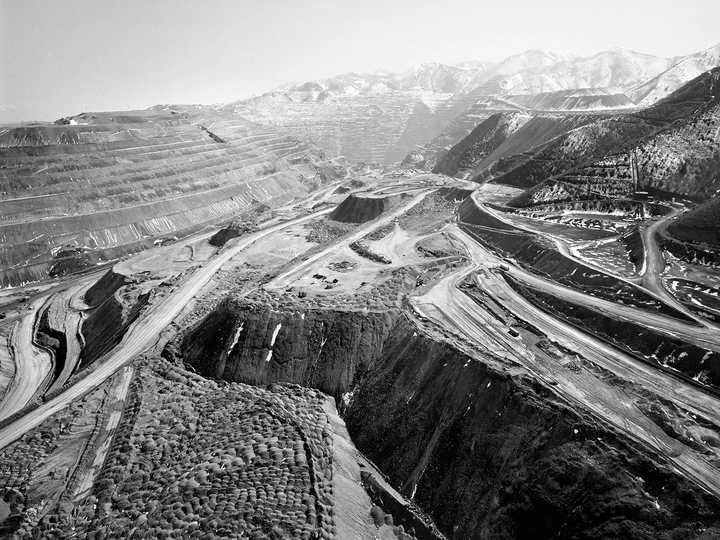
This project critically examines the deep entanglement of architectural practice in the predatory material flows of modern urbanization. Modernity’s insatiable demand for minerals relies on a planetary lattice of resource extraction, mines, pipelines, and logistical corridors, all predicated on violence, dispossession, and neo-imperial exploitation across the Global South. This project situates the physical scar of the mine site as a "hyperobject" that mediates between deep geological time and the hyper-accelerated temporalities of financial capital. By treating infrastructure not as a neutral technical tool but as a material expression of power. Through a synthesis of critical theory and design speculation, the project rejects the mechanized logic of endless accumulation. Instead, it designs a speculative, reterritorialized city within the ruins of a massive open-pit coal mine in northern Colombia. This alternative urban paradigm counteracts the metabolic rift by embracing relational, mutual human and non-human well-being.
Core Objectives & Spatial Methodologies
1. De-Coding Abstract Space: The project visually and conceptually deconstructs the homogenized, functional grids of extractive infrastructure, exposing the systemic, anonymous violence embedded within modern logistical networks.
2. Mapping the Hyperobject: Through analytical collage and multi-scalar mapping, the design links the local realities of displacement and toxic tailing degradation with planetary networks of global trade and capital circulation.
3. Speculations on Reuse of Extractive Infrastructure: Drawing inspiration from anti-extractivist resistance and Indigenous concepts of land stewardship, the project shifts the site's logic from imperial depletion to communal nourishment and mutual entanglement.