PISTA
Isabella Moretti
Trained as architects, we began working in the field of publishing several years ago. We met at NESS Magazine; together, we have edited magazines and books, shared countless conversations, and taken great pleasure in crafting narratives and defining our scope of action within them. That is why we created PISTA, an independent editorial platform, conceived as an expansive and thoughtful partnership that seeks to create, guide and support editorial and curatorial projects. Operating between Buenos Aires and Barcelona, and working in Spanish, English and German, allows us to navigate different editorial cultures and build collaborations across linguistic and institutional contexts.
At the moment, we are interested in how archival research can generate new and plural readings of familiar histories and in exploring new editorial formats to expand the ways architecture is communicated, discussed and experienced.
These interests come together in our current research project, Sacriste's Cookbook: Architectural Teaching in the Global South, where we revisit the life and work of Argentine architect Eduardo Sacriste through essays, interviews and archival research to uncover its educational, culinary and social dimensions. Last year, as part of the editorial team for the 6th Chicago Architecture Biennial, we co-edited SHIFT: Architecture in Times of Radical Change, a publication that unfolds the many faces of SHIFT through collective conversations, visual essays and manifestos.
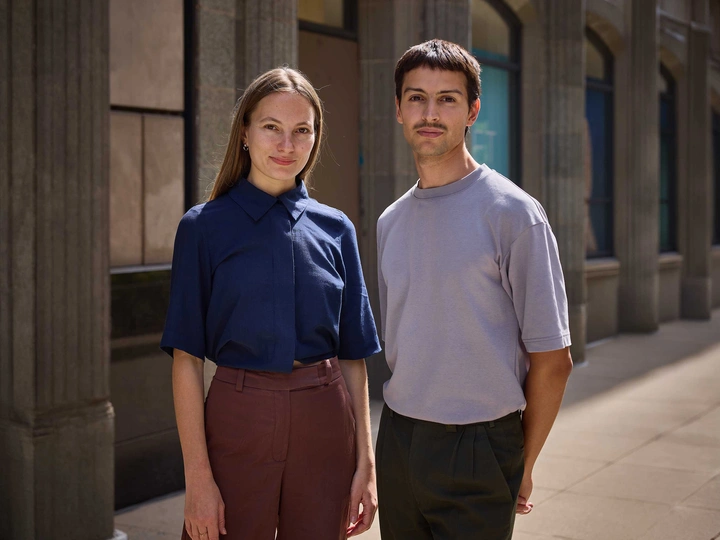
While we work collectively, our individual backgrounds inform the different perspectives we bring to each project; Santiago Bogani is an architect, editor and landscape designer based in Barcelona. He has collaborated with publishers, architecture studios and cultural institutions across Europe and Latin America; Isabella Moretti is an architect, editor and professor based in Buenos Aires. She directs the Di Tella Architecture Archive at Torcuato Di Tella University, where she also teaches.
We came to editorial work through architecture. Along the way, we realised that much of what makes architectural knowledge possible happens between research, writing, design, archives and conversation. Yet the practice of bringing these elements together often remains difficult to name. With PISTA, we hope to contribute to making the role of the architectural editor more visible by building a network of collaborators across institutions, disciplines and geographies.
Rather than operating as a publishing house or a graphic design studio, we see editorial work as a collaborative practice that adapts to each project, bringing together the people, formats and questions needed for ideas to evolve.
We are especially interested in editorial transposition: the movement of knowledge from one medium to another. How can an oral conversation become a publication? How can archival documents generate new narratives? How can research unfold as a book, an exhibition, a podcast or a public programme? For us, each format is not simply a container but a way of thinking, capable of shaping how architecture and spatial culture are understood and experienced.
Editors rarely work alone. They create the conditions for others to meet, exchange ideas and produce new forms of knowledge. Through LINA, we would like to expand this way of working internationally, developing projects with institutions, researchers and practitioners while allowing each collaboration to define its own questions, formats and outcomes.
Our ambition is to strengthen editorial practice as a visible cultural role: one that not only communicates architectural ideas but actively participates in producing them.