Multi-layered listening to spatial appropriation
I'm an architect and a musician and I've never managed to pick one.
I trained in architecture in Mexico and worked in several studios there, on buildings and interiors, before moving to Europe. Alongside that, and for longer, I've been a classically trained guitarist, a singer and an actor. Musical theatre, opera, choral work, including nights at the Lunario del Auditorio Nacional in Mexico City. For years those were two separate lives. What I do now is what happened when they stopped being separate.
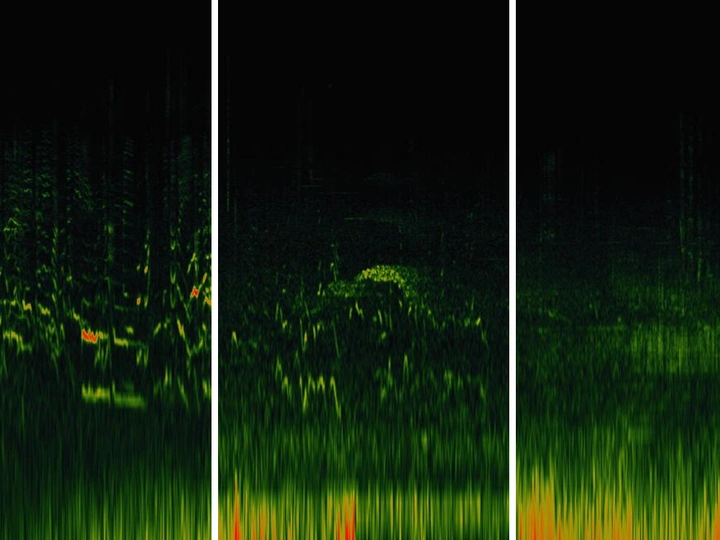
Right now I'm finishing a European master's spread across four universities in Germany, Ireland, Belgium and Spain, where I developed a multi-layered listening methodology to highlight and diagnose social and urban practices. I have published a paper on the bells of Cholula and their place in the Mexican soundscape and sense of belonging, I have put together about 200 field recordings across nine European cities, and organized a community exhibition in Bilbao to hand the results back to the people.
I have worked with multiple research techniques: field recording, acoustic and spectrographic analysis, GIS mapping and cartography, interview and survey design, exhibition design, editorial and layout work, plus all the essential architectural skills and software. I have experience and interest in parametric and computational design tools, I can run workshops, and I'm comfortable in front of a room, learned from stage practice.
What I'm after is people who need someone who can work at different scales: from a room acoustics to urban sound regulation; designing an event as a manager with experience as a performer; able to work from an office or in the field, interacting with people and giving them voice on projects that usually pass them over. Art, work and research has to be coordinated, interdisciplinary and polyphonic, like the society it represents.
You can hear a rule before you read it. Which corner fills with sound, who sings and who doesn't bother, which street stays oddly clean. Multi-Layered Listening is how I read that.
Four layers, collected at the same time and read against each other. Geolocated recordings, same place at different hours, so a street gets compared with itself instead of with a standard. Interviews with the people who make the sound, hear it, or put up with it. Participatory mapping, where residents put their own hearing onto the city. Then ordinances, licences and complaint records, which come at it sideways: complaints are the signal cities trust most, and they turn out to be produced very unevenly.
No layer works alone. Measurement without context misreads what it hears. Interviews can't tell you how much. A map with no voices in it is decoration. The method is about what happens between them.
I built it because my two trainings kept getting in each other's way. I'm an architect. I'm also a classically trained guitarist who has spent years on stage. One taught me that space gets produced. The other taught me to hear it.
I have used Bilbao as a case study: around 200 recordings, 21 interviews, participatory mapping, and a street-music dispute that made the stakes obvious to everyone involved. It went back to the city as a community exhibition where people listened to their own neighbourhood.
What I want now is to take it somewhere it hasn't been. It's cheap and it doesn't extract much: it diagnoses a street and argues about it without knocking anything down or putting anything up, with kit that fits in a bag. It turns into a two-day workshop, a walk, an exhibition, an essay, a performance. Any street with a contested use and a complaints inbox can be read this way, by anyone I can teach it to.