The Atlas of Lived Space: Continuity as Heritage
Architecture Master’s candidate at the University of Ljubljana with a background in spatial research, exhibitions, publications and collaborative studio design. My work ranges from empirical site analysis and institutional proposals, to international competition entries and built projects. Functioning as both researcher and co-creator, I focus on bridging academic inquiry with grounded, public-facing architectural practice.
Contemporary architecture and urban planning are facing a profound crisis, not due to a lack of technical expertise, but rather a disregard of the social and psychological aspects of space. Neoliberal urban initiatives lead to sterile architecture that strips away informal and historical elements, reducing citizens to passive subjects of administrative control and causing a state of sensory anesthesia.
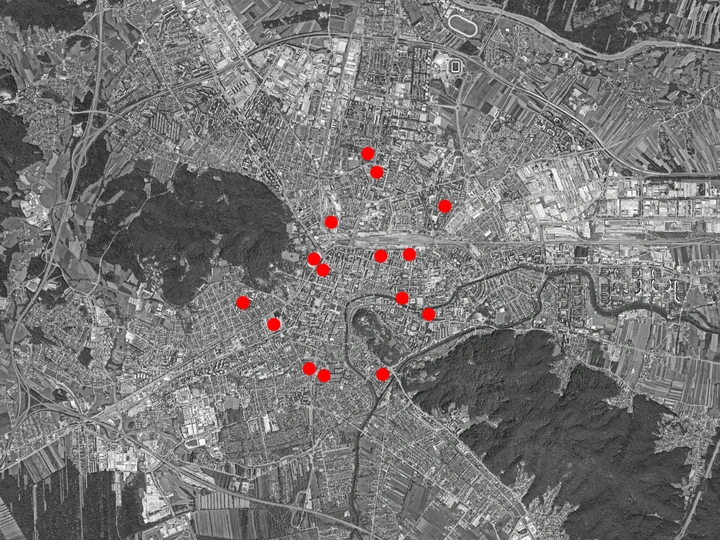
The proposal introduces an interdisciplinary framework mapping spatial appropriation and resistance. It diagnoses bureaucratic sterility, frames aesthetic outrage as resistance against anesthesia, elevates experiential knowledge from marginalized groups, and redefines heritage from frozen physical matter into a living, performative social process.
This framework translates critical theory into an operative instrument, establishing a preservation category of Processual Cultural Heritage that locates authenticity in social action and autonomous management. Backed by the Atlas, a tactical counter-cartographic toolkit, it translates informal practices into defensible records for insurgent validation and spatial defense.
By framing informal spatial production as processual heritage, the project shields autonomous spaces and informal practices against market extraction, displacement, and erasure. It redefines the architect as a facilitator of spatial empowerment, reactivating aesthetic outrage as a vital democratic force. This adaptable framework offers a transferable methodology for counter-cartography and insurgent planning.
The next step is to refine these methods and safeguards through real-world application alongside active communities, establishing an operative practice at the intersection of heritage, degrowth, and community-led spatial action.