Paper Urbanism
Una Ivanovic (b. Belgrade, Serbia) is an architectural designer whose work investigates the relationship between the built environment, ecological systems, and human experience. Working across drawing, photography, digital visualization, and architectural design, she examines cities as evolving systems, exploring how density, mobility, infrastructure, public health, and patterns of occupation shape the urban environment. Her research is driven by an interest in the ways planning methodologies, material systems, and everyday life continually redefine the relationship between architecture and the city.
Raised in Hyderabad, India, Una has also lived in the Philippines, Japan, Serbia and the United States, experiences that have informed her perspective on cities and the diverse ways they are inhabited. She received her Bachelor of Architecture from the Savannah College of Art and Design and is currently pursuing a Master of Architecture at the Boston Architectural College.
Architecture and urban planning have a long tradition of designing toward an ideal. Every urban plan is an idealized projection of how architects believe people should live. Reality either exceeds, resists, or fails to inhabit that vision. Paper Urbanism treats this friction between architectural intention and reality not as a failure to be corrected, but as the central subject of inquiry.
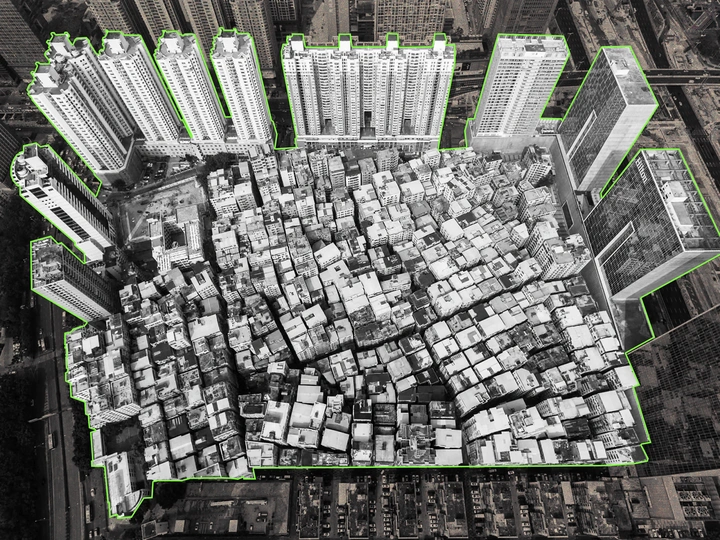
Through comparative observation, it studies urban plans as they were originally imagined alongside their current condition, documenting the ways cities have been rewritten over time. Barcelona's Eixample reveals communal courtyards transformed by industry and commerce. New Belgrade's superblocks have been reprogrammed through informal paths, kiosks, and everyday occupation. Lusail, conceived almost entirely before its residents arrived, asks the inverse question: can a city be designed before urban life exists to inhabit it?
This documentation functions as a form of counter-cartography: a record not of what the city was intended to become, but of how it has evolved. More importantly, it exposes a deeper disciplinary question. If urban life inevitably reshapes every plan, what is the architect's responsibility? Is it to prescribe an ideal future, or to design frameworks capable of adapting to futures that cannot be predicted?
If life never stops reshaping a place once it is built, then the standard model of urban design is itself part of what keeps producing this gap. Rather than treating change as a deviation, Paper Urbanism argues that urbanism must be practiced as an ongoing process: a framework built to absorb revision, pressure, and change as they arrive, instead of planning for utopia.
This research marks the beginning of that inquiry. By documenting how life continually edits architecture, Paper Urbanism seeks to establish a methodology in which the city is understood not as a fixed artifact, but as a living document, continuously rewritten by the people who inhabit it.