The Pianura Project
Matteo Mastri (he/him) is an architect and researcher based between Italy and Switzerland. He holds a Master of Science in Architecture from the Accademia di Architettura di Mendrisio, where he developed his approach to building design alongside an ongoing interest in the political, social, and spatial consequences of suburbanization. Over the course of his practice, he has worked in international practices in Japan, Germany, and Switzerland, including Herzog & de Meuron, where he held design leadership roles on projects across the United States. More recently, he founded Array of Content, a research practice investigating the spatial and social effects of suburbanization in northern Italy through architectural proposals and public initiatives.
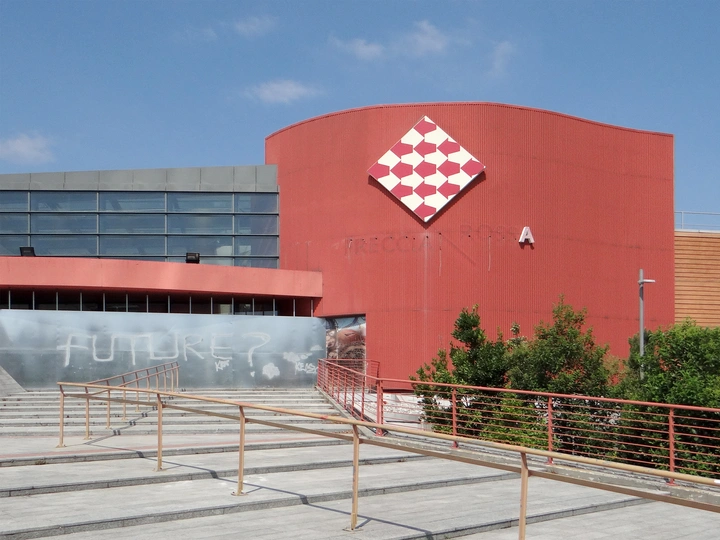
The Pianura Project is a digital atlas documenting vacancy and promoting the reuse of commercial buildings across the Po Valley. The Po Valley (Pianura Padana) is the most extensive plain in southern Europe: a continuous territory of agriculture, industry, logistics, and low-density urbanization stretching across northern Italy. This territory embodies what Italians call provincia: not only a sprawling landscape, but also a lifestyle shaped by the economic optimism of the late twentieth century. Within this climate of growth, legislative reforms redistributed planning authority to regional and municipal governments, aiming to simplify administrative procedures and accelerate development. Yet in many parts of northern Italy, this decentralization produced unintended consequences: weak territorial coordination, fragmented decision-making, and competition between municipalities encouraged the rapid development of commercial buildings without broader spatial strategies. Among these, shopping malls have become one of the most visible and symptomatic forms of contemporary vacancy. Today, shifting consumption patterns, demographic decline, and the rise of e-commerce have accelerated their obsolescence, leaving behind the physical residues of a development model based on expansion and speculative growth. However, despite the thousands of vacant commercial buildings, agricultural land continues to be consumed as investors build new logistics hubs and data centers. Launching in September 2026, the Pianura Project addresses this growing phenomenon by mapping abandoned shopping malls across the Po Valley, challenging municipalities, stakeholders, and investors to shift from further expansion toward the reuse of existing structures.