Architecture as a platform for discourse
Architect based in Zurich and originally from Barcelona, I graduated in Architecture from the Escola Tècnica Superior d’Arquitectura de Barcelona (ETSAB) in 2020 and complemented my studies at the Technical University of Munich (TUM). My final thesis focused on the design of a residence for elderly people, a topic that has remained a continuous thread throughout my professional path.
After graduating, I moved to Switzerland, attracted by its architectural culture and the opportunity to learn from demanding architectural practices. Since then, I have worked in different architectural offices and contributed to projects across various stages, from concept design to execution. At kathrinsimmen Architekten, I contributed in two winning projects: home for the elderly residence “Betreutes Wohnen Suhrhard” and a residence for people with disabilities “Wohnen Stiftung zur Palme”. These experiences reinforced my interest in architecture that responds sensitively to users needs, social contexts, and different forms of living. During this period, I experienced the evolution of the office from a small practice into a larger team.
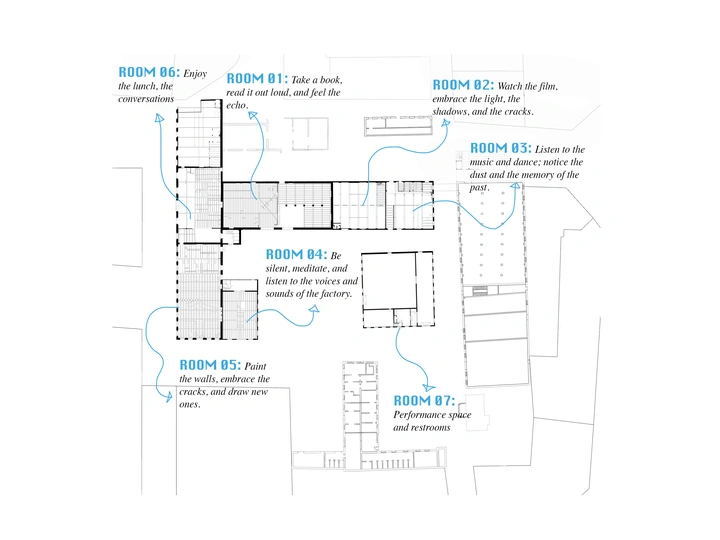
As I became aware of the structured path that architectural practice often follows, I felt the need to explore other ways of thinking and working. This led me to complete the CAS OnCurating in Berlin, where I further developed my interest in research and explored the intersection between architecture and curation through my final thesis, titled “Curating Architectural Spaces: Ephemeral Interventions as a Platform for Discussion”.
Today, I am particularly interested in the social role of architecture and in topics such as ecology, feminism, care, and new forms of living together. I would like to continue exploring how research, design processes, and curatorial practices can contribute to questioning existing realities and supporting social transformation.
This research emerged from a personal questioning of the role of the architect and the limits of its definition. During my architectural education, particularly within the Spanish context, the discipline is often approached through the need to design and construct, leaving little space to question whether building is always the most appropriate response. After completing my curatorial studies, I began to question why expanding my architectural practice through curation was often perceived as moving away from architecture rather than as an extension of it.
Through this question, I developed my CAS thesis by investigating how architecture can operate beyond the production of buildings and become a platform for discourse, communication, and social engagement. The research is based on theoretical frameworks from Michel Foucault’s Discipline and Punish (1975), which examines how institutions produce discourses that define what is considered legitimate, and Henri Lefebvre’s The Production of Space (1974), which understands space as a social production rather than a neutral condition.
The research analyses case studies such as the Blur Building by Diller + Scofidio, Floating University by Raumlabor, and Instant City by Prada Poole, exploring how temporary and experimental architectural practices act not only as a physical structure, but also as critical tools capable of questioning, communicating, and creating awareness.
Focusing on ephemeral architecture, this research understands it as a catalyst for change: a practice whose temporary and adaptable nature can open new possibilities for how architecture is produced, experienced, and communicated. Building on these findings, the project will continue to explore alternative forms of architectural practice, investigating how architecture can act not only through construction but also as a medium for dialogue, collective imagination, and social transformation.