Arc-en-ciel, live together at 1600m
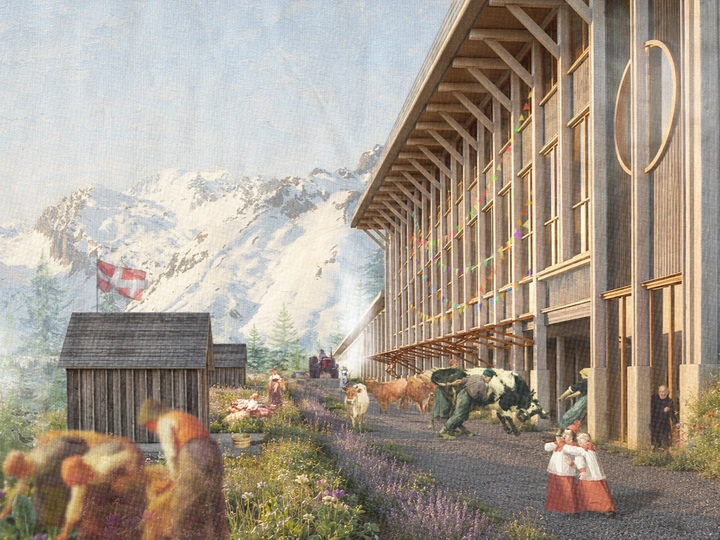
I grew up in these Alpine territories. They now define an aprtie of my identity. Alas today I am distressed to see that nothing is done in my mountains to think about the future of these magnificent sites when snow will no longer be the main resource.
So I decided to take the lead by setting up a collective reflection process to think together about our mountains of tomorrow and make them more resilient in the face of social, economic, and environmental challenges.
Collective Reflection on Rethinking Our Winter Sports Resorts
The Site: Arc 1600 is a French ski resort located in the Tarentaise Valley in Savoie. It was developed during the "Plan Neige", a French national initiative to develop the Alpine region. Les Arcs, is designed by the Atelier d’Architecture en Montagne in collaboration with Charlotte Perriand.
However, criticism soon emerged. These resorts, whose economies depend almost entirely on the exploitation of a resource that is increasingly under threat—snow—began to reveal significant social and environmental issues. Unfortunately, despite these observations being made more than fifty years ago nothing have been done. Today, climate change is forcing mountain communities to reconsider these large high-altitude developments, which are truly active for only three months of the year.
Research Question: How can a territory dominated by tourism be transformed in order to foster a new and desirable year-round way of living?
The objective is to reconcile local populations with holidaymakers and create a more balanced and sustainable relationship between residents and visitors.
Project: Reflection on mobility issues. Reuse of existing structures, creation of social links, requalification and preservation of green spaces, new economic system to integrate a life in the year...
Conclusion: Winter sports resorts are not isolated microcosms detached from the rest of society. On the contrary, they are governed by the same dynamics and face the same challenges as our cities and communities: climate change, the need to rethink mobility, ecosystem preservation, and the renovation of existing built heritage. I firmly believe that if we are able to innovate within these territories and restore their original role as laboratories of urban planning and architecture, we will generate valuable lessons that can later be applied to our cities, helping them become more resilient in the face of future crises.