Basta Città! Reactivating Rural Villages
Cristina Spinelli
Juan Walker
Basta Città is a cross-disciplinary team based between Italy and Chile, united by family ties to specific Italian villages and complementary expertise in architecture, territorial research, and communication.
Stefano Rossi Pantoja is an architect based in Rome. Until June 2026, he designed public projects—including hospitals, public spaces, and infrastructure—in both rural villages and cities at Varia Studio. He is currently expanding his expertise through a diploma in military geomatics and an Executive Programme in Data Science and Business Analytics at POLIMI Graduate School of Management, applying these skills to Basta Città's territorial scouting and impact measurement. Since 2022, he has been a member of Liminal, a network working with communities and governments on rural areas facing depopulation and disinvestment. He also co-founded RossiWalker, an architecture studio operating between Chile and Italy.
Juan Walker Aninat is an architect and co-founder of RossiWalker based in Santiago, Chile. Alongside professional practice, he worked as a teaching assistant at Pontificia Universidad Católica de Chile, bringing a research-driven perspective to the studio's work.
Cristina Spinelli is founder of Spin Collective and Global Strategy and Business Director at Chap 19. She has held senior roles at Unilever, Sony Pictures, and Warner Bros, leading award-winning cultural and communication projects. As Head of Marketing at Videocittà, she developed experience transforming underused spaces into cultural destinations. Within Basta Città, she leads communication, public engagement, and the project's relationship with families and communities.
Together, the team combines architectural practice, territorial research, an active network addressing depopulation, data analysis, and strategic communication to develop place-based projects that reconnect people with rural territories.
Italy is usually drawn as a peninsula on a map. But over 6.5 million Italian citizens live abroad, and an estimated 80–100 million worldwide carry Italian ancestry — more than Italy's own population. This proposal treats that global community as the starting force for repopulating Italy's emptying rural villages.
Thousands of borghi sit nearly empty despite good access to rail, hospitals and schools — houses cost under €15,000, less than the materials to build one today. Yet they're hard to enter: closed communities, little activity, no obvious way in for outsiders.
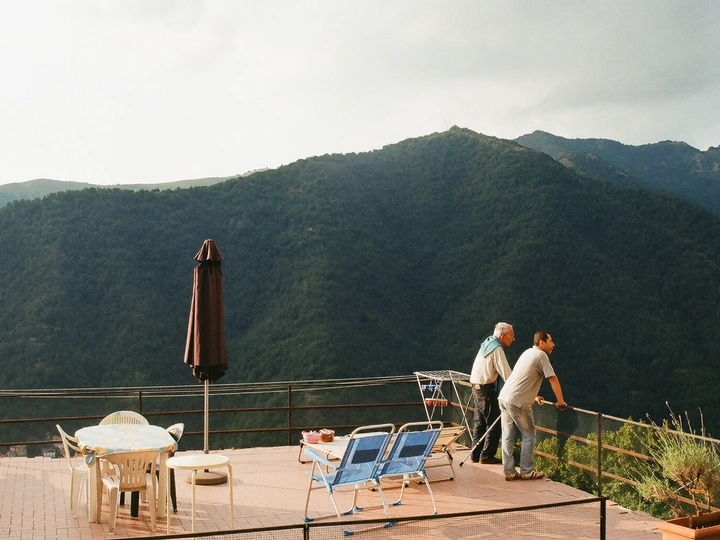
Our answer is to grow through real family ties, not marketing. The project began in Carsi, a hamlet in Valbrevenna, Liguria, where the founder's grandparents are from — so it starts with existing trust, not a cold pitch. It works like a snowball network: a village joins only when someone with a real connection joins the team, so every member extends both group and territory. Over time it opens to everyone — but starts with those who never left.
Concretely, repopulation happens through reactivation: we surface what makes each village distinct, then draw attention to it until it's worth visiting again — pulling people with some connection back, first to visit, then to buy, growing the economy and welcoming Italians with no prior tie, without displacing anyone.
These villages took centuries to form, so repopulation gets the same patience, across four phases: (1) scouting and listening — time on-site and workshops to understand real needs; (2) tactical activation — events (concerts, food, exhibitions) bringing people back for the first time; (3) extended-stay offers — multi-month visits pairing scouted properties with local life; (4) consolidated repopulation — purchases structured with the municipality so part of each sale funds shared infrastructure.
The goal isn't to fill houses, but to rebuild relationships — between people, history, and a place — while strengthening the community that stayed.