Hot Clouds, Cold Landscapes
I am a registered architect, artist and researcher based in Vienna. Trained in architecture at the University of Applied Arts Vienna (Studio Prix), I have worked internationally with practices including Coop Himmelb(l)au, Snøhetta and Flying Elephant Studio, before becoming a licensed architect in 2017. Alongside architectural practice, I developed an interdisciplinary artistic approach that led me to co-found the collective 2MVD and pursue a PhD in media theory at the Weibel Institute for Digital Cultures at the University of Applied Arts Vienna, completed in 2024.
Today, my work operates at the intersection of architecture, media theory, artistic research and digital technologies. Through installations, exhibitions, teaching, writing and speculative design, I investigate how emerging technologies reshape space, memory and ecological futures.
I have taught since 2012, primarily in architecture, with a focus on new design methodologies, digital technologies and virtuality.
My recent research examines digital archives through their material, environmental, interfacial and spatial implications. I am particularly interested in how systems of digital storage influence collective memory and how their often-invisible infrastructures can be critically reimagined.
I currently work as a postdoctoral Senior Scientist at the Weibel Research Institute for Digital Cultures. My work has been exhibited and presented internationally in museums, galleries, festivals, conferences and publications. I have also curated exhibitions, including two major projects: Günther Domenig: “DIMENSIONAL @ HEFT/Hüttenberg” in 2022 and “Thinking Through Weibel - Beginnings, Diversions, Elsewheres” in 2025.
Hot Clouds, Cold Landscapes
Architecture between Storage and Memory
Behind the apparent immateriality of the “cloud” lies an expanding network of resource-intensive architectures that consume vast amounts of land, water and energy while increasingly shaping territories and landscapes. Despite their growing footprint, these infrastructures remain largely invisible.
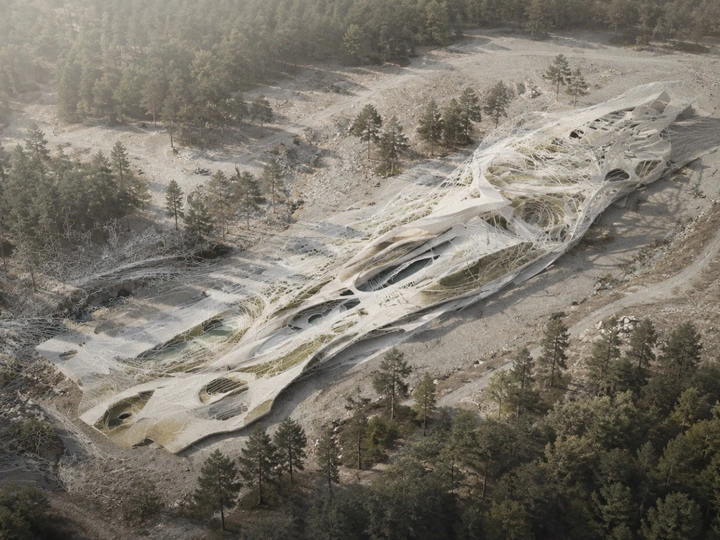
This proposal tries not only to make these hidden infrastructures visible but, more importantly, imagine alternatives. Rather than treating data centres as purely technical facilities, I want to approach them as architectures of digital memory and ask: What spatial futures become possible if these infrastructures are conceived not as closed machines of extraction, but as ecological, public and collectively shared environments?
The proposal grows from an artistic and theoretical research trajectory centred on digital memory. In earlier work, I explored site-specific forms of digital memory through augmented reality, investigating how digital information can become embedded within physical places rather than concentrated in distant cloud infrastructures. This research was further developed through academic writing on alternative interfaces and expanded towards the ethical and ecological implications of digital technologies.
Through LINA, I want to extend this investigation into architectural speculation. Drawing on cyberfeminist and ecofeminist thought, I seek to develop alternative imaginaries: feminist servers, decentralised systems of storage, multispecies data landscapes, and architectures that prioritise care, collective stewardship and ecological reciprocity over extraction and optimisation. Rather than proposing one solution, the project develops a series of architectural speculations that challenge dominant models of hyperscale computation and open new ways of imagining the relationship between digital technologies, ecology and the built environment.