"Al-‘ar·d" Think-Tank
Kinan Deeb
Walaa Hajali
Mudar Obaid Dabbous
alard collective is an architectural collective based in Berlin. Their interest lies in exploring how architecture can respond to environmental urgency, scarcity, and fragile contexts,
while remaining deeply rooted in landscapes and specific local realities. Through this
approach, the collective engages in rethinking reconstruction in Syria, developing a
practice grounded in the dynamic relationship between the built environment and the
People.
- Qusay Amer: architect and researcher at TU Berlin. His research focuses on collaborative approaches to architectural and urban interventions, framing his work through insurgent urbanism and the right to the city.
- Kinan Deeb: earth-based material expert, at Kéré Architecture, specializes in low-tech, community-driven construction.
- Walaa Hajali: architect and sustainability expert at Transsolar Klimaengineering. Her practice extends into questions of urban resilience, ecology, and post-recovery landscapes in Syria.
- Mudar Obaid Dabbous: architect, graphic designer and visual storyteller, explores public space and socio-political reconstruction through design.
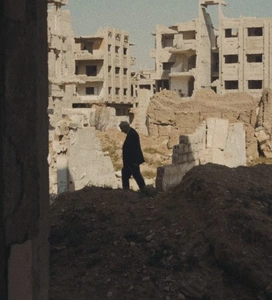
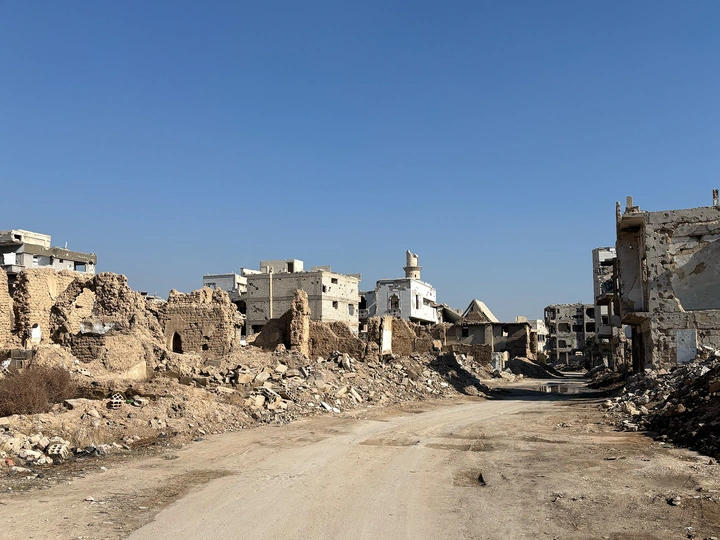
“Al-‘ar·d” (Arabic for earth) brings together expertise in architecture, environmental design, urban planning, civil engineering, physical geography, ecology, and development economics. Its core objective is to bridge the gap between academic inquiry and the realities of on-the-ground rebuilding, producing actionable knowledge and physical outcomes that contribute to long-term resilience and environmental regeneration in the post-war reconstruction process in Jober neighbourhood, Damascus, Syria. This broad intellectual base allows the Think-Tank to approach reconstruction as a complex and interconnected process, where environmental, material, cultural, and social dimensions must be understood and engaged simultaneously. A central aim is to explore and prototype sustainable construction methodologies that integrate local knowledge, recycled materials, and bio-based alternatives in ways that are both economically feasible and environmentally responsible.
The project impact is envisioned on multiple levels. At the material scale, it seeks to demonstrate through a 1:1 architectural prototypes the potential of circular construction by reusing rubble from war-damaged sites, reducing waste and carbon footprint, the use of bio-based materials and finding affordable solutions for the people. This process will employ low-tech methods—defined here as context-sensitive, resource-efficient, and easily replicable solutions suited to fragile and resource-constrained environments. A second key outcome will be comprehensive documentation and analysis, including environmental assessments, feasibility studies, and policy-relevant insights. These outputs are intended to inform local building practices, academic discourse, and community-led reconstruction initiatives.