GÖRA PLATS: Making Space
Anna Maria Hellner
Luka Murovec Murovec
I am an urban planner by training and a gardener by instinct. I have worked from within municipalities, housing organisations and public institutions, developing places where artistic practice, landscape and planning become part of the same long-term process.
I have consciously chosen this position. Rather than working outside institutions, I want to influence how public decisions are made from within. I commission artists, lead complex development processes and take responsibility for carrying the knowledge generated through artistic practice into future planning. For me, temporary interventions only matter if they continue to shape permanent decisions.
Working with uncertainty, risk and real places has taught me more than any predefined methodology could. With GÖRA PLATS and the beginning of a three-year Formas-funded research programme, I now have the opportunity to articulate the theory that has emerged from practice.
I have never been particularly interested in disciplinary categories. I simply follow the questions a place raises. Sometimes that means working with artists, sometimes planting trees, writing, curating or leading planning processes. The categories change; the commitment remains the same.
My work is driven by a belief that public space should belong to everyone. I am particularly interested in children's everyday environments, urban trees and the ways landscapes shape how we live together. Nature has always been my greatest teacher. It reminds me that the most resilient systems are cultivated over time rather than imposed all at once.
Receiving public funding, scholarships and national grants has never felt like personal recognition alone. It has strengthened my conviction that these opportunities carry a responsibility to contribute to the common good. Ultimately, that is who I work for.
GÖRA PLATS: Making Space is an iterative methodology for cultivating public space before long-term urban planning decisions are made, allowing planning to learn from reality rather than assumptions. It emerged from a simple question: how can we know what a place needs before people have had the opportunity to experience, transform and care for it?
My practice is informed as much by horticulture as by urban planning. A gardener does not begin with certainty but with cultivation; plants reveal where they thrive over time. I apply the same logic to cities. Cultivation is not a metaphor but a planning methodology where temporary interventions generate knowledge for public development.
Unlike many artistic interventions that operate alongside planning processes, GÖRA PLATS is developed from within them. Working with municipalities, housing organisations, artists, researchers and local communities, I create conditions where artistic experimentation informs future planning. Participation is not an end in itself but a process of producing situated knowledge that shapes future decisions.
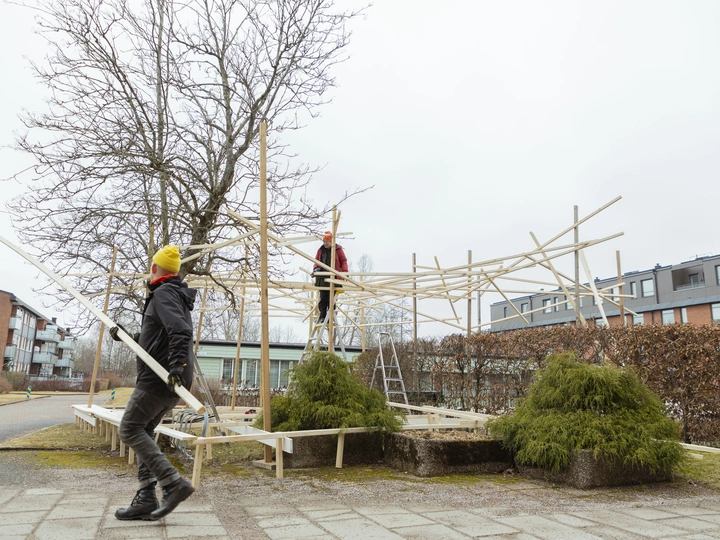
The methodology has evolved through two long-term public space projects in Örebro, Sweden: Common Space: Krämartorget and The Green Villa Play Build in Varberga. Rather than following predefined masterplans, both places developed through cycles of making, observing and adapting. An ice rink became a dance floor, temporary interventions evolved into permanent change, and each action revealed possibilities that could not have been predicted in advance.
From September 2026, GÖRA PLATS will continue through a three-year national research programme. Through LINA, I want to transform years of practice into an open methodology shared with municipalities, commissioners, designers and cultural practitioners. The outcome will be a publication documenting its principles, tools and lessons, enabling others to cultivate public space and generate knowledge for long-term urban planning.