What can an artist do after a disaster
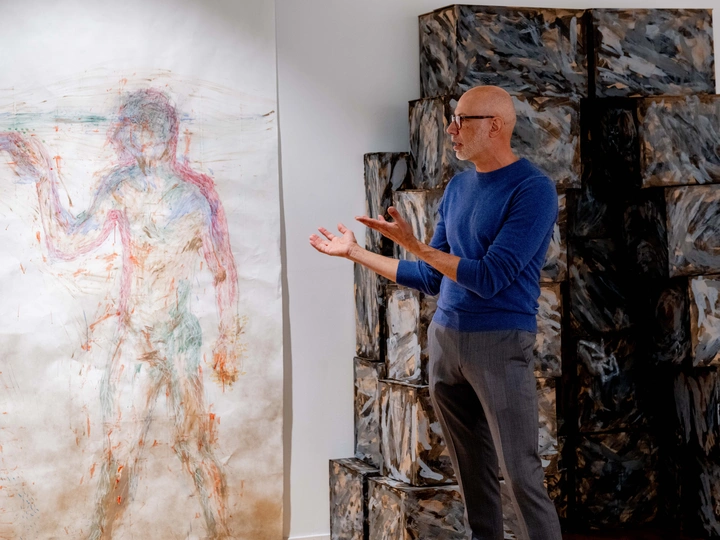
I am an artist, engineer and researcher based in Stockholm. My background is rooted in analyzing large-scale structures, sensitive infrastructure, and long-term safety. This experience taught me how to handle complex frameworks and how to adapt when conditions change.
In my artistic practice, I apply this research-driven approach to what I call the Architecture of the Fragile. Instead of building for permanence, I investigate impermanence. My interest lies in the gap between monumental systems and the bits and pieces that are going to disappear. I look for cracks in grand narratives and by transforming institutional symbols I look into human-scale experiences.
Flexibility is central to my process. I deliberately choose materials like paper, textiles, metal, and scent because they are temporary and responsive to the environment. I treat each piece as an experiment, adapting the work to the specific space and the presence of the viewer. My role is to bridge the analytical rigor of research with the intuitive necessity of artistic creation.
My achievements span both worlds. I have authored over 70 scientific publications, which reflects my dedication to evidence-based inquiry. Artistically, my work has evolved from early site-specific outdoor installations to complex, multi-sensory indoor environments, including projects like #I_Wake_Up_In_The_Morning_And_I_Am_Alive and #Escaping_What_Is_Real. Ultimately, my practice is a way to question what we choose to preserve. By bringing the methods of research into the fragile space of art, I try to understand how memory and human vulnerability survive within the monumental systems that surround us.
Rooted in my practice, Architecture of the Fragile, I explore the friction between monumental systems and human impermanence. Post-disaster reconstruction is often reduced to sterile logistics, risking a systematic erasure of collective identity.
I propose an existential approach where memory is vital infrastructure. My practice acts as a catalyst where debris and daily life collide. By using ephemeral materials to humanize harsh environments, I create interventions that offer humanity before permanent structures break ground. This approach challenges the politics of reconstruction, re-introducing inefficient spaces as a democratic necessity.
True reconstruction must let a city breathe. I propose a Symbolic Inventory: a process of mediation between survivors and builders. Rather than technical answers, I facilitate a value-dialogue with survivors. Drawing from my experience transforming mundane materials into symbols of resilience, I help identify what is worth preserving, the soul of a place expressed through social gestures, rituals, and symbols of resistance. Together, we distinguish between what must be surrendered to oblivion for healing, and what constitutes the inheritance that anchors the future to history.
I aim to rebuild meaning. By curating the transition from debris to architecture, I propose a living platform that preserves the place’s identity. Applying this to cases like Caracas, Kyiv, or Gaza, I offer a bridge between past trauma and future hope. My role is to help articulate ambitions, ensuring the new city is not just a housing of bodies, but a vessel for the human spirit.