The Possibility of a Ruin
I am an architect based in Zurich, with a background that spans art history, journalism, and architectural practice in Paris, Berlin, and Switzerland. Before training as an architect, I studied art history and economics – a combination that continues to shape my interest in the social and economic dimensions of the built environment, alongside its aesthetic and material qualities. I currently work on adaptive reuse projects, do editorial work for German publications including Die Zeit, and have previously curated exhibitions and photography publications.
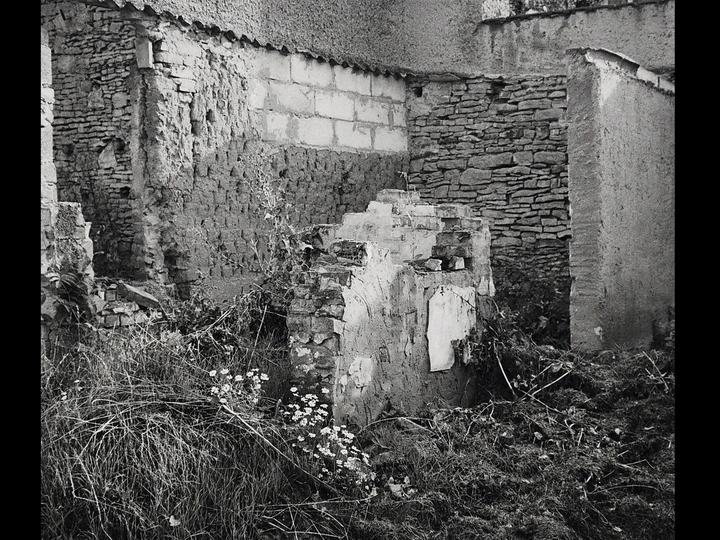
Since 2021, I have been researching ruins in post-industrial regions of Germany – abandoned buildings reclaimed by nature, examined through fieldwork and photography (published in Horizonte Weimar and Protocol, awarded the Konrad Wachsmann Prize). This work raised a question I want to develop further, combining my background in both architecture and economics: if degrowth and circularity are to shape the future of housing, what economic model makes cooperative ownership actually work – not just ecologically, but financially, over generations?
Housing cooperatives are often discussed in ecological or social terms, rarely in terms of their underlying economics: How do you finance circular renovation without the cost logic of speculative development? How does a cooperative remain economically resilient while resisting the growth imperative that drives most real estate models? As an architect currently working on adaptive reuse projects in Switzerland – a country with a strong cooperative housing tradition – I want to investigate how economic structures themselves can become a tool for ecological restraint, rather than an obstacle to it.