Bioregional Translations
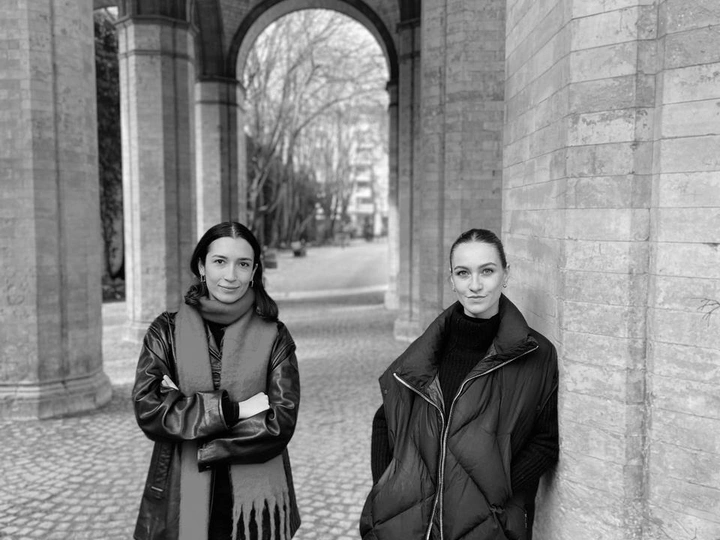
Öykü Tok
We are Franziska Sorger and Öykü Tok, architects, researchers, and teaching associates at the Professorship of Architecture and Design at the Technical University of Munich. Together, we founded Common Matter Studio, bringing together our interests in the intersection of architecture and design.
We both studied architecture at TUM, completing our bachelor’s and master’s degrees there, and have collaborated on architectural and material-based projects since our studies, including international formats in Seville, Sicily, and Vienna. Coming from Munich and Istanbul, our shared work is shaped by an interest in how materials carry cultural, ecological, and regional meanings.
Our collaborative project Material Perspectives reflects with our bioregional methodology a key foundation of our practice. It has received several awards and international recognition in design and material development, as well as interest from industry partners and regional stakeholders. Building on this experience, our current work connects material research with educational formats, experimental making, exhibition contexts, and public dialogue.
Öykü works as Product Design Lead in the EU Horizon Europe project BIOARC, where she focuses on agricultural by-products, fibre-based materials, and bioregional construction frameworks. She has also supervised material-based exhibition work, including the Convivium project at the Architekturmuseum der TUM. Franziska leads a DBU-funded research project on the optimisation of hemp-lime construction and develops workshops for students, professionals, and public institutions such as the Deutsches Museum.
As Common Matter Studio, we are interested in materials not only as technical components, but as ways of connecting resources, territories, communities, and spatial practices. Our work combines material recipe development, testing, teaching, exhibition-making, and knowledge transfer across academic, professional, and public contexts.
Can a bioregional methodology travel?
This project explores whether a design framework developed in one territory can be adapted to another while remaining sensitive to local communities, traditions, crafts, ecologies, materials, and economies. It investigates how a way of seeing, mapping, and engaging with a place can evolve through different territorial contexts.
Working with secondary biomass and agricultural by-products, the project will identify a new bioregion through collaboration and use it as a testing ground for the methodology. Through fieldwork, stakeholder engagement, material investigations, and design experimentation, it will explore how local resources can contribute to new regional material cultures.
The outcomes will extend beyond material development. The project will generate material prototypes, artifacts, mappings, workshops, and an exhibition that communicate the relationships between resources, landscapes, communities, and architectural production. The ambition is not to create a universal model, but to develop tools and narratives that support place-based material futures.
The project builds on Material Perspectives, a design-research project developed in the Oberpfalz region of Bavaria. By combining territorial analysis, stakeholder collaboration, and material experimentation around industrial by-products from the glass and porcelain industries, the project revealed overlooked regional resources and opportunities for new value chains.
Material Perspectives received recognition from industry partners, regional stakeholders, and the design community, including European awards in design and material development. These outcomes demonstrated the value of a bioregional approach and raised a new question: can such a methodology remain meaningful when applied to a different territory?
This project seeks to answer that question by testing and refining the methodology through a new bioregional context.