Reservorio
Fernando Dextre Polo
Estefania Sanchez Ingles
SOMA Territorio is an urban research and design practice founded by architects and urbanists Ángela Chapman and Estefanía, based in the Region of Murcia (Spain). Our work explores how communities, everyday care and ecological relationships shape more just and resilient territories through participatory research, mediation and design.
Our practice is grounded in Agenciamientos Ecológicos (Ecological Assemblages), a methodological framework that understands territories as living systems where people, landscapes, infrastructures, species and everyday practices continuously shape one another. Through this approach, we develop participatory methodologies that connect territorial pedagogy, community knowledge and spatial transformation.
We collaborate with universities, research centres, public institutions and local communities, including the Universidad de Murcia, AgroSimbiosisLab, CEBAS-CSIC, the Universidad Popular de Cartagena and municipalities across the Region of Murcia. Our methodology has been consolidated through projects such as Futuros en el Aire, supported by the Daniel and Nina Carasso Foundation, addressing ecosocial transition through community-based territorial practices.
For Reservorio, SOMA leads the research, methodological design and facilitation across three municipalities in Murcia. The project is expanded through architect, urban mobility specialist and urban artist Fernando Dextre Polo (Barcelona), whose work combines participatory urban art, sensitive mobility mapping and community-based spatial interventions, extending the methodology from rural to metropolitan contexts.
Together, we understand architecture and urbanism as practices of mediation that reveal and activate the invisible infrastructures of care sustaining everyday life. Through Reservorio, we are developing an open, transferable methodology that can evolve through collaboration across diverse European territories.
Across Europe, an essential form of heritage is disappearing: the everyday care practices that make territories habitable. Beyond monuments and protected landscapes, communities are losing the relationships, knowledge and practices that sustain social cohesion, ecological resilience and belonging. Reservorio is an open methodology for identifying, activating and transmitting these ecosocial care practices. Based on SOMA Territorio's Agenciamientos Ecológicos (Ecological Assemblages), it understands care as the living relationships between people, landscapes and everyday practices that continuously produce territory. Rather than documenting memory, Reservorio creates the conditions for new relationships of care to emerge, strengthening collective capacity to shape resilient territories.
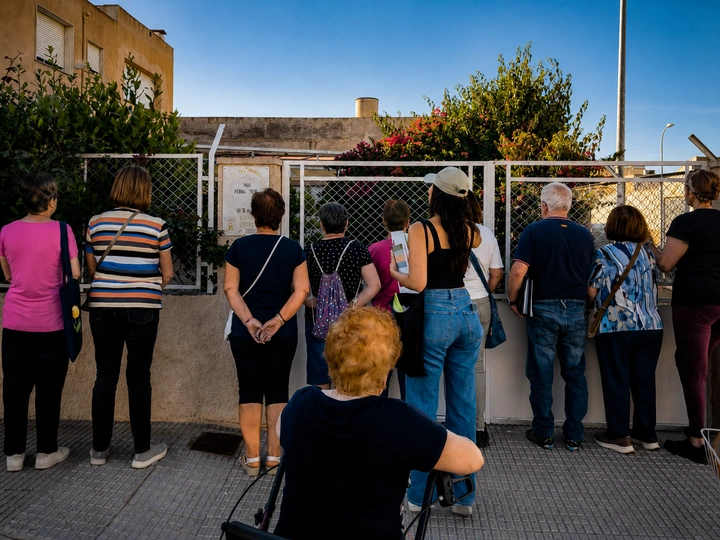
The methodology emerged during Caminando Nuestra Memoria (Miranda, Cartagena, 2026), when participants spontaneously organised the village's first collective visit to Juan “El Artista”, guardian of a traditional irrigation system. This unexpected act revealed that invisible infrastructures of care already exis, they simply need to be recognised, connected and activated.
Reservorio operates through three interconnected dimensions: safeguarding intergenerational knowledge; strengthening reciprocal care that supports migrant inclusion; and revealing overlooked biocultural heritage embedded in everyday landscapes. Together with architect, urban mobility specialist and urban artist Fernando Dextre Polo, the methodology expands from rural to metropolitan contexts through participatory urban art and mobility mapping. Its transferable outcome is the Reservorio Toolkit: an evolving open-source methodology enabling communities across Europe to identify, map and activate ecosocial care through participatory protocols, field guides and mapping tools. Already implemented in Murcia and Barcelona, Reservorio enters LINA as a living laboratory for collectively prototyping new ecosocial futures.