Inclusive architectures for discreet inhabitants
I am Zoi Fourlanou, I was born and raised in Athens . I studied design and then architecture in Toulouse in France. For me, a drawing or an image can distil universal, accessible concepts, without the need to understand a written language.
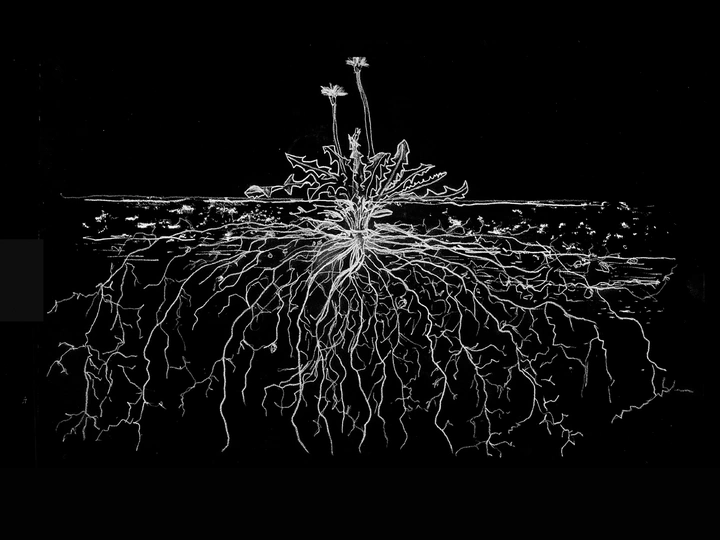
I work around naturalistic subjects through drawing, photos, creative workshops. I am interested in understanding and revealing the wild and invisible nature, the non-spaces through artistic approaches. As an architect, I want to develop an awareness for wild nature, which is often absent in the design of spaces but is essential for our existence. I want to create an architecture that leaves space for all living things.
My last text, "La citadine discrète,", exploring the connection between the terrain we treat the individual lives embedded in the soil. was the third winner of the 2026 contest to write the city “ Prix ecrire la ville” in Toulouse.
I am currently a designer in the framework of research included in the "POPSU, Plateforme d'observation des projets et stratégies urbaines" program conducted at the Laboratoire de la Recherche d’Architecture de Toulouse. My role inscribes in the graphic representation, hand-drawing landscape situations that highlight the complexity, coexistence and existence between city, nature and agriculture, in metropolitan parks.
Day by day, humans increase their hold onto nature, leaving less space for wilderness. Many of us are concerned about it, but we rarely take direct action, because nature feels far away. What if the best way is to learn to protect it is to start at our door? My project is about this perspective.
Urban spaces are the result of human control. A few living beings overflow this rigid framework, survive between cracks of asphalt, sidewalks, concrete, roofs, walls. They inhabit interstices, the unused, non-spaces. I envision letting nature take freely a place in the urban landscape; wild; rich ecosystems by our doors. Wild gardens.
Cohabitation between humans and non-humans has both practical and aesthetic facets. Plants in the city have many strategies to survive harsh conditions. But wilderness is generally considered unclean; and plants are often cut.
To improve the acceptance of wild beings, I’m proposing two directions. A change in the aesthetic of those inhabitants and finding suitable space and devices to favor their implantation.
I conducted several actions to raise awareness of the discreet street residents. I organized walks, discussions, signaling with the botanist Boris Presseq, several exhibitions, in streets; libraries, showing photographs and drawings of the street plants diversity. These actions had a visible effect on care and awareness for the wilderness. I also developed different architectural devices promoting their installation, while limiting the impact on human uses to favor their acceptance.
My research let me think that; despite its hostile appearance, a city can accommodate, at a very low cost, different diverse environments, if we question the way we build our public spaces, and a little space is cleverly left for wild beings.
I like to see this idea take seeds in other streets, other cities, other countries, through international exhibitions, share of idea, knowledges, architectural devices to let a place for the wilderness in cities.