Rituals: Architecture of Collective Desire
I am an architect, researcher, editor and curator. I lead ALTRE, a studio and publishing house working at the intersection of architecture, research, design, publishing and urban culture.
My practice is grounded in a humanistic and anthropological approach to territory. I am interested in understanding how communities build identity, memory, and creative ways of building community through rituals, celebrations and popular culture. I see architecture, curating and publishing as complementary tools for creating cultural infrastructures that strengthen collective life.
In recent years, I have curated and designed projects for institutions including IVAM, Bombas Gens Centre d'Arts, Universitat Politècnica de València, Las Naves and the Fundació del Disseny de la Comunitat Valenciana. Among them are "El llibret de falla. Una oportunitat cultural", the first exhibition to bring Valencian Fallas popular culture into IVAM, later presented at the Frankfurt Book Fair; the Ciutat Fallera Special Plan, an urban strategy to consolidate a cultural district unique in the world; and Espai Botanch, a cultural facility transforming a former agricultural warehouse into a new public infrastructure for Cullera.
These projects have contributed to redefining the relationship between contemporary cultural institutions, architecture and popular culture, opening spaces where collective rituals, local knowledge and community practices become drivers of innovation and cultural transformation. This work has been featured by platforms such as ArchDaily, Fundación Arquia and Metalocus, and shared through the TEDx talk Opportunities for Change in Valencia.
In 2025, I received the COACV Emerging Architect Award, recognising a practice that understands architecture as a cultural tool at the service of society. Today I develop situated methodologies that bring together architecture, anthropology and the humanities to imagine new ways of inhabiting, caring for and celebrating territories.
Architecture does not begin by designing. It begins by recognising the forms of life that already sustain a place and by cultivating the joyful forces capable of imagining its future.
Every community possesses living cultural infrastructures. They are not only buildings or facilities but also rituals, celebrations, shared memories, practices of care and collective traditions that organise everyday life. They generate relationships, shared emotions, conflict, identities and cooperation, keeping open the possibility of imagining common futures.
My practice adopts an anthropological approach to territory, recognising cultural diversity, living memory, history and local adaptation as fundamental resources for architecture. Through ethnography, social and affective mapping, fieldwork, archival research and collaborative processes, I seek to understand how places build community through popular culture.
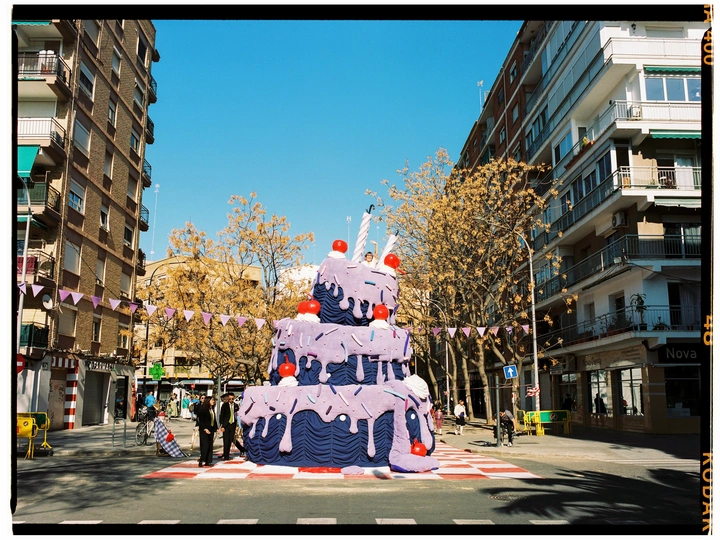
I do not transfer cultural models. "Las Fallas" Festival, "La Ruta Destroy" and other joyful expressions of Valencian popular culture are not exportable examples but the starting point of a methodology that understands tradition as a living cultural infrastructure: a human legacy to project towards innovation and contemporaneity. This approach can be applied anywhere by identifying the living cultural infrastructures that sustain, celebrate and regenerate collective life.
Every territory already contains the instructions to imagine its own future. Architecture remains a projective discipline, but one that builds shared futures by recognising and strengthening the living cultural infrastructures that sustain community. Exhibitions, publications, urban strategies and spatial interventions become tools to activate collective desire and imagination, cultivate joyful forces, and expand communities' capacity to build futures that are freer, more diverse, resilient, desirable and ecologically committed.