Planning Through Togetherness
Maria Crammond is a Danish architect and urban planner and founder of Studio Common Connection, an independent practice exploring how participation, care and local knowledge can shape more meaningful urban development.
After more than a decade working with urban planning and strategic development, she established her own practice in 2025 to develop new methods for collaborative spatial planning. Her work focuses on translating dialogue into spatial strategies through workshops, storytelling, mapping and long-term engagement with communities.
Recent projects include the strategic development of Munkebo, Denmark, where a participatory process involving residents, schoolchildren, local organisations and the municipality shaped a shared vision for the town, and Krøgenes, Norway, where she led a collaborative planning process for the transformation of a former industrial peninsula into a mixed-use neighbourhood.
Maria's work has been recognised through several awards and fellowships, including a shared first prize in Europan 17, support from the Danish Arts Foundation and selection for the Danish Association of Architects' START programme. She collaborates across disciplines with architects, landscape architects, architects historians and artists, believing that the most resilient places emerge when many voices help shape them.
Through her practice, she is developing Planning Through Togetherness as both a methodology and an invitation to rethink the role of the architect—from expert to facilitator of shared futures.
Planning Through Togetherness is my approach to shaping cities through care, dialogue and collective imagination. Rather than generating solutions, I cultivate the conditions for communities to discover a shared direction for the future.
I see urban development not as a linear process of problem-solving, but as a sensitive, situated practice rooted in care. Planning should respond to the complexity of place, people and ecology—not by simplifying it, but by listening, adapting and building trust.
I founded Studio Common Connection in 2025 to develop an alternative to planning driven by checklists, data and predefined answers. Instead, I work through iterative, place-based processes that build on local knowledge, relationships and collective imagination.
This methodology has evolved through projects such as the Munkebo Strategic Development Plan in Denmark and Krøgenes Peninsula in Norway. Rather than arriving with predefined solutions, I create processes where citizens, municipalities, schools, businesses and local organisations become co-authors of change.
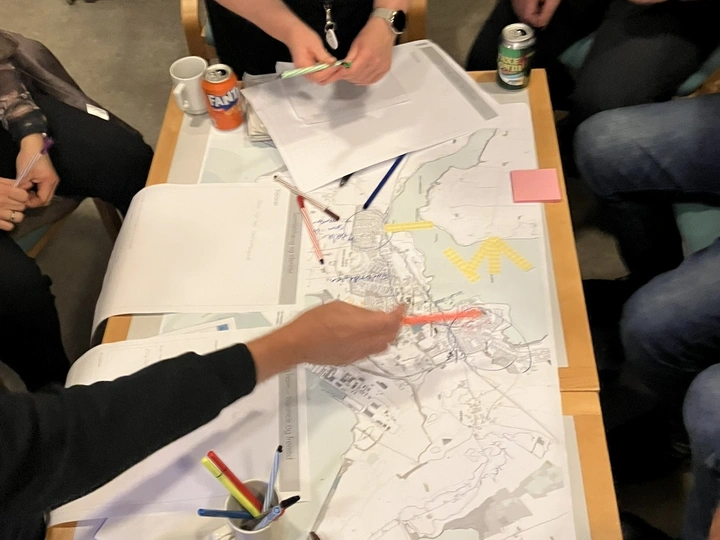
In Munkebo, postcards, conversations with schoolchildren, workshops and a Community of Practice helped establish a shared direction for the town. In Krøgenes, workshops, mapping and model-making transformed different interests into a collective vision for a former industrial peninsula. In both projects, the most valuable outcome was not only the plan itself, but the trust, ownership and long-term relationships created through the process.
Today, I am developing empathetic planning as a framework for navigating urban transformation through care, curiosity and shared responsibility. I see planning as a rehearsal of the future—a continuous process of imagining, testing and learning together.
Through LINA, I hope to refine this methodology while learning from others who are redefining architecture as a social, ecological and cultural practice.