arèneeurope
Etienne Gilly
Etienne Gilly (France, 1991), architect, and Gianluca Gadaleta (Brazil, 1996), filmmaker, have been collaborating regularly since 2021 on research, image, and moving image projects. In line with previous cartographic research on energy changes in the European Union, the duo uses video as a tool to observe, represent, understand, and map the territory and the migratory and logistical flows that traverse it. Trained in civil engineering and architecture (RIBA Part II, Architectural Association), as well as in the Master's program in Political Arts Experimentation at Sciences Po (SPEAP), Etienne Gilly has developed a practice situated at the intersection of architecture, urbanism and anthropology. After working at l'AUC, he co-founded asept in 2023 (with Charles Treve and Aris Chekherdemian). A graduate of ESRA Paris, Gianluca Gadaleta works as an artistic director and director, notably in music and fashion. Also a photographer, he has made personal short films exploring dance (Entry Point) and the preservation of Brazilian wildlife (Le Gardien de la forêt). In 2025, he founded RocheFichier studio.
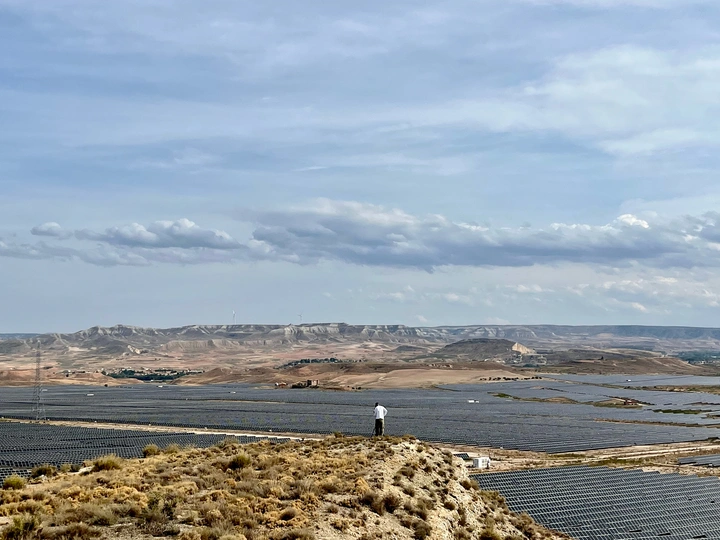
arèneeurope explores the shifting identities of the European Union in the era of environmental and energy policies known as “carbon neutrality.” Neither a territory nor an institution, Europe is examined here as a set of intertwined conflicting energy and anthropogenic flows, alternately regulated, harmonized, and accounted for by supranational legal and infrastructural architectures. Acknowledging that cartography fails to capture these shifting realities, arèneeurope favors film and sound to reflect the physical manifestations of power. Beyond the history of European construction and current geopolitical and climatic tensions, the project explores locally the transition to renewable energies and the concrete ways in which “logics of control and extraction” are exercised, contradicting the stated ambitions of decentralization, transition, and autonomy. The project focuses on territories on the margins of the inhabited centers of the “old continent,” searching for nodes where landscapes, memories, and populations are similarly affected. The concept of the arena, borrowed from screenwriting, suggests other avenues for political and energy development based on the infrastructure itself, beyond territorial realities: space-times where “energy citizenship” is being reinvented locally and transnationally.