Architecture of Hospitality
Maria Covrig
Daniel Koller
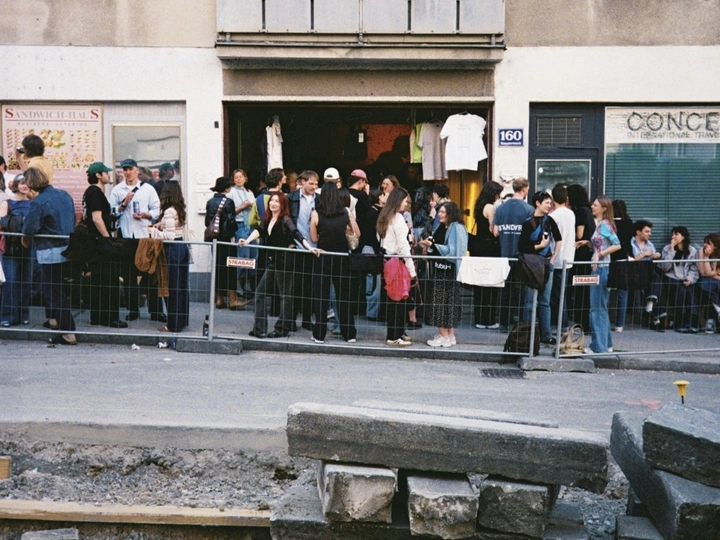
Sebastian, Maria and Daniel are co-founders of Studio Margarita, a collective of young architects who run together a space for architectural experiments, cultural exchange and social encounters. As a community of creatives with architectural background, they all work side by side, sometimes in interdisciplinary collaborations. Additionally, they share their space with the public by regulary hosting exhibitions, screening, talks and concerts - events that help maintaining and curating a joyful creative and social environment. By actively engaging with the creative community, with its neighbors and visitors, the studio challenges the architect‘s role in society and reimagines tools and methods of participatory city making.
Sebastian Caballero is a trained mechanical engineering designer and architect. In addition to his work in a Viennese architectural office, he is involved in experimental furniture construction on a smaller scale, as well as more climate-resilient building concepts, which will be tested in upcoming competitions.
Maria Covrig is a young architectural designer with experience in built architecture, visual media art and academic research. She was involved in various collaborative exhibitions, from design to production, and centers her interest in curatorial practice, Her work explores community-focused planning methods and architectural experimentation.
Daniel Koller works in the fields of architecture and contextual design, with a primary focus on vernacular and socially responsible building methods. In addition to his building practice, he
has participated in several exhibitions and small-scale interventions in public space, exploring the relationship between materials, users, and the built environment.
Can we understand hospitality as a tool to support social interaction and translate it into architectural space? How will we address the concepts of privacy, public space, and comfort in the years to come? How can we use the potential of existing built and unbuilt matter to create a sense of togetherness? Our proposal understands hosting as a tool to cultivate exchange and trust, and explores strategies for a community-driven spatial production. Especially in a time of constant movement of people, knowledge, information and culture, it feels relevant to address the various issues of hospitality. As an architectural concept, this project aims to renegotiate the conventional notions of living, housing and working and hospitality.
Considering hospitality as an intrinsic part of our collective existence, we aim to explore it as a tool for a socially responsible spatial production. We believe that curating spaces for conviviality by hosting temporary interventions, cultural events or collective moments can be a sustainable method of spatial activation, especially in the context of vacant built matter. By bringing underused spaces back into public life and to local communities through gradual transformation, this project questions current tendencies of fast real estate development and the misuse of available resources.