Stratigraphy
Rand Abou Fakher
Qusay Awad
Mohamad Badran
Dhia Douss
Marah Echtai
Qusay Awad (b. As Suwayda, Syria) is a Berlin based architect, multidisciplinary artist, and researcher whose practice spans spatial investigation, film, installation, sound, and curatorial practice. Through speculative and research driven environments, he explores how memory, violence, and political power become embedded in architecture, landscapes, and infrastructures. His work has been presented internationally across exhibitions, festivals, and institutional contexts.
My proposal develops an artistic framework for investigating how architecture, landscapes, and infrastructures preserve traces of political power, collective memory, and lived experience beyond official historical narratives. Drawing from my background in architecture, I combine artistic research with moving image, installation, sound, mapping, archival materials, and spatial design to construct new ways of encountering places as active sources of knowledge.
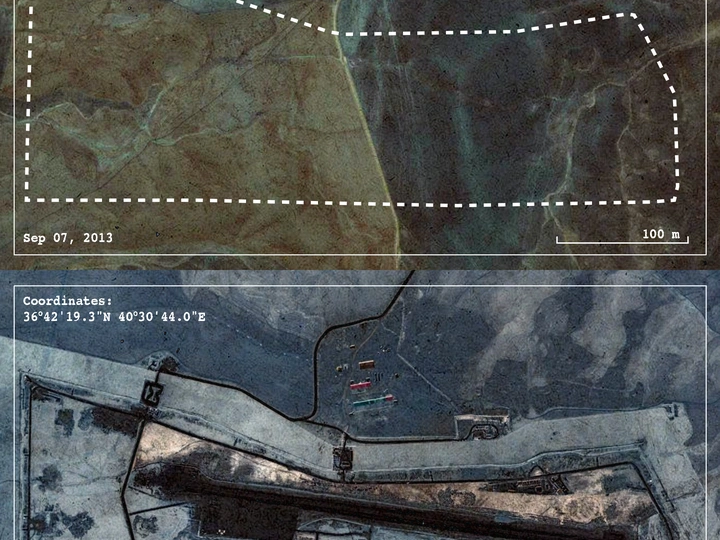
This framework has evolved through a series of interconnected projects. Transmission 1987 investigates the Syrian landscape through satellite imagery, archival footage, and installation, reimagining the orbital gaze of Syria’s first astronaut to examine mass graves, military infrastructures, and landscapes transformed by political violence. Sediment explores the layered history of Berlin’s Bärenzwinger, reading architecture as a material witness to changing political, social, and ecological conditions. The Tessera, my ongoing hybrid feature documentary, follows the investigation of my great-grandfather’s house in southern Syria, where one building reveals successive histories of colonization, archaeology, education, militarization, and displacement. Together, these projects shift between landscape, institution, and domestic space while asking how places continue to embody histories that have been concealed, erased, or rewritten.
Alongside these investigations, Principles to be Rebuilt expands my practice into collaborative spatial research. Through community curation, participatory workshops, and exhibition making, it explores how collective forms of inquiry can generate new relationships between place, memory, and shared knowledge.
Through LINA, I aim to further develop this framework by testing it across new contexts and collaborations, expanding it into a methodology through which artistic research becomes a tool for reading, experiencing, and collectively reinterpreting contested spaces.