Open Architecture
Holly Dale is an architect and researcher based in the Netherlands. She initiates and leads site-specific projects that examine how places are shaped by relationships between materials, labour, policy, economics, heritage and everyday use, and how these relationships can support more just and regenerative forms of practice.
Since 2020, Open Architecture has provided the framework for her work. Working across the roles of designer, researcher and facilitator, Holly designs processes that bring communities, makers, researchers, industries and institutions into dialogue. Through fieldwork, film, writing and material investigation, she identifies knowledge and relationships often overlooked by conventional architectural processes. She then translates these findings into collective briefs, public programmes, exhibitions, prototypes and spatial proposals.
Alongside her independent practice, Holly teaches architectural practice at TU Delft and contributes to CIRCUL’ARTS and Architects Climate Action Network Netherlands. Working across academia, practice and public culture, she builds collaborations between people who do not usually shape projects together.
Notable achievements includes Landscape Crafting workshops and exhibition at Rotterdam Art Week and OMI (2026); Regeneratieve Regio’s, a community design-and-build project supported by the Creative Industries Fund NL (2026); The City That Was Not Supposed to Be on the Map, documentary shown at Dokufest (2023); New Narratives for the European City, Writingplace Journal 8/9 (2023); and RAW exhibition at Het Nieuwe Instituut (2021).
Open Architecture rejects urban development driven by political and economic interests, placing private gain above collective needs. From London’s ghost mansions to the Skopje 2014 remodelling, such projects cause environmental harm and deny local communities agency over their future. In response, Open Architecture develops public design processes that bring local narratives, material practices and shared knowledge into design, construction and care.
Open Architecture begins on site. Tracing everyday narratives, overlooked characters, skills, material flows and ecological relationships that have shaped a place over time. Through film, theatre, writing and co-creation, these workshops reveal shared values and form questions and design briefs.
Open Architecture makes knowledge tangible. Through making, participants handle, test and assemble materials, allowing ideas to develop through embodied experience. Community values, practical skills, material limits and ecological relationships can be seen, felt and debated. Participants create shared futures, questioning what is needed, what form it should take and how it will be used and cared for.
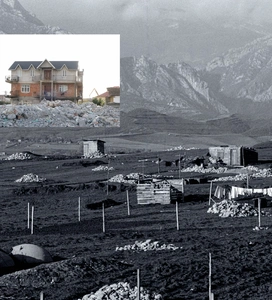
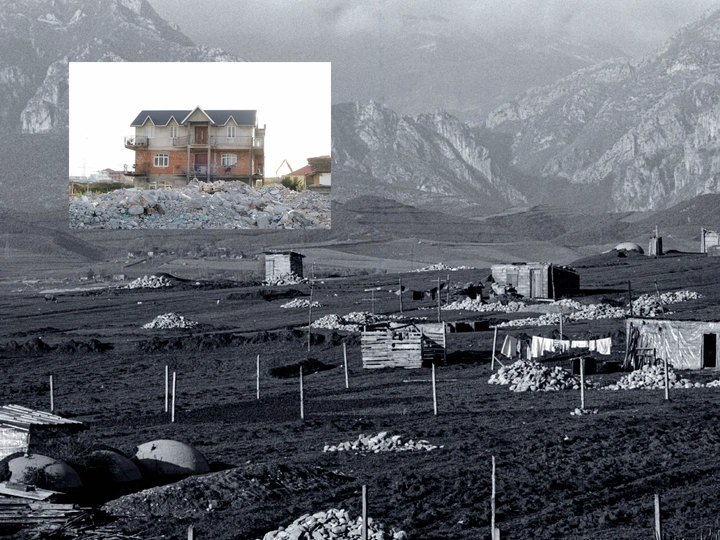
The process has developed in different projects. Documentary filmmaking in Tirana and Kamza recorded self-built histories overlooked by formal planning. RAW used a public call and exhibition to reveal labour and unseen values in design. In Skopje, a competition became a collective inquiry through co-creation workshops. Landscape Crafting connected sand-extraction sites with material workshops to explore the environmental, social and economic relations carried by construction materials.
Together, these processes created forums, collective briefs and material propositions that prioritise situated knowledge. The next step is to test whether shared agency can be sustained through financial constraints, construction and maintenance by transforming an existing building and carrying collective decisions into long-term stewardship.