Shaping Change With Disabilities
In my artistic and research practice, I explore the relationships between (social) spaces, (social) memory and architecture, often outside the framework of the established art world. I am an artist, a visual anthropologist, and a sociologist. I am currently completing my doctoral studies in sociology at the University of Warsaw, writing a dissertation on how young adults (Generation Z) perceive Holocaust museums in Poland and Germany.
My practice demonstrates a broad interdisciplinary approach that bridges time-based media art with (visual) academic research. For instance, my participation in the Bauhaus Lab programme in Global Modernism Studies 2022 (Bauhaus, Dessau) fostered my sensibility for the interdisciplinary contexts and processual learning. I further developed the research topic into a video installation entitled Mit sozialistischem Gruß (2025) where the archival and field research involved collaboration with various social actors in former East Germany, in Tanzania and in South Africa. It was honoured with the Meisterschüler*innenpreis der G2 Kunsthalle 2024 at the HGB Leipzig.
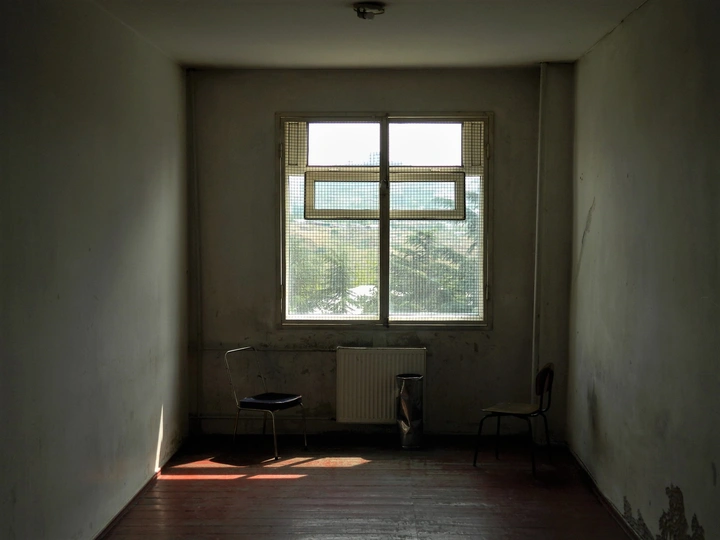
In 2020, I started to work with Ugné Grigaitė, a global public mental health expert from Lithuania. We met in the frame of Future Docs 2019, a programme run by the IFF Watch Docs, Warsaw. The project was under development with support of the Human Rights Monitoring Institute, Vilnus.The idea is based on the question: How can we organise facilities for psychiatric and social care differently, and how are we able to record and show the process? — The ratification of the 2007 UN Convention and Article 19 reshapes our approach to living conditions and physical spaces. This poses a particular challenge for countries in the former Eastern Bloc, where mental health problems and disabilities were officially non-existent. This resulted in the institutionalisation of social care, which was often out of reach for society. The UN Convention demonstrates a complete contrast, and we are witnessing a transformation process that reshapes the physical spaces. The project involves fieldwork, archive study and reflections on visual languages and ways of presenting the research outcomes. What format and shape should the artistic presentation take? This will include studying possible approaches, such as using simple language, audio descriptions or inclusive design methods, and adapting them to the project conditions.