The political materiality of home and beyond
I am a French architect and urban researcher whose work explores the political dimensions of housing and the built environment. After training in architecture, I have spent more than a decade living, working and conducting research between Berlin, Paris and São Paulo, where I collaborated with architectural practices, public institutions and the Laboratory of Housing and Human Settlements (LabHab) at the University of São Paulo. This experience profoundly shaped my understanding of architecture as a social and political practice.
My doctoral research investigated how everyday built environments materialise relations of power, conflict and democratic coexistence through long-term ethnographic fieldwork, spatial analysis and architectural inquiry. Today, my work combines methods from architecture, urban studies and the social sciences with mapping, photography and other visual practices to make research accessible beyond academia.
More broadly, I am interested in how architecture participates in addressing contemporary political, social and ecological challenges. Rather than separating research, design and public engagement, I seek to develop interdisciplinary projects that connect critical inquiry with exhibitions, publications and visual storytelling.
Alongside my research, I teach urban studies and architecture at university level (Sciences Po Paris, Université Paris Nanterre, Ecole d’Urbanisme de Paris) and contribute to international collaborations. My current work expands from Brazil to comparative research in France and Portugal, exploring how different residential environments shape everyday experiences of inhabiting and living together.
I see architecture not only as a profession but as a way of understanding and transforming the world through space.
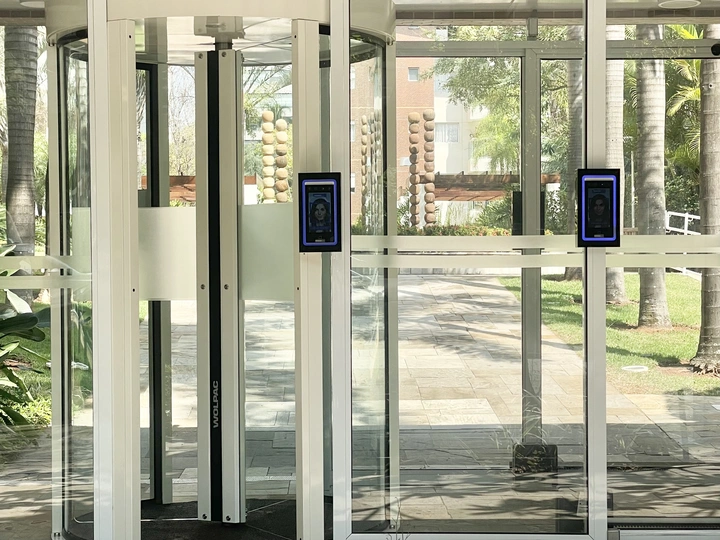
The Political Materiality of Housing investigates how everyday built environments shape democratic coexistence, from residential spaces to streets and neighbourhoods. Boundaries, thresholds, surveillance devices, circulation patterns and shared spaces are never neutral: they influence encounters, conflicts, care and exclusion. Among these material configurations, the growing anticipation of security offers a particularly revealing example. Increasingly embedded in architecture, landscape design, technical devices and material choices, security reshapes everyday environments long before they are inhabited. At a time of political, social and ecological upheavals, understanding how built environments shape togetherness has become an urgent democratic challenge.
Drawing on my research on contemporary housing and urban transformations in São Paulo, this proposal expands the inquiry to France and Portugal through ethnography, spatial analysis, mapping and visual documentation.
Combining architectural plan analysis, ethnography, mapping and visual practices, the project investigates how spatial configurations embody social relations and organise everyday life. Photography will document the often-overlooked materialities of everyday life. Particular attention will be paid to domestic hierarchies through the analysis of housing plans, such as the example of the « quartinho de empregada » (maid's room) in Brazilian apartments, as a legacy of colonial and domestic labour relations.
By bringing together research, visual storytelling and public engagement, the project seeks to make visible the hidden political dimensions of housing and stimulate dialogue between architects, researchers, practitioners and wider audiences. Beyond exhibitions and visual storytelling, the project aims to produce an illustrated book for a broad audience, making its findings accessible to readers beyond academia and architects.