Primum non nocere
I am an architect based between Portugal and Poland, working at the intersection of architecture, heritage, adaptive reuse and circular practices. My work explores how architecture can cultivate authentic human presence through listening before intervening, translating careful observation into meaningful and buildable interventions.
After receiving the Polish Diploma of the Year Award in 2018 for On the Verge. The Soothing Venue and being one of Polish young architect nominated to YTAA award, my practice expanded from conceptual design into the realities of architectural practice. Over the past decade I have worked on projects ranging from private homes and tourism developments to feasibility studies, heritage contexts and multidisciplinary design processes, collaborating with engineers, craftspeople, municipalities and local communities.
Alongside design, I have explored natural building techniques, adaptive reuse and circular construction, believing that architectural ideas only become meaningful when they are translated into places through materials, craft and collaboration. I enjoy moving between visionary thinking and practical implementation, connecting architectural, technical and human perspectives.
Through LINA, I hope to continue developing a collaborative methodology that treats heritage,not only architectural, but also natural and intangible,as a living source of knowledge capable of shaping meaningful futures.
This proposal began not with an idea,but with a place. While studying a XVIth sanctuary in Portugal, I realised the site invited a different architectural attitude:listening before intervening.
At the same time, observing contemporary society, questions about the loss of spaces for silence, contemplation and authentic presence had already begun to emerge within me. As I listened to the sanctuary, I realised it was giving architectural form to those questions by revealing not whether to intervene, but what kind of intervention the place was asking for.
Observation unfolded alongside historical research. Archival sources and material evidence reinforced the emerging direction. Rather than preserving the site as a static monument, I reinterpreted its original vocation through an integrated intervention that introduced new architecture while restoring its self-sufficiency and preserving the primacy of its landscape & heritage.
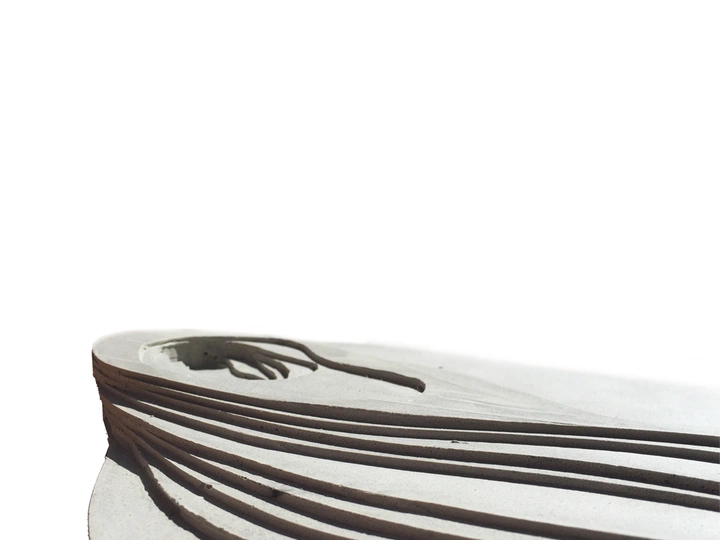
On the Verge.Soothing Venue(2017) received the Polish Diploma of the Year Award 2018.Looking back,I see it as the moment an architectural project began evolving into a collaborative methodology. Although my practice evolved, the question has remained the same: how can architecture cultivate the conditions for authentic presence through listening before intervening?
Over the following decade, practice in Portugal and Poland deepened this inquiry. Adaptive reuse, circular construction, natural building, engineering and collaboration translated attentive listening into reality. Heritage is valuable not because it belongs to the past, but because it still carries unrealised potential for the future.
Through LINA, I hope to develop this methodology across diverse heritage contexts and co-create a practical framework combining attentive listening, adaptive reuse, circular practices and local knowledge. The project did not begin by asking what could be added to the sanctuary, but what the sanctuary, and perhaps every place, still had to offer.