Chrysalide
Multidisciplinary artist working across digital art, light installation, immersive environments, and public space interventions. With a background in visual communication and digital creation, his practice has progressively evolved toward hybrid forms combining moving image, light, sound, physical materials, and participatory processes.
His work explores the relationships between perception, mental landscapes, ecological transformations, and contemporary technologies. Through immersive and sensitive environments, he develops installations that question how individuals collectively experience climate anxiety, digital acceleration, memory, and transformation.
Over the past years, he has developed projects presented in festivals, public spaces, and international contexts across Europe. His participatory project Chrysalide explores collective dreams and ecological mutation at the scale of a city, while Breathing, developed within the European Climateurope2 program during an art-science residency in Belgrade, transforms climate data into an audiovisual immersive experience combining synchronized light, sound, and video.
Other projects such as Grotte investigate psychological refuges and mental spaces through immersive mapping and geological aesthetics, while Seasons uses real-time weather data to generate evolving visual landscapes interacting with visitors.
Alongside his digital practice,he is currently developing a more material and low-tech approach integrating natural dyes, lenticular printing, biomaterials, drawing, and sculptural experimentation. This transition reflects a desire to create more sensitive and grounded relationships between technology, living systems, and public experience.
His work has been shown in various European festivals and cultural institutions dedicated to digital arts, light art, and immersive creation, and he regularly collaborates within interdisciplinary and participatory contexts connecting art, science, ecology, and public space.
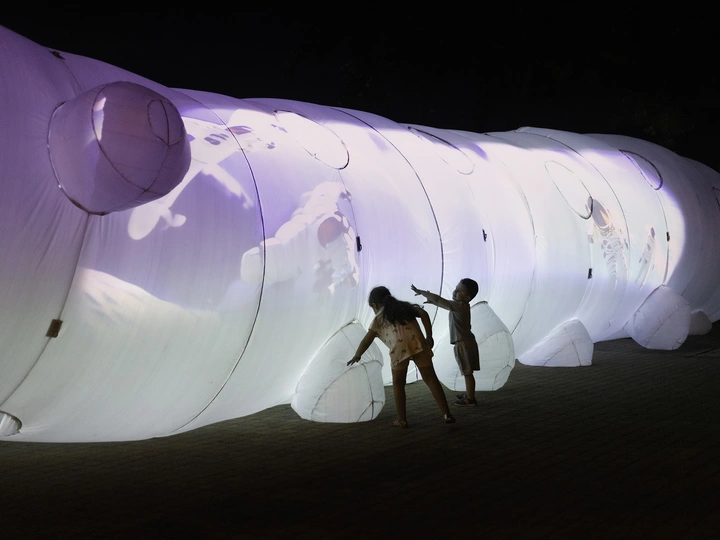
Chrysalide is an participatory spatial installation exploring how digital environments reshape human perception, collective experience, and our relationship to shared spaces. Conceived as a living ecosystem in perpetual transformation, the project combines generative visuals, spatialized sound, light, and interactive systems to create an evolving sensory environment where visitors become active participants.
The project emerged from a desire to question how contemporary technologies influence the ways we inhabit physical and emotional spaces. Inspired by biological metamorphosis and ecological interdependence, Chrysalide investigates the porous boundaries between organic life, digital systems, and collective consciousness. Through movement, presence, and interaction, audiences influence the behavior of the installation, producing a constantly shifting dialogue between bodies, space, and virtual matter.
Rather than presenting technology as spectacle, the project approaches immersive media as a tool for creating sensitive and relational experiences. Chrysalide seeks to transform public or shared spaces into environments of attention, contemplation, and connection, encouraging audiences to reflect on their place within increasingly mediated ecosystems.
The work has evolved through interdisciplinary research combining digital art, spatial practices, audiovisual composition, and participatory methodologies. Its development is informed by questions related to environmental transformation, sensory perception, and the social implications of immersive technologies in contemporary society.
Within the LINA context, Chrysalide could evolve toward more site-responsive and context-sensitive forms, integrating local narratives, ecological data, and participatory processes connected to specific territories and communities. The project aims to explore how immersive spatial experiences can foster new forms of collective awareness and engagement with the environments we inhabit.