Architecture as Behavioral Interface
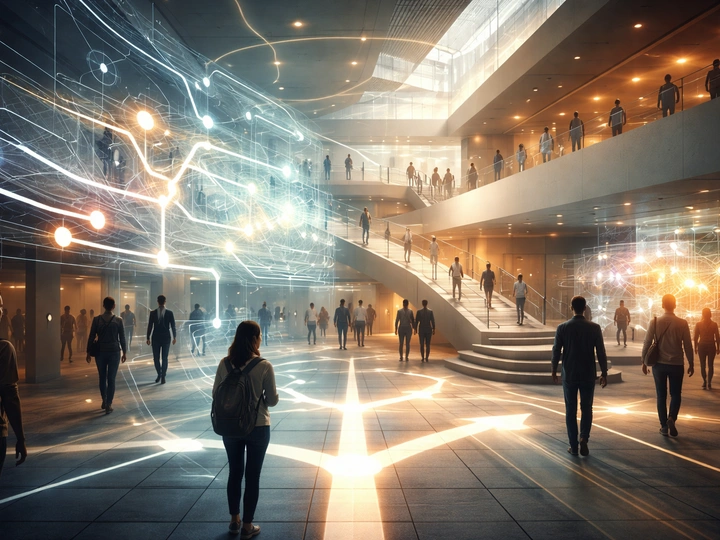
I am a final-year architecture student at the University of Belgrade focused on experimental, research-driven architectural practice. My work investigates the relationship between spatial design, cognitive behavior, and environmental systems, with a particular interest in how architecture influences perception, decision-making, and collective behavior through what I define as “spatial scripts.
My practice combines design research, digital tools (Revit, AutoCAD, BIM workflows), and speculative spatial prototyping, often developing projects that test behavioral and environmental responses in real spatial conditions. I am especially interested in public space and the development of architecture as an active system rather than a static object.
I have participated in academic and applied BIM projects at the Faculty of Civil Engineering and worked on competition and practice-based architectural work, including collaboration in professional studio contexts. My interests lie in advancing architecture as a hybrid field between design, research, and cognitive science, with the aim of contributing to emerging experimental and ecological spatial practices.
Architecture is never neutral. It produces behavior.
Every threshold, corridor, and spatial decision shapes cognition, emotion, and movement, whether or not it is acknowledged in design practice. This project, Architecture as a Behavioral Interface, frames space as an active system of behavioral and cognitive production.
Healthcare and public institutions make this most visible. In these environments, users do not simply navigate, they hesitate, misread, recover orientation, and decide under stress. Architecture is already operating on cognition, but without being explicitly designed as such.
Wayfinding is not signage. It is embedded in spatial structure: hierarchy, visibility, ambiguity, and friction. These are not formal qualities, they are behavioral mechanisms.
The project reads architecture as cognitive coding. It focuses on decision points, breakdowns of orientation, and moments of spatial hesitation. These are not errors, but the real content of architecture.
The aim is not optimization. It is exposure.
To make visible how space already scripts behavior, perception, and decision-making.
The project refuses solutionism and treats architecture as a behavioral script that must be read and questioned rather than improved.
Future development will test different spatial and cultural logics through LINA collaborations, focusing on friction, contradiction, and breakdown rather than coherence.
The central question remains: who designs behavior through space, and how much of it remains invisible?