Reawakening Place
I am an architect and interdisciplinary researcher exploring how relationships between people and place can foster more resilient, caring, and sustainable communities. My work brings together architecture, vernacular heritage, environmental psychology, and participatory research to investigate how spatial experiences shape identity, belonging, and collective wellbeing.
After graduating in Architecture and completing a Master's degree specialising in the conservation and rehabilitation of built heritage, I became increasingly interested in moving beyond the preservation of buildings toward understanding how people experience, remember, and care for places. This led me to develop research methods that combine emotional and participatory mapping, storytelling, photography, and artistic practices as tools for engaging communities in reading and reimagining their environments.
Alongside my research, I develop creative projects inspired by nature and local landscapes, believing that artistic practice can also become a way of strengthening people's connection with place. I see architecture not only as the design of physical space, but as a cultural and social practice capable of nurturing dialogue, empathy, and collective agency.
My ambition is to contribute to new approaches to spatial practice where heritage becomes a living resource for regeneration, participation, and environmental responsibility, while building collaborations across disciplines and cultural contexts.
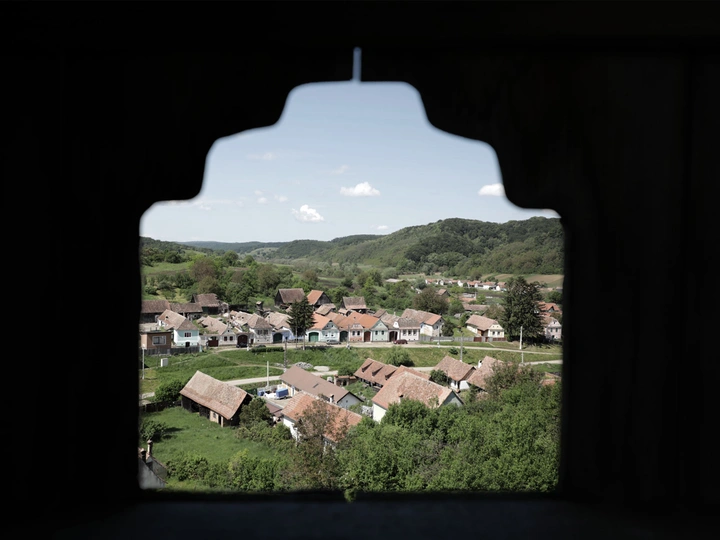
Across Europe, and particularly in many rural regions of Eastern Europe, vernacular heritage is disappearing as buildings deteriorate, traditional knowledge fades, and communities continue to shrink. Yet the crisis is not only physical. As everyday relationships with place weaken, heritage risks becoming either an object of nostalgia or a technical matter of conservation, detached from contemporary community life.
Reawakening Place asks how participatory spatial practices can rebuild these relationships, transforming vernacular heritage from an object of preservation into a catalyst for care, belonging, and rural regeneration.
Rather than documenting buildings alone, the project proposes a participatory methodology that uncovers how places are experienced, remembered, and valued by the people who inhabit them. Through participatory mapping, memory walks, storytelling, photography, and collective spatial observation, residents become co-researchers, revealing the invisible cultural, emotional, and social dimensions of vernacular landscapes.
The project is grounded in the belief that caring for heritage begins with caring for the relationships people build with places. By combining architecture, heritage studies, environmental psychology, and socially engaged artistic practice, it explores how emotional attachment can become an active resource for community resilience rather than merely an object of research.
The long-term ambition is to develop an adaptable participatory toolkit that can support architects, researchers, cultural organisations, and local communities across diverse European contexts. Although rooted in rural vernacular heritage, the methodology is intended to evolve beyond a single geography, offering new ways to reconnect people with the places they inhabit and collectively shape their futures.