Toward a Labour Centered Architecture
Lalie Porteret
Carolina Pichler and Lalie Porteret engage with design politics by exploring labour process on Swiss construction sites. They advocate for a labour centered architecture offering new perspectives of solidarity in the construction industry and redrawing architect's role within it.
Carolina Pichler (she/her) is an architect with a bachelor and a master degree from the EPFL. She has been a student assistant at the RIOT laboratory as well as an active member in university politics, addressing working conditions (TNT) and architectural diversity (Drag Lab). Through internships, earth construction workshops and studio projects, Carolina explores decarbonization, material extraction and labour value in design practices.
Lalie Porteret (she/her) is an architect. She graduated in 2025 with a Master of Architecture from EPFL. Active in university politics, she contributed to TNT and Drag Lab associations, addressing working conditions and diversity in architectural education. She co-teaches DRAG(UE): Performativity and the Built Environment at EPFL, a format that critically analyses the built environment through the lens of social structures and norms. Through on-site professional experiences and rammed earth or cob construction Lalie engages with the material dimensions of architectural practice and the labour they entail.
Their diploma work together reveals hidden narratives of the construction industry through fieldwork : interviews and site observations on site, to propose a speculative design process. This work contributed to the publication On Architecture and Work: The Political Economy of Space Vol. 3 edited by Charlotte Malterre-Barthes. They also presented their present work, to (non-) Swiss Architects, Unmasking Space at ETHZ and to RIOT students at EPFL as part of the What Was I Thinking format. They are collaborating on an ongoing publication with T.I.N.A, a self-published fanzine on systemic violence in architecture.
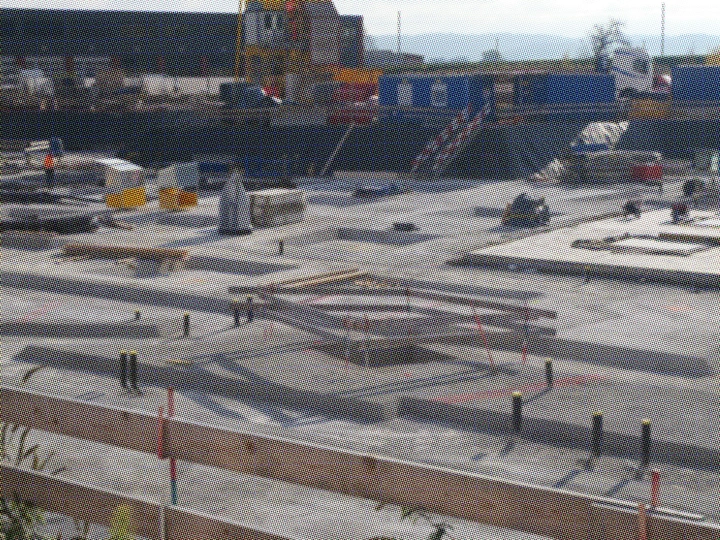
Capital generated by ongoing intense construction activities has reached unprecedented levels through the extraction of labour on construction sites, which pursues craft devaluation and deteriorating site conditions. The construction industry relies on bodies subjected to increasingly precarious conditions. According to Peggy Deamer, “we can only have a more fulfilling, less passive, and more disruptive role in capitalism if we don’t think of construction and labour as conceptual ‘others’ of architecture, and, I would add, embrace its production chains.”
Toward a Labour Centered Architecture reacts to the need to address this situation publicly as stakeholders and witnesses of the same industry, and builds on the diploma work we undertook together.
Through field research, including voices collected from interviews and discussions, as welle as observations and situations experienced on site, our work reveals hidden narratives from the construction industry. From those hints, it explores design process policies as transformative device to reveal possibilities of design practices that center their process around site labour. What would architecture be if workers from the construction industry carried it out as a collaborative project, and labour would truly impact our design choices? Design principles have been identified, such as the pooling of piping systems, which influences housing and the associated ways of living or the use of unprocessed materials to protect workers from toxic substances they hanfle and to promote the development of know-how.
We look ahead to investigate further ways of designing that support these concerns, drawing on a range of sources, from collecting testimonies and voices within the industry to theoretical and archival resources. Eventual ranges of radical and concrete design methods could be specified, guiding us towards collaborative experimentation and spatial or hands-on constructive approaches.