Re-coding Armenian Spatial Memory
Nairi Grigoryan
Angelina Margaryan
Yana Zakharova( Zakharyan), conceptual artist, designer, and Art Manager . She is a lecturer in the Department of Advertising and Creative Industries at the Russian-Armenian University.Yana is the author of a patented artistic method that combines academic drawing and digital collage, forming the conceptual,technical foundation of the project. Her work has been presented in Yerevan museums in 2025 during International Museum Day.She works at the intersection of contemporary art, design, and cultural heritage, developing a distinctive visual language that combines classical aesthetics with digital technologies. Yana’s work explores the dialogue between tradition and modernity, organic forms with geometric precision and reinterpreting historical visual codes through a contemporary lens.
CREATIVE DIRECTION / CURATOR
Exhibit: Prague international poster exhibition /ARTtention
Art Manager /“The Echo: Armenian and Austrian Artists Under One Roof”
Art Manager/Art festival “Fear-Less-Hope: Framing Time” “Zwetajewa” Center of the University of Freiburg
Exhibit/SECRET SPACES – BORDERS ART FAIR
Palazzo Albrizzi-Capello, Venice
Exhibit,Curator/“Above”ICOM
Curator/Harmonic Structures /The Intersection of Geometry and Flow
SAFA Boyajian Gallery.Yerevan
Exhibit/“Women in Data Science: Creative Cognition”.Armenia
Exhibit/International Print Biennale Yerevan Curator /Charity Art Exhibition.Machar,Yerevan
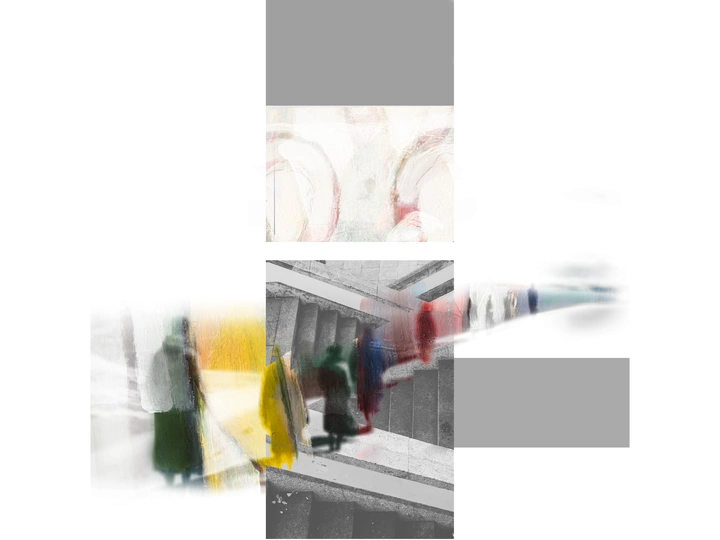
This project develops and disseminates a patented artistic method that reinterprets Armenian cultural heritage through a hybrid process combining hand-drawn academic techniques and digital collage.
The project expands Armenian visual culture beyond traditional representations by integrating architecture, typography, iconography, and historical narratives into contemporary art.
It includes the creation of a new body of artworks, exhibitions, educational workshops, and a digital archive, contributing to the international visibility of Armenian culture.These elements are not reproduced, but reframing through a cyclical process (analog, digital, analog), creating new contemporary artworks.
Rather than treating heritage as a static archive, the project approaches it as a living system that can inform new spatial and architectural imaginaries. it generates hybrid outcomes, including digital spatial compositions, speculative architectural fragments, and installation-based environments.
This structure will translate Armenian visual and architectural codes into an immersive spatial environment, where layered drawings, digital compositions, and physical elements interact. The pavilion will function as a space of perception and reflection, allowing visitors to experience cultural memory as a dynamic and evolving system.
The project focuses on the relationship between memory, space, and identity, particularly within fragmented and diasporic contexts. It proposes a way to reconstruct cultural continuity through spatial experience, transforming visual heritage into immersive and contemporary forms.
Within the LINA framework, the project aims to contribute a methodology for translating cultural memory into spatial practice, while opening possibilities for collaboration between artists, architects, and researchers.
Ultimately, it positions heritage not as preservation, but as an active spatial system capable of shaping future environments.