Improvisation and Survival: Beirut Margins
Architect, planner, and researcher committed to empowering vulnerable communities and transforming degraded urban environments through socially responsive design. Founder of Babu-Space Actions, a multidisciplinary initiative with international contributors that integrates education, design, research, and advocacy. One foot on practice and the other in academia, assistant professor at the Faculty of Architecture, Urbanism at Gdańsk University of Technology (GUT). Professional practice spans real-world consulting projects, participatory urban interventions, and community workshops, emphasizing collaboration with local authorities, architects, and residents to co-create inclusive, resilient, and equitable urban spaces. Active member of the International Society of City and Regional Planners (ISOCARP) and the Polish Society of Town Planners (TUP). Since 2011, volunteered as an architect in humanitarian crises, integrating crisis-responsive approaches into his research and professional practice. Recognized with international awards in architecture and planning across the Mediterranean, Poland, Taiwan, and Australia. Published peer-reviewed articles on urban transformation, crisis contexts, and the challenges faced by marginalized communities, with a particular focus on Beirut. Co-author of the book “60 Years ISOCARP – A Legacy of Planning Impact” (2025).
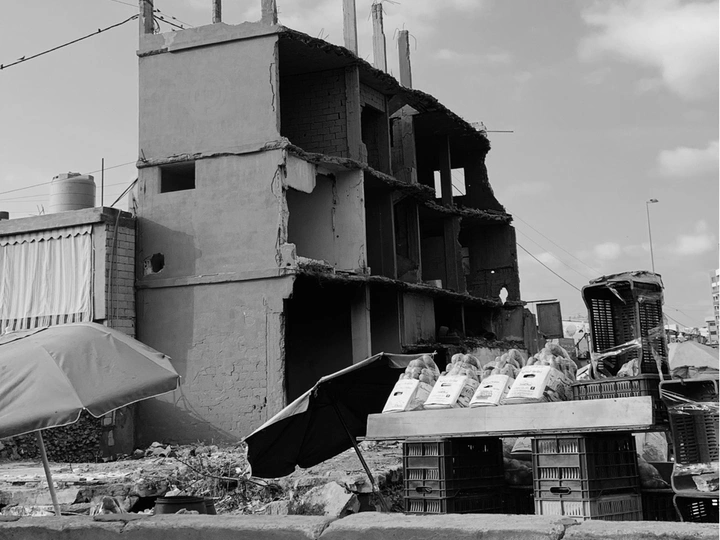
This proposal emerges from my long-term research and architectural practice on degraded urban environments, exploring how communities under social, economic, and environmental pressure create alternative forms of spatial adaptation. In Beirut’s margins, where instability, limited resources, and rapid urban change shape everyday life, residents continuously transform their surroundings through improvisation, repair, reuse, and collective action. The project challenges the perception of informal neighbourhoods as spaces of deficiency. Instead, it investigates them as places of knowledge, where everyday practices reveal forms of urban intelligence: adapting spaces with limited resources, creating social networks, and building resilience through collective effort. Through mapping, field observations, photography, interviews, and spatial analysis, the research examines how informal transformations influence neighbourhood identity, social cohesion, and responses to changing conditions. Developed through academic research, architectural practice, and engagement with communities in Beirut, the project aims to reframe marginalised areas as sources of innovation and valuable lessons for future urban development.
Within the LINA Architecture Programme, I aim to develop this research into an exhibition that presents these overlooked forms of urban intelligence through visual narratives, photographs, maps, and spatial stories. The exhibition will connect Beirut’s experience with other urban contexts facing similar social and environmental challenges, creating dialogue around resilience, adaptation, and inclusive city-making. The project advocates for an architecture that listens and learns from existing realities, recognising that resilient futures are shaped not only by technology and planning, but also by the creativity, knowledge, and everyday actions of communities.