R9: Space for Material-Centred Architecture
Máté Milovits
Gergely Tasnádi
Apol Temesi
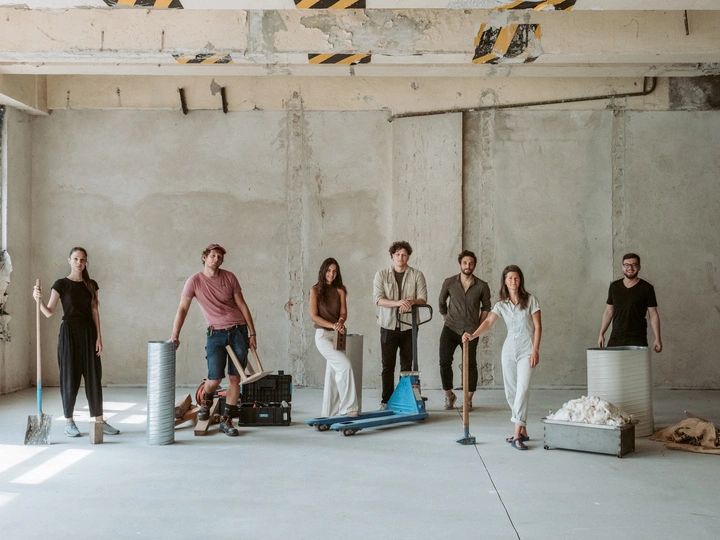
We are R9 Studio & Material Space, based in Budapest, co-founded by Veronika Róza Háló, Máté Milovits and Gergely Tasnádi. Róza and Gergely are architects working in material-centred design and education, while Máté’s background is in innovation management, institutional strategy and organisational development. We started R9 to bring these fields together in a platform for material-centred design.
Several experiences inform how we are building R9.Róza studied architecture for exhibition at YAC and was a resident at Center Rog in Ljubljana, a creative hub built around shared facilities and cross-disciplinary work. Máté studied Economics and Business Administration in Aalborg and founded his first company in 2018, specialising in innovation management. He later led digital transformation at MOME before becoming Director of Strategic Development, overseeing communications, business development, digital systems and student services. Gergely’s work at Precious Plastic and studies at BASEhabitat gave him experience of material-centred design in collaborative, practice-based communities. At MOME, he develops material-centred design methods through teaching and doctoral research.
Our roles reflect these backgrounds. Róza focuses on community and partnerships, Máté on how the initiative is organised and run, and Gergely on its architectural and methodological work.These areas overlap, and we develop projects and make strategic decisions together.
Since starting R9, we have been building a shared environment for applied material-centred design, hosting independent practices, working with universities and manufacturers, and applying material mapping and circular strategies in architectural projects.Our work connects practice, experimentation and education, helping material-centred designers bring their knowledge into projects.We are interested in how existing knowledge, available resources and proven circular methods can be adapted to local conditions and everyday practice.
R9 Studio & Material Space is a Budapest-based architecture studio and experimental workspace focused on material-centred design methods and applied circular material practice.It translates the ecological aims of material sustainability into feasible solutions shaped by the technical, economic, organisational and cultural conditions of professional projects.R9 also hosts material-centred practices in a shared environment that supports exchange and collaboration.
In Hungary, circular material design has not yet formed a coherent field of practice.There is a diffuse awareness that architecture and design need to engage with materials differently, yet this usually appears in isolated student projects, individual studios or occasional institutional initiatives.These efforts rarely connect or continue beyond a single project. The infrastructure, methods, networks and access to commissions needed to sustain them remain limited.
Our proposal is R9 itself: a curated working environment and platform where Hungary’s circular material design practitioners can build a community and establish a shared professional culture.It brings designers, emerging practitioners, universities, architects, makers, manufacturers and clients into sustained contact around experimentation and projects.Shared access to tools, testing and prototyping supports collaboration across disciplines and helps material knowledge enter architectural practice.
Working alongside active material-centred practices allows emerging designers to observe how material investigations develop into collaborations, commissions and viable professional models.This proximity creates opportunities for informal learning, shared experimentation and partnerships across disciplines and stages of practice.
R9 has begun building these connections locally.Its next phase connects this community, its methods and projects to a wider European context, enabling long-term exchange and collaboration rooted in local material conditions.