Building Territories
Born and raised in Tbilisi, Georgia, I initially studied Economics at Tbilisi State University before shifting my focus to architecture, completing both my Bachelor's and Master's degrees at TU in Vienna. This interdisciplinary background continues to shape my interest in the relationship between architecture and economy.
I co-initiated project KIOSKI, a design-build project developed together with colleague students during the studies and the NGO Vejini in Gurjaani, Georgia. Designed and constructed over two weeks using timber joinery systems, the kiosk created a shared space where local producers could sell homemade products such as wine, cheese and preserves. The main focus of the project was the social and economic role of architecture within rural communities.
My Master's thesis, How We Build Next?, explored alternatives to the demolition of Soviet housing estates by investigating architectural and financial strategies for their long-term transformation. Following my studies, I worked as a Student assistant at TU Wien's Institute of Urban Design and Landscape Architecture, contributing to research and design studios on urban transformation.
in 2023 During an artist residency at Club Hybrid in Graz, I developed experimental prototypes exploring the relationship between renewable energy, architecture and public space, including a mobile solar-powered outdoor kitchen.
I currently live and work in Zurich as an Austrian citizen, collaborating with architects and researchers on projects that examine architecture through the lens of material culture, territorial transformation and adaptive reuse.
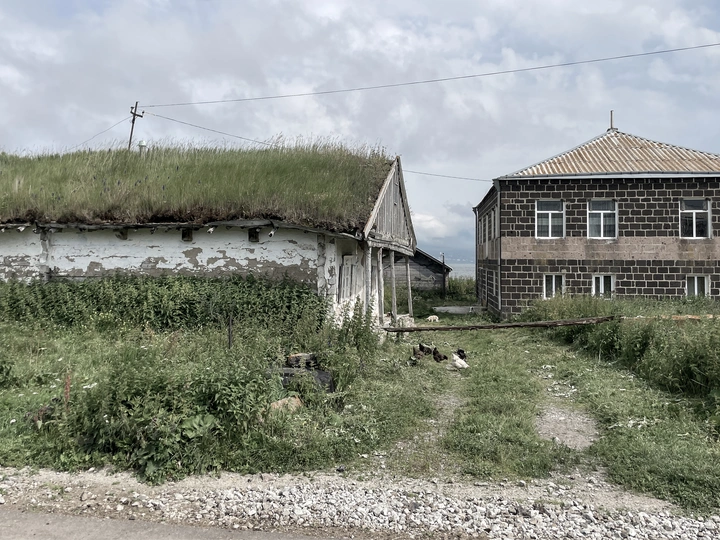
Architecture is often understood through individual buildings. The research instead approaches architecture as evidence of territorial relationships. Materials, construction techniques, labour, logistics and spatial organisation reveal how economies, landscapes and communities interact over time. Where buildings are not isolated architectural objects.
They are physical records of changing territorial systems.Rather than documenting vernacular architecture as heritage, the research examines it as a living body of territorial knowledge. The value of vernacular construction lies not in its age or authenticity but in its adaptive intelligence: the ways local materials, environmental conditions and social organisation have historically informed building practices. As these relationships change through migration, industrialisation, global supply chains and changing rural economies, architecture changes with them.
The project develops a transferable methodology for reading territorial transformation through architecture. It combines territorial mapping, architectural drawing, photography, film, interviews and material studies to connect individual buildings with broader ecological, economic and cultural systems. Rather than documenting vernacular architecture, the aim is to understand the processes that produce it and how these continue to evolve.
The proposal is conceived as an open research framework that can be applied across different regional contexts. By comparing territories undergoing similar transformations, it seeks to build a broader understanding of how architecture reflects changing relationships between people, place, resources and construction knowledge. Ultimately, the project positions architecture not only as a designed object, but as a material record of territorial change and a tool for understanding more resilient and context-responsive ways of building.