The Emotional Layers of Space
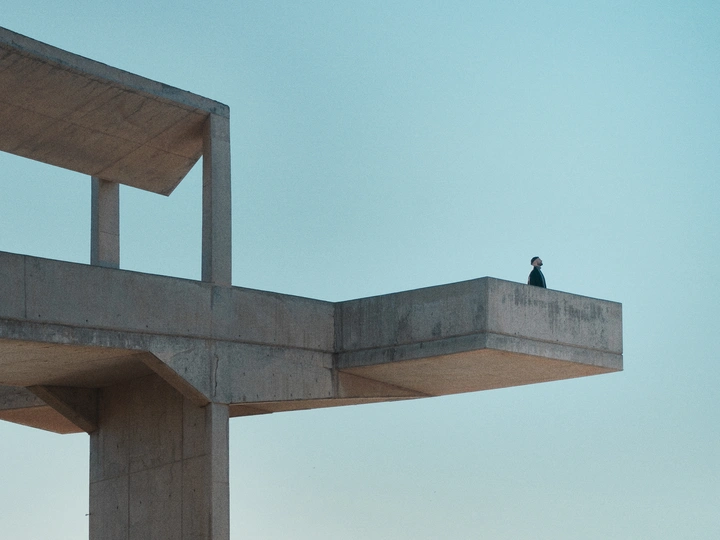
I am a visual author born in Tenerife in 1985 and based in Madrid. I work across photography and film under a single gaze: two forms of the same reading of space.
My path did not begin in architecture. It began in dance, where I spent ten years as a performer and creator. That decade trained my perception before I ever picked up a camera: weight, rhythm, threshold, presence. When I moved behind the lens, that sensitivity came with me and became the core of my practice.
Growing up on an island shaped the rest. The Canary Islands taught me to feel complete in a place where others feel isolated, and to pay attention to how a territory and its people hold each other. That attention to the dialogue between the human being and the place it inhabits runs through everything I make.
I have developed visual essays on architecture by Manuel Aires Mateus, RCR Arquitectes, Aires Mateus and Francisco Saenz de Oiza (Torres Blancas), and collaborated with institutions such as UNESCO, Villa Medici. My work has been published in the Financial Times, Manera Magazine, Urlaubsarchitektur, Metalocus and RTVE, among others. As an educator I teach masterclasses and workshops on the body as a tool for understanding space, with collaborations with universities in Valencia, Barcelona, Canaries, Helsinki, Stockholm and Toronto, and for institutions and festivals across Spain.
The essays are made with dancers whose contribution is structural to the research.
I am now extending the research toward vernacular architecture sustained by collective practice: an atlas of spaces kept alive by ritual, dance and play. LINA is the natural home for that next step.
Architecture is usually shown empty. Clean images, perfect light, nobody inside. What those images leave out is the reason a building matters: how it feels to be in it.
There are questions architecture cannot answer alone. Why one room calms us and another exposes us. Why we lower our voice in certain spaces. Where the sense of shelter actually lives. My work is a transdisciplinary framework for those questions: I bring the languages of dance and visual art into architecture to reach the emotional layers that lie beneath it.
The process is physical before it is visual. I spend time in the space until it raises a question. Then a dancer enters, and we work not on a performance but on an act of inhabiting. Physical expression becomes the instrument: where the body slows down, resists or finds refuge, an emotional layer becomes visible. Shelter, vertigo, intimacy, exposure, calm. The camera arrives last. Photography holds what endures; film holds the life that moves through it.
I have applied this framework to architecture by Manuel Aires Mateus, RCR Arquitectes and Francisco Saenz de Oiza, in projects with institutions such as UNESCO and Villa Medici, with work published in the Financial Times among others. And I teach it: masterclasses and workshops on the body as a tool for understanding space, for architects and students at universities in Helsinki, Stockholm and Toronto.
Within LINA, the framework opens toward traditional architecture, the architecture without architects: frontons, threshing floors, ritual grounds across vernacular Europe. Spaces that survive because communities return to them. Maintenance through use is a quiet form of regeneration: nothing is demolished, nothing is built, and the architecture stays alive. In a discipline searching for de-growth, these buildings already practice it.
The method needs little. A space, time, and a body willing to ask.