Codes of the Eternal Feminine Principle in Space
Kriszta Hollai
Dr. Gyöngyi Major
Dr. László Molnár
Lilla Amália Molnár
Rebeka Nagy
Gábor Sziráky
Dr. Konstantin Vukov
The proposal is submitted by Forum for Contemporary Women’s Reflections (KNRF) & Gallerie Femme Harmone, led by founder and president Dr. Gyöngyi Major (economist, researcher, gallery director). Kortárs Női Reflexiók Fóruma (KNRF):KNRF is an intellectual platform and research forum dedicated to rendering visible the nuanced layers of female experience, integrative presence, and socio-cultural reflection. Operating at the intersection of cultural economics, spatial ethics, and human ecosystems, KNRF analyzes the integration of masculine and feminine organizing principles within social and economic structures. In an era shaped by AI and technocratic acceleration, KNRF (Forum for Contemporary Women’s Reflections) advocates for an "economics of care," focusing on human agency, ethical memory culture, and sustainable social paradigms. Gallerie Femme Harmone:Gallerie Femme Harmone serves as the physical, visual, and curatorial arm of this initiative. Functioning as an interdisciplinary sandbox and exhibition venue, the gallery bridges fine art curation with academic research. It focuses on contemporary female artists, art market dynamics, and spatial narratives, alongside publishing the online journal A Női Dimenzió – Femme Harmone. The gallery curates multi-sensory experiences—combining visual art, spatial installations, and performing arts such as the Sziráky Nocturne ballet—to explore how artistic representations of landscape, body, and sanctuary shape modern spatial culture. Leadership & Integration:Dr. Gyöngyi Major (PhD in Economics, MTA Public Body Member, INTBAU member, Paul Harris Fellow) integrates these two institutions. Through KNRF's theoretical research and Gallerie Femme Harmone's curatorial practice, we provide a unified framework translating the Eternal Feminine principle into spatial stewardship, protective environments, and regenerative design.
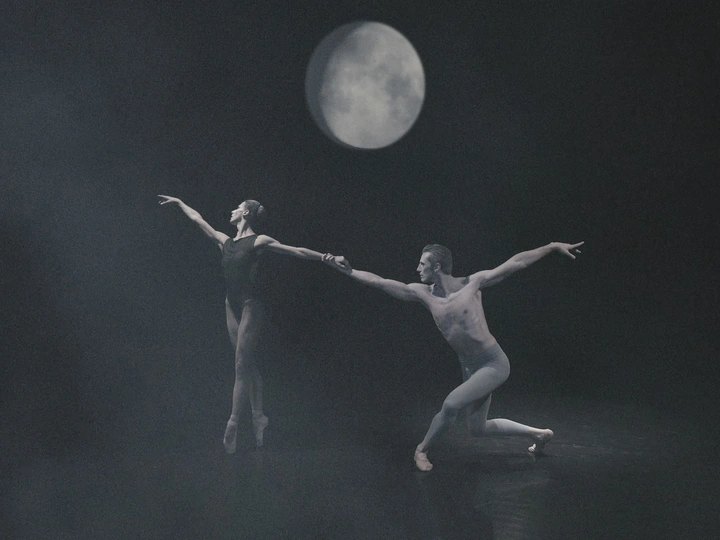
Contemporary architecture and spatial design face a profound ethical and ecological crisis, driven by technocratic utilitarianism and hyper-rationalized spatial consumption. Initiated within the intellectual framework of the Forum for Contemporary Women’s Reflections (KNRF) and Gallerie Femme Harmone, this proposal critically explores how modern spatial culture alienates human beings, and how gendered organizing principles offer a regenerative alternative. Grounded in cultural economics, spatial ethics, female narratives, and performing arts, the initiative addresses spatial culture as a living framework for social criticism. The project explores "place" through the codes of the Eternal Feminine principle in space, bridging academic inquiry with artistic expression. Expanding upon our "Eternal Feminine" exhibition, the practice integrates dance—specifically the Sziráky Nocturne ballet—as a primary medium expressing the research's spatial essence. Ballet serves as an embodied spatial practice: the fluid, protective, and non-dominating movement of the dancer translates abstract feminine codes into physical space, capturing protection, emotional resonance, and organic presence. The most successful aspect of this work is its interdisciplinary synthesis: combining KNRF’s theoretical research, Gallerie Femme Harmone’s fine art curation, and performance art to demonstrate that sustainability is a caring, relational mindset. It shows that spatial stewardship relies on protection, warmth, and ethical connection rather than spatial exploitation. Evolving within LINA, the proposal aims to develop collaborative workshops, video-based spatial essays, and curatorial research models. It seeks to bridge traditional spatial wisdom and artistic performance with future regenerative design, offering practical tools for architects to restore empathy, rhythm, and genuine homeliness to modern habitats.