paving and public space
I am currently an architecture Master's candidate at the Faculty of Architecture in Ljubljana, Slovenia. Alongside, I work as a freelance architect with a focus on adaptive reuse and participative processes.
What interests me most is the conditions under which architecture gets made in a time of degrowth. I believe that requires building knowledge horizontally, sharing methods and findings openly rather than guarding them, and working within cross-silo frameworks rather than singular expertise.
The achievements / projects relevant to the themes mentioned in my proposal include:
1. In the competition team for the winning pavilion of the event Demanio Marittimo KM278, Marzocca, 2025. The pavilion was nominated for the international Piranesi award.
2. Working on the adaptive reuse of Teol Factory in Ljubljana for a new modern dance centre for Španski borci, with Ela Grasselli, Gašper Medvešek, Raum arhitektura, in progress.
3. Project AWARE, for raising awareness of the city's architectural and cultural heritage, with MAO Museum of Architecture and Design, Ljubljana, in progress.
4. Working on the pavilion design for the event "Beroča reka," about reading awareness, with Slovenian Institute for Adult Education (SIAE), in progress.
In facing the polycrisis, degrowth is particularly relevant in the European context. The construction industry is largely dependent on non-renewable resources, and much of the housing stock sits underused, which forces us to ask why build at all. Concern for existing buildings has been growing over the past decades, and with it, questions about the architect's role. I argue that a constructive response to both questions can emerge from public space as the fundamental condition for creating architecture. Its potential lies in acting as a catalyst for change, opening possibilities for new ways of coexistence between people, nature and the city. Recognising this calls for a repeated rethinking of public space, which is shaped by an almost indeterminate mix of social, political, economic and professional interests.
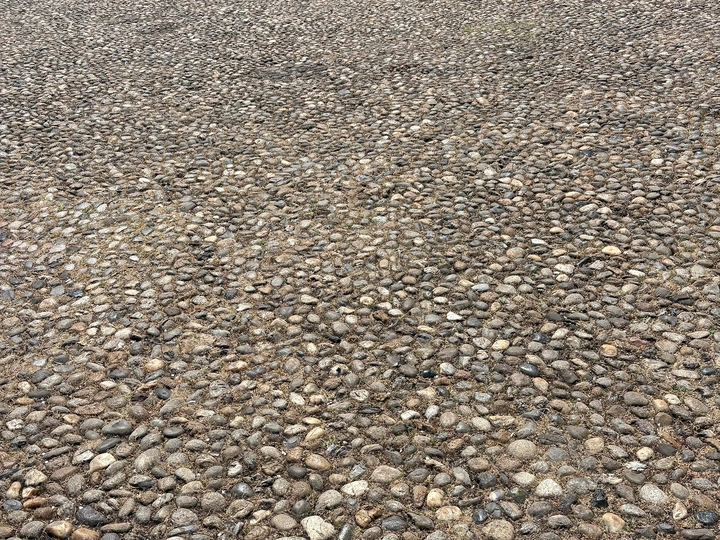
Within this reflection, I have chosen paving as the focus theme, recognising both a research gap on the subject and the resulting underexploited potential of this architectural element for public space in the twenty-first century. From an architectural perspective, the aim is not a particular image or outcome to be achieved, but a dialogue that drives a process of change for the better. In the short term, the project explores the potential of potential through small, site-specific interventions in neglected public spaces across Slovenia. In the long term, I see it as a starting point for an open, interdisciplinary project bringing together (landscape) architecture, and urban planning, conservation.