The Dgħajsa Bench:-Two Shores, One Seat
I am a multidisciplinary artist, designer and maker based in Malta and Austria, working at the intersection of art, spatial design, sustainability and community engagement. My practice explores how discarded materials can be transformed into meaningful public interventions that foster dialogue about environmental responsibility, cultural identity and the future of shared spaces.
My work is rooted in experimentation with recycled plastics, textiles, reclaimed materials and natural elements, creating installations, functional objects and site-specific artworks that connect people with their surroundings. I am particularly interested in the relationship between ecology, heritage and everyday public life, developing projects that combine artistic expression with practical, regenerative solutions.
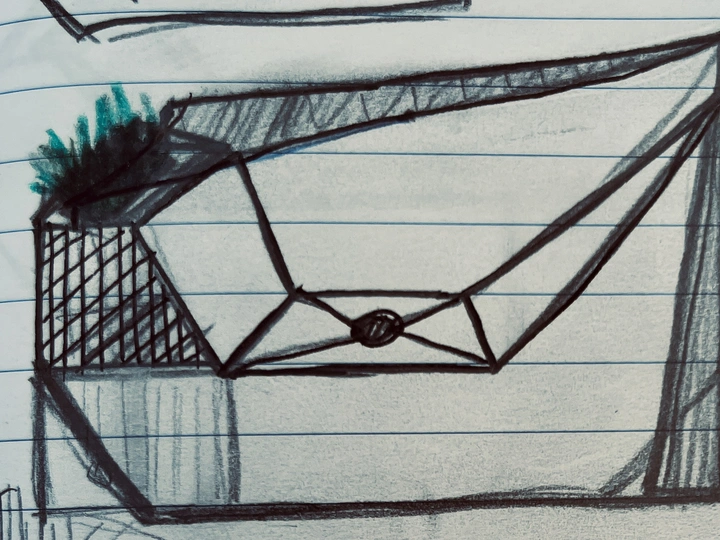
This proposal explores the bench as a hybrid spatial object that combines cultural memory with regenerative design thinking. It stems from a personal interest in how everyday urban furniture can transcend its static function and become an active participant in ecological and cultural exchange.
The concept develops from the observation of two contrasting spatial languages: the structured, functional clarity of Vienna’s urban environment and the organic, maritime identity of the traditional Maltese dgħajsa. By combining these two references, the project questions how public objects can possess multiple identities and act as subtle bridges between places, histories and ways of life.
The bench is designed as a double-sided structure. At one end, a small integrated landscaping system introduces a living element that evolves over time. A lightweight canopy structure extends over the seating area, functioning both as shelter and a passive rainwater harvesting system. This turns the bench into a small regenerative microsystem embedded in the public space.
The most successful aspect of the proposal lies in its ability to merge narrative and function: it is at once a place to sit, a symbol and a slow ecological device. Rather than treating sustainability as an add-on, it embeds natural cycles directly into everyday use.
The project is not designed as a fixed object, but as a speculative framework that can adapt to different contexts. In the future, it could become a series of site-specific benches, responding to local climate, materials and cultural references, forming a network of small regenerative public interventions in cities.