Architecture for Reactivation
Manuela Rosso
Studio 3Mark is an architecture studio founded by architects Manuela Rosso and Michele Cassino. Our practice operates across architecture, interior design, exhibition design, graphic design, and cultural projects, addressing different scales and contexts through a unified design approach. We work on both new construction and the transformation of existing conditions, developing projects for public and private clients.
Each project begins with an attentive reading of context and the interplay between spatial quality, function, communication, and construction, without rigid distinctions between disciplines. Over the years, alongside professional practice, we have pursued continuous design research, experimenting with different languages and tools through architecture, public spaces, exhibitions, installations, and temporary spatial devices.
It is within this framework that the proposal presented to LINA is situated, focusing on the reactivation of underused infrastructures and spaces through minimal interventions—a theme that represents one of the recent research directions of our studio.
Our work has been presented in exhibitions and publications nationally and internationally, including the 2025 Venice Biennale – 19th International Architecture Exhibition, and has received several awards in the field of architecture and design. We consider these achievements as opportunities to further expand dialogue with institutions, designers, and communities, continuing to develop an open practice capable of engaging with different themes and scales.
In contemporary cities, a clear contradiction emerges: while land and resources continue to be consumed for new construction, a vast heritage of infrastructures, urban edges and underused spaces is progressively losing its civic function.
The environmental crisis is also about our difficulty in recognising the collective value of what already exists. Rather than residual places, we see them as spaces with unrealised potential, fragments of the city that have lost their capacity to generate relationships.
Our practice starts from here: transforming infrastructures and transitional spaces into frameworks open to new uses by reshaping the conditions that enable collective appropriation of space through minimal, low-impact interventions.
Working across different contexts, we have developed an approach based on four actions: READING the spatial qualities and memory of overlooked places; RECONNECTING the thresholds between infrastructure, landscape and communities; INTRODUCING minimal devices and lightweight structures to trigger new uses; ACTIVATING cultural and communicative processes to consolidate shared forms of spatial stewardship over time.
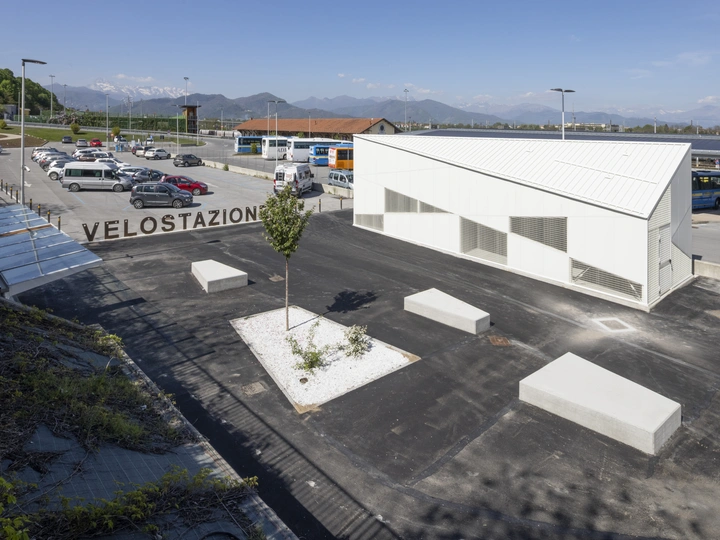
The Velostazione, New School Square, Urban Circle and the Permanent Tennis Collection emerge in different contexts but share the same question: how can architecture restore civic value to infrastructures and spaces that appear to have lost it?
Rather than offering definitive solutions, these projects demonstrate how small spatial interventions can generate meaningful effects on public space, sustainable mobility and human relationships.
Through LINA, we aim to confront this research with other contexts, testing its limits and potentials together with an international community of designers and researchers. Our goal is not to export a finished method, but to evolve it collectively, adapting it to different territories and cultures in order to co-develop new strategies for civic reactivation.