Tabula Plena: Living Archives, Situated Reuse
Ella Fleri Soler
Text Catalogue is a research-led collective formed by Ella Fleri Soler and Andrew Darmanin, working across architecture, design and the allied arts. We produce site-specific installations, critical writing, workshops and pedagogical projects engaging spatial, cultural and political conditions. Our work is often concerned with making visible the less tangible aspects of the built world around us. We call the shift in perspective ‘the switch’ and we love using architecture to make more than buildings.
We like to work collaboratively and across disciplines. Last year we formed part of Memoria - a team of 4 artists in residence at Berlin’s Spreepark Art Space where we worked on a site specific research project which resulted in our first international exhibition in 2026. This was an exciting moment for us as a collective which has grown organically within a Maltese context because we often see that the issues we are exploring are shared across regions. Meeting with international audiences continues to confirm this - most recently with the Documenting Difference works being recognised at the UIA World Congress of Architects in Barcelona as a selected project and shared through a presentation and panel discussion.
We practice as architects more formally and are visiting staff at University of Malta too, so our work as Text Catalogue is carefully fit between projects and calls for the occasional late night. Our work is always in progress, and it sometimes only feels like a body of work when we are able to make connections from one project to the next. Recent exposure through residencies abroad (Berlin and New York) has allowed us to slowly broaden our audience, refine our approach and keep us motivated for what might come next.
We recently founded the Reuse Collective which brings together architecture students and graduates to explore reuse culture and experimentation which will debut its first installation at a local festival this summer.
Tabula Plena is a response to Malta's development boom masking a deeper crisis. Architecture on the island follows binary logic: preserve the old and demolish everything else. The slate is wiped clean for generic development, erasing the vernacular in between.
This long term project has allowed us to see the (not-always-old) vernacular that we encounter everyday and to question how else we might value it: not for its age, and not only materially, but for the ways it allows connections between people and space.
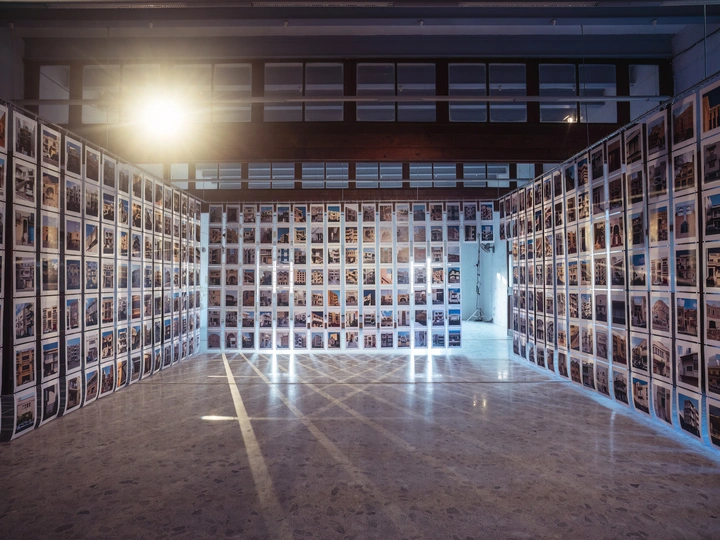
Through collaborative workshops with University of Malta students (2020-2022), we developed a living archive. It documents Malta’s overlooked buildings that reveal 'difference' from the cookie-cutter developments which are often replacing them.
The archive’s form has taken many forms: a large-scale immersive installation (Ħaġra Festival, 2025), a publication, and international presentation (UIA World Congress of Architects Barcelona, 2026). Its latest challenge is taken on through the development of a digital prototype - one started at the Art Omi:Architecture 2026 residency and which continues to be explored. Through it we question what might emerge when the overlooked is made visible - exploring the digital archive as a site of production and potential. Our vision is an open-source tool where communities participate in documentation and architects discover ways to work collaboratively and innovatively with what remains.
We welcome the support of members working in landscapes facing similar development pressures and policy constraints. We want to advance this work across several fronts: developing Tabula Plena to a functioning open-source platform; experimenting with community documentation and participation; testing design methodologies that emerge from archive research. Together, we aim to establish reuse as a material, cultural, and spatial practice that operates both locally and across contexts.