The Invisible Façade
Gerd Wetzel is an architect and educator whose work moves between architectural practice, urban design, teaching and research. He founded Studio Wetzel in 2014 as a platform for built projects, competitions and speculative studies. Across these fields, he understands design not simply as the production of form, but as a method of inquiry and knowledge production.
Since 2022, he has been Professor of Architecture and Urbanism at IU International University and has taught architectural design at HFT Stuttgart since 2021. From 2014 to 2020, he taught at the Karlsruhe Institute of Technology. His teaching focuses on design methodology, urban transformation, spatial relationships and the role of architecture under changing environmental and social conditions.
His professional background includes work with OMA, MVRDV, Herzog & de Meuron, Massimiliano Fuksas and other international practices. These experiences shaped an approach that connects conceptual thinking with the realities of architectural production.
His current research is organised around two complementary fields: Architecture After Stability investigates adaptability, resilience and transformation, while The Environmental Afterlife of Architecture examines the material consequences of architectural decisions beyond construction and use. His work has been presented at international conferences including the UIA World Architects Congress and ICCAUA, and his digital collage series Exodus 2021 was exhibited at the 198th Royal Scottish Academy Annual Exhibition in Edinburgh in 2024.
Through research, teaching and practice, he explores how architecture can remain open to change while becoming more conscious of its environmental effects.
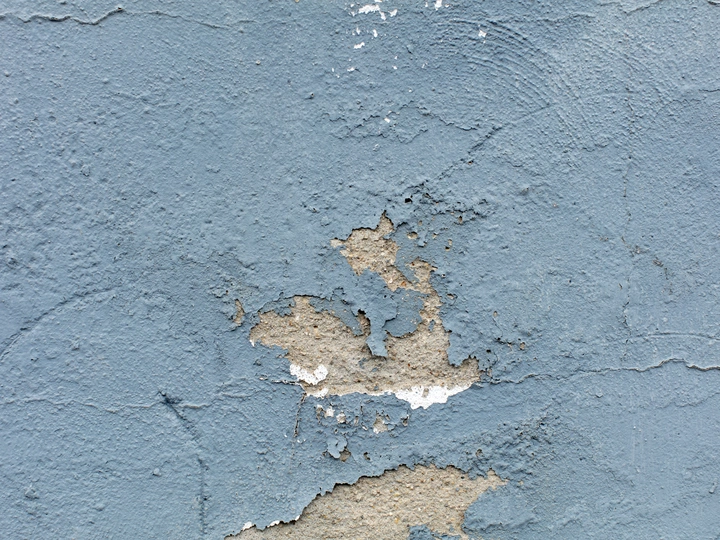
Architectural paint is usually discussed through colour, protection and maintenance. Yet every painted surface also has a material life beyond the building. Through weathering, abrasion, cleaning and renovation, fragments of coatings leave the façade and enter dust, soil, drainage systems and water. What appears to be a stable architectural surface becomes an invisible material flow.
The Invisible Façade asks: Where does a façade end? At the wall, at the street drain, or in the wider environment?
The project emerged from my research and teaching on the environmental consequences of construction. While carbon emissions, energy consumption and material cycles have become established architectural concerns, the slow dispersal of paints, polymers, additives and biocides remains largely absent from architectural discourse. Existing environmental research provides evidence, but its implications for architectural thinking and design have yet to be fully explored.
The proposal combines environmental research with architectural analysis, material mapping and visual storytelling. It follows paint from production and application through use, weathering, maintenance and eventual dispersal. Rather than treating the façade as a fixed boundary, it understands it as a changing interface between building and environment.
The project can evolve through writing, an exhibition, a material atlas, public lectures or collaborative workshops. These formats would bring scientific knowledge into spatial culture and invite architects, students, manufacturers and the public to reconsider seemingly ordinary material decisions.
The Invisible Façade is the first investigation within a broader research programme on the environmental afterlife of architecture. Its aim is not simply to argue against paint, but to develop a more responsible understanding of architectural surfaces—one that considers not only how they look and perform, but also where their materials travel over time.